
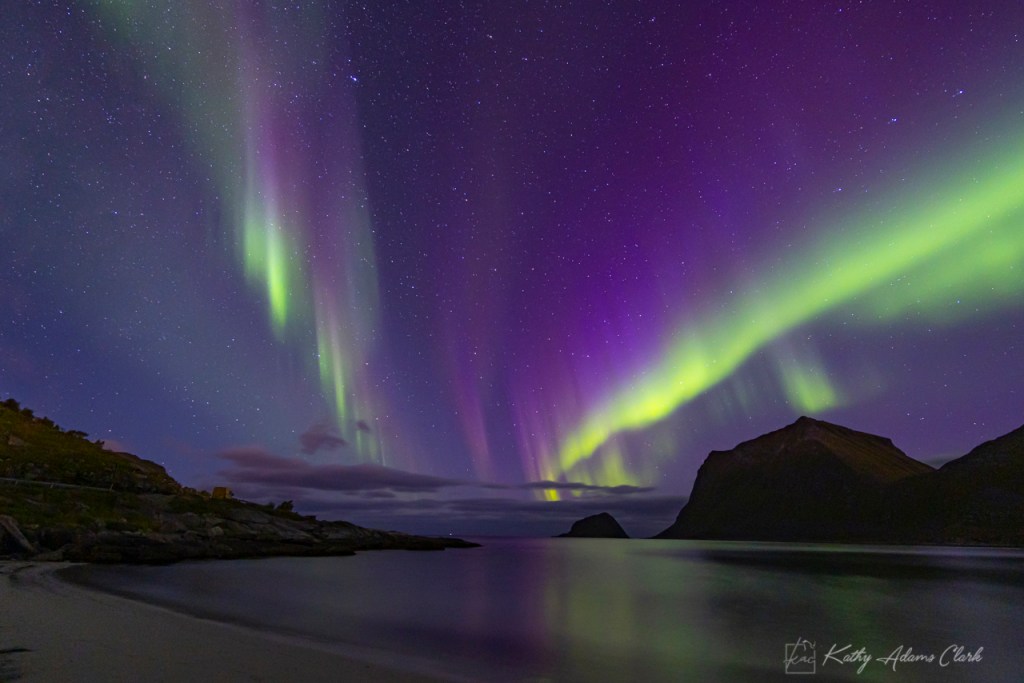
The days are getting shorter in the northern hemisphere so it’s time to start thinking about photographing Northern Lights or Aurora Borealis.
How to photograph Northern Lights :
- Shutter Priority Mode: Shutter speed about 20” second, ISO Auto. This should give you a wide-open aperture with an ISO in the 800 to 1600 range.
- Alternative with Manual Mode – 20” shutter, wide open aperture in the 1.4, 2.8, or 3.5 range, ISO 800 to 1600 to balance the light meter. NOTE: this will change as the lights dance across the sky so watch the light meter. Only change the ISO to balance the light meter.
- Long Exposure Noise Reduction OFF.
- Camera on tripod.
- Shutter release attached to camera. My preference is the Vello Shutterboss II wired.
- Focus 1/3 of the way into the scene. Turn off Auto Focus. Watch your focus during shooting.
- Set Focus Peaking if you’d like. It works very well in the dark.
- Mirrorless cameras have a focusing scale viewable on the back screen.
- Usually there’s a line that you put in the middle of the infinity symbol.
- Focus 1/3 of the way into the scene. Turn off Auto Focus. Watch your focus during shooting.
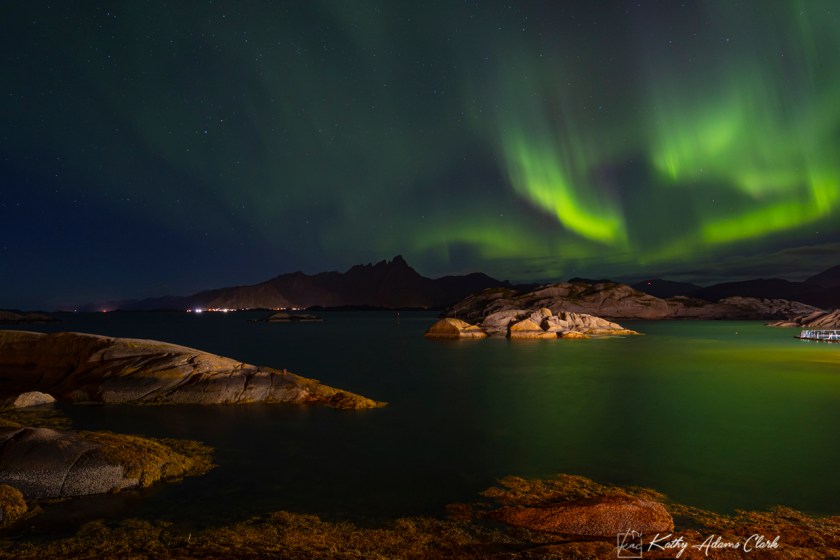
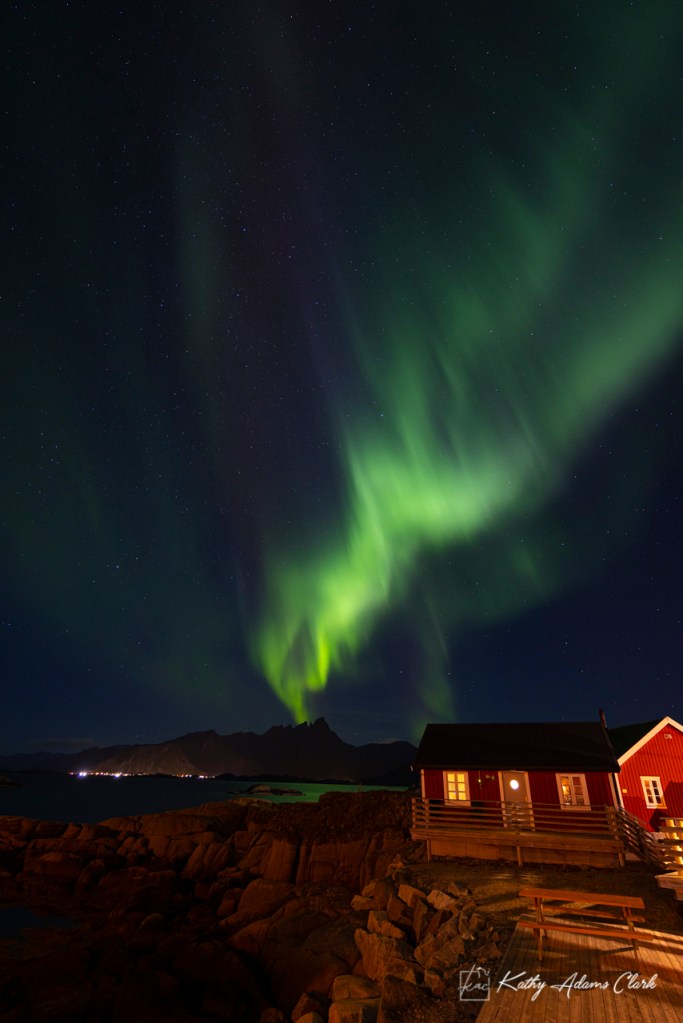
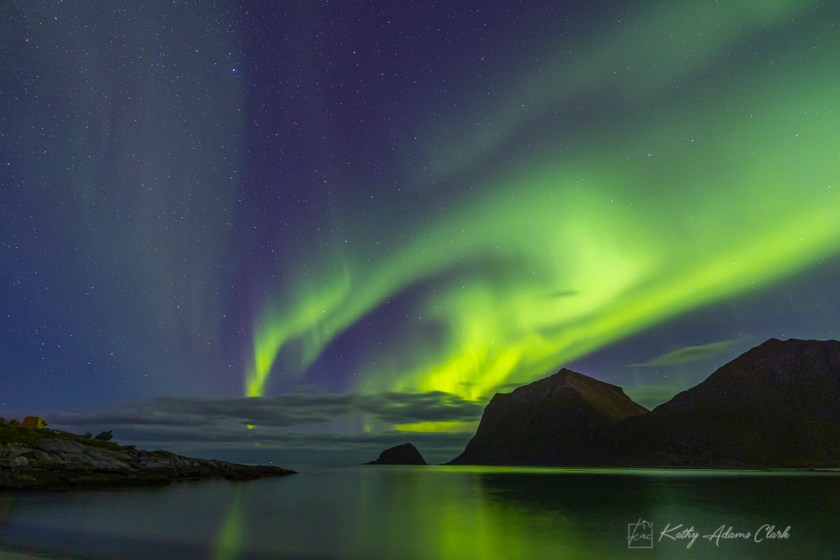
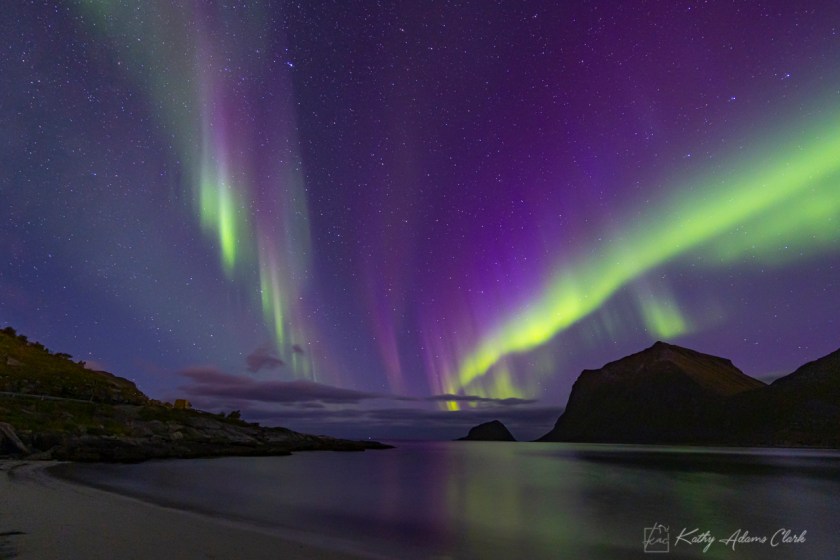
- Compose so there’s an interesting foreground. Reflections in the water are nice.
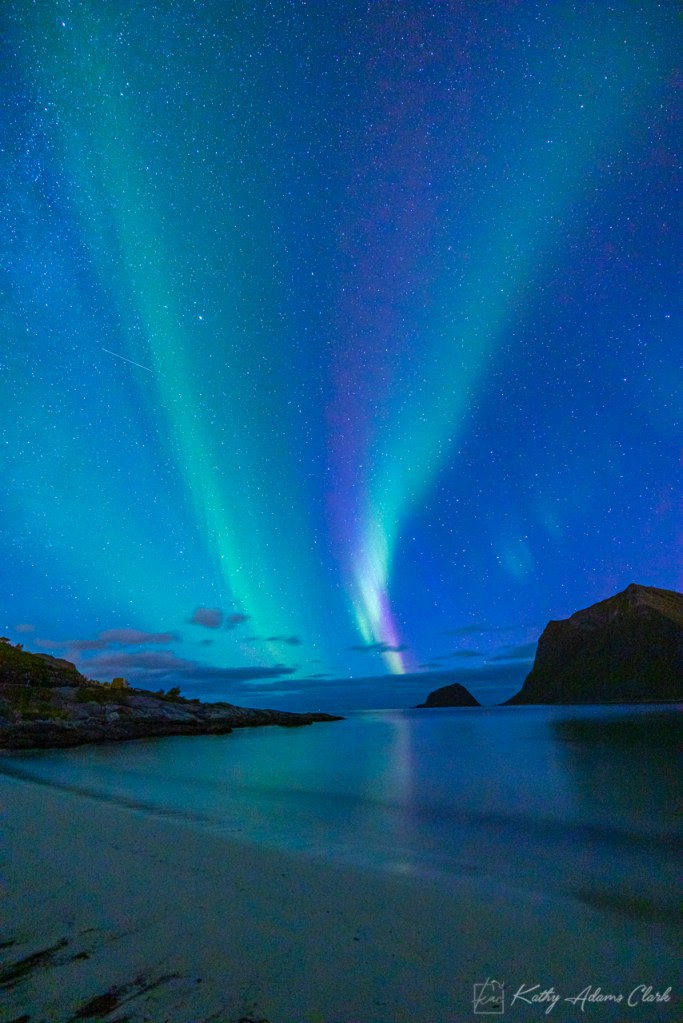
- Check the first photos to make sure the stars are pinpoints of light. Double-check the edges. We don’t want streaks on the stars. If the stars are not pinpoints of light, make the shutter speed faster. My lens likes 13” seconds.
- When the lights are “dancing” across the sky, a faster shutter speed is needed to get defined streaks of color.
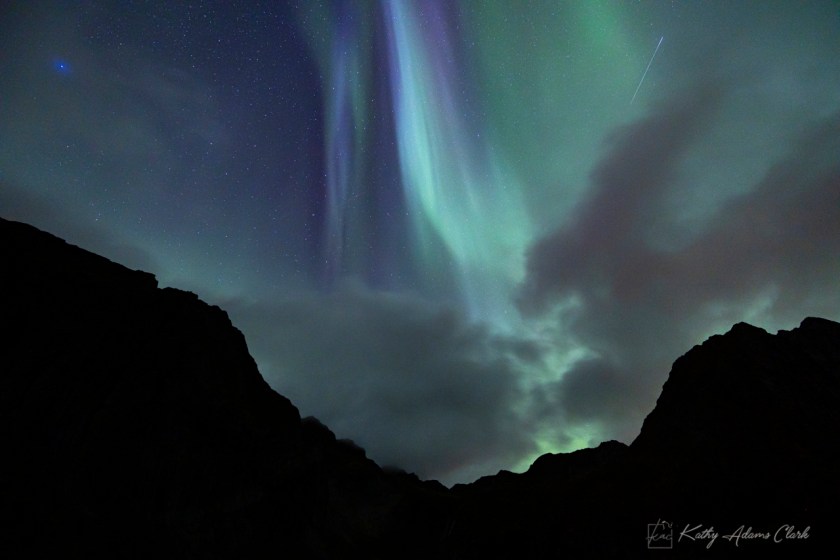
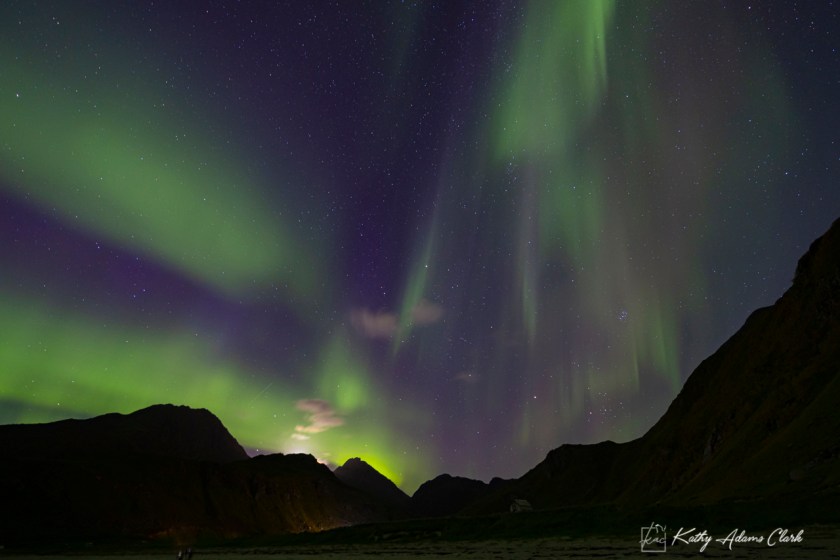
- Green is the only color you’ll see with your naked eye. The reds, blues, and purples look like hazy clouds. We see those colors on the finished photo.

 Kathy Adams Clark