
Which Class Should I Attend?

“Which class should I attend? You offer so many different topics!”

We use the same principles of photography regardless of the subject. 

When we photograph dragonflies or butterflies, need the same adjustment of shutter speed to stop their motion.  I use the same settings for either critter. 
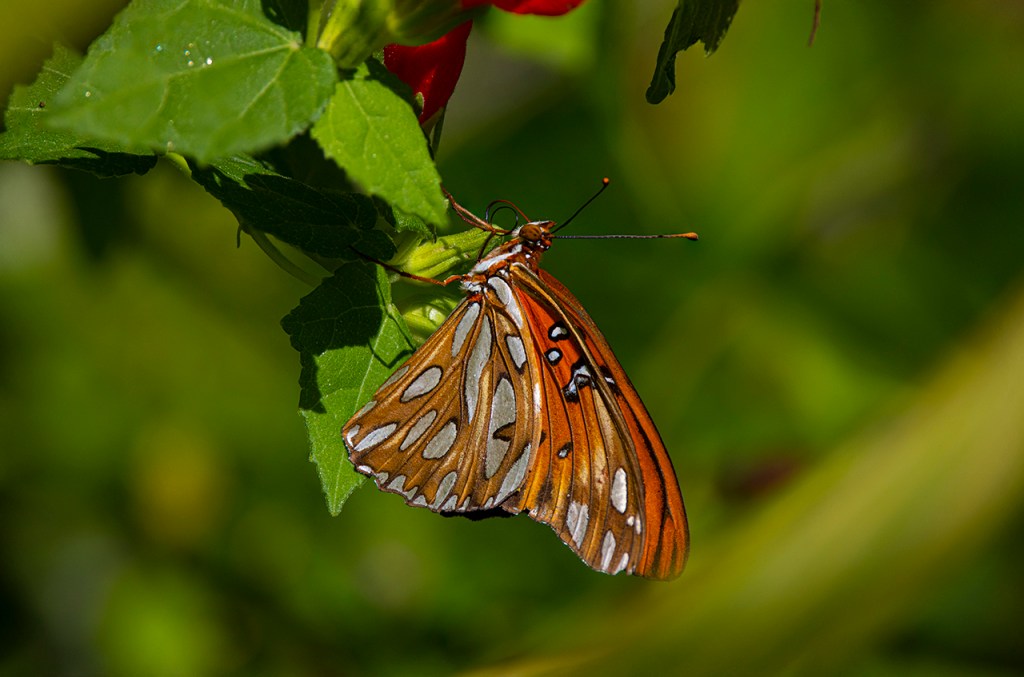
During a recent Butterfly Photography class, we photographed more dragonflies than butterflies.  That’s just what we encountered.  Participants learned how to use Shutter Priority and Auto ISO to stop the subject we found.  They also learned about moving their focus points around to focus on the subjects.  Also, how to change their focus setting based on where the subject was in the vegetation.

Crystal Ball Photography is an indoor class.  That will cover f/stop, shutter speed, and ISO but more for static subjects.  This class will emphasize how to use the crystal ball to see things in a different way.  More creative than the first two classes.  Also, this is an indoor class so it has a slower pace.
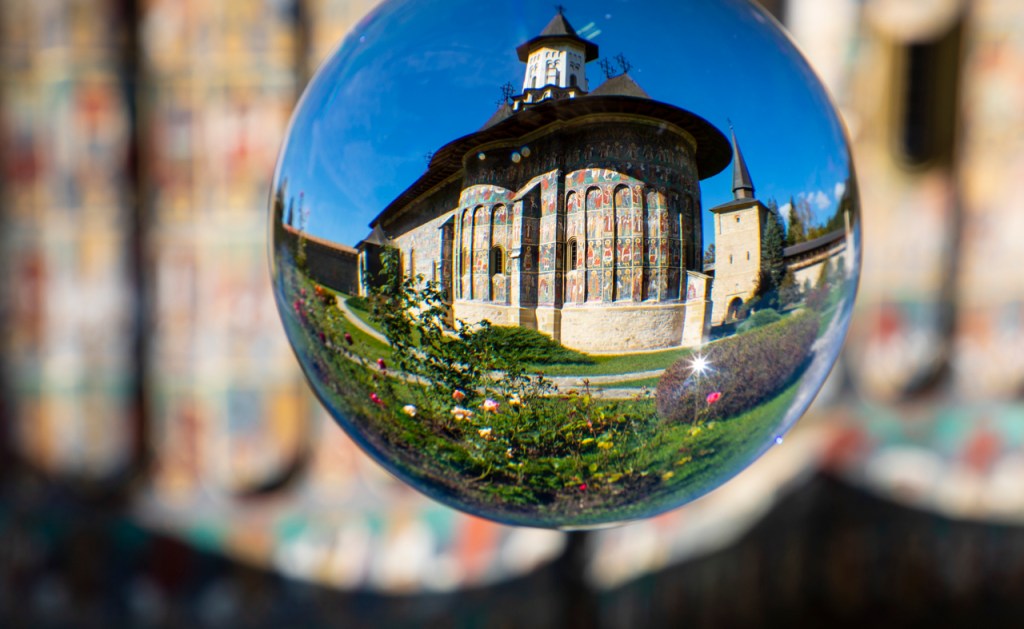
Crystal ball, Sucevita Monastery, Sucevita, Romania

Landscape Photography is more about that big, static thing in front of you.  It’s not about stopping the action so much as which lens or filter is right for the moment.  There are also a lot of processing tricks that are needed when photographing landscapes. 
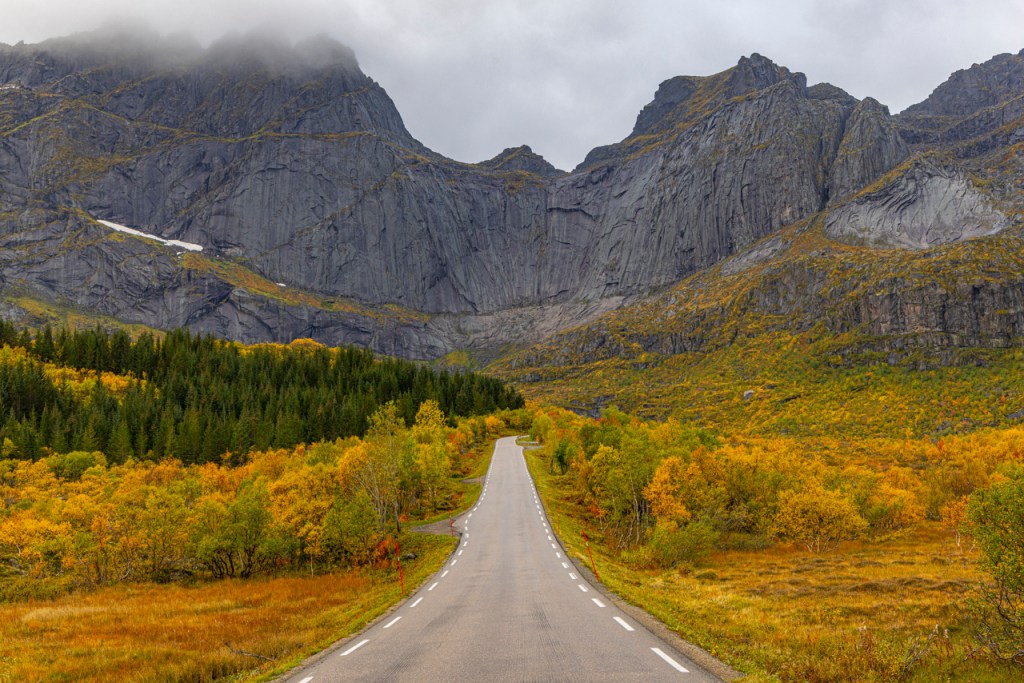
Lofoten Island; Norway; Nusfjord; Ramberg, Norway”

Any aspect of photography teaches you something different that feeds into the whole.  When you take a class in one thing, you learn something that applies to something else.

So, I’d suggest you choose the one that is important right now and attend that one.  Here’s a list of upcoming classes on my website.
Canon EOS R7 — Autofocus

I was eager to try the autofocus on the R7 with a variety of subjects.

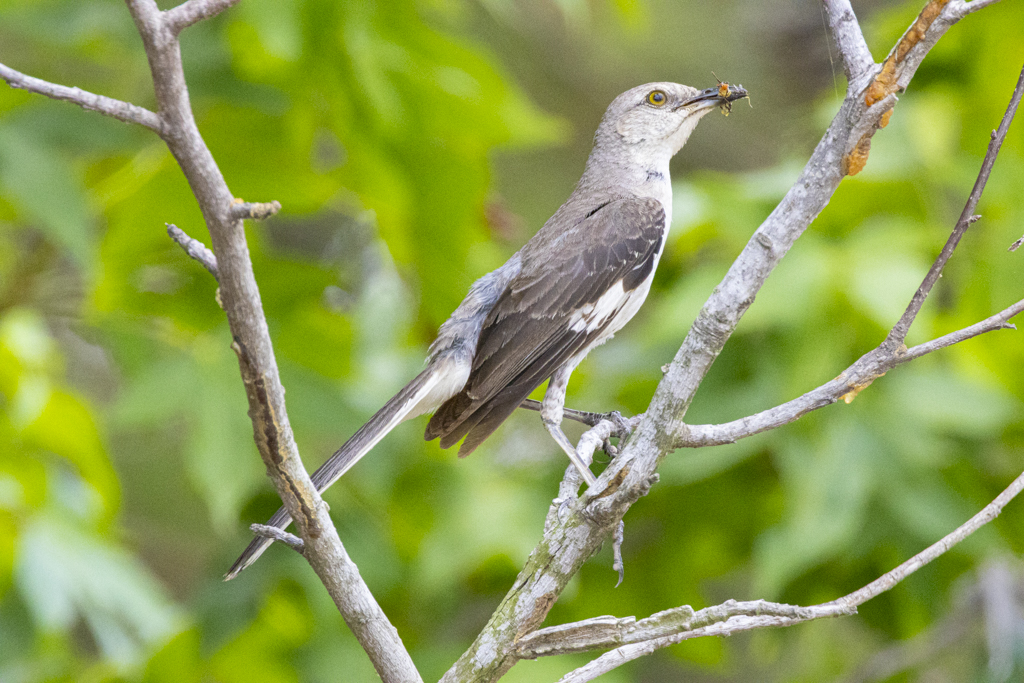
I used the same settings on all the photos: Servo, AF[1], Subject Tracking, Subject to Detect is Animals, Eye detection is Enabled. Servo AF is on Case 2 which is “Continue to track subjects, ignoring possible obstacles.”

For those of you new to AF[1], it is a wide zone where the camera looks for a subject based on face and/or motion. Once the camera has found a subject, the focus point lights up with blue dots. Then we can move the camera around to compose the shot while the camera stays on the subject.

Northern mockingbird. The R7 found the bird without hesitation and locked on to the eye.
Great-tailed grackle. I didn’t push the focus button until the bird’s face came into view. Once the eye was clear of the pine needles, then the R7 found the eye and locked on.
Gray Hairstreak. Tiny butterfly. The Flexible Zone AF 1 (AF[1]) was not the best choice for this small butterfly. The R7 found the subject because it was moving. The focus point bounced between the butterfly’s real eye and the fake eye at the base of the tails. I should have changed to 1-point AF and put that point on the butterfly’s eye. Not bad, though.
Gray Hairstreak. Same as above with a slight change in my angle to get a green background.
Clouded Skipper. The R7 found the butterfly’s eye without a problem. It locked on and held focus.
The same clouded skipper perched on a purple passionflower. The R7 stayed on the butterfly but I confused the camera. The R7 tried to focus on the structure on the passionflower. This camera is smart but the photographer has to remember to give clear directions. My error in not changing to the 1-point AF area. Then the camera would have known exactly where to focus.
Honeybee on bee bush. The AF[1] focus area stayed with bee without any effort.

I found the Autofocus on the R7 quick and precise. The R7 is not a mind reader (though it does amazing things) so we have to remember to change AF Areas based on the subject.

The only time the R7 failed to acquire focus was on a tiny subject at the top of a stick. I moved the camera down the stick until it acquired focus. Then I moved the camera back up to the subject and the R7 held. This is not unusual with AF in mirrorless but not as bad as I’ve seen in earlier cameras.

All photos in this post were taken with the 100-500mm RF lens, 1.4x extender. All the insects were at the edge of the minimum focusing distance of 3.94 ft.

All photos are uncropped.

Questions? Post below. I’d love to hear your comments and feedback. Thanks for reading.