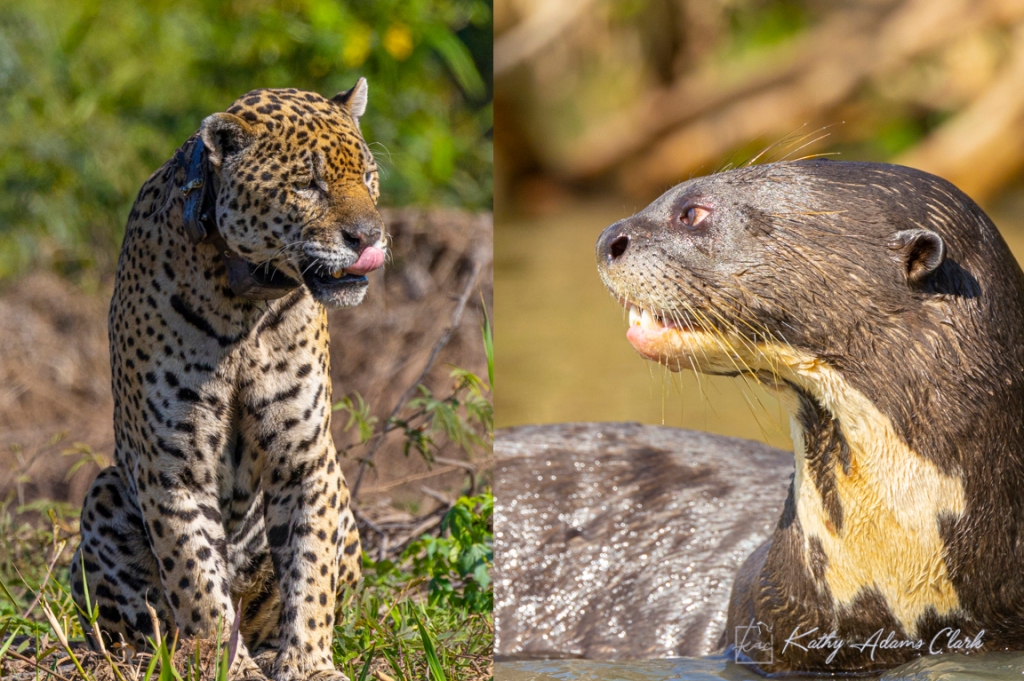
Jaguar versus Giant Otters — Who Wins?

Jaguar versus giant otter

We were in the Pantanal of Brazil photographing jaguars, birds, and other critters in July of 2024. Our main target was jaguars since one can see more jaguars in Pantanal than any other place in the world.

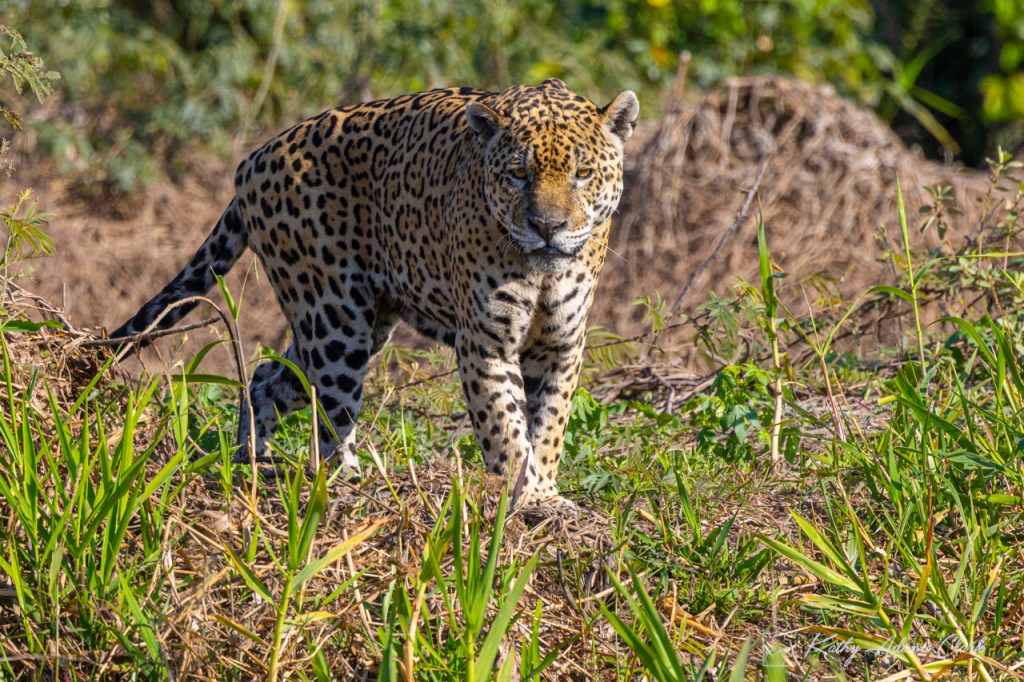
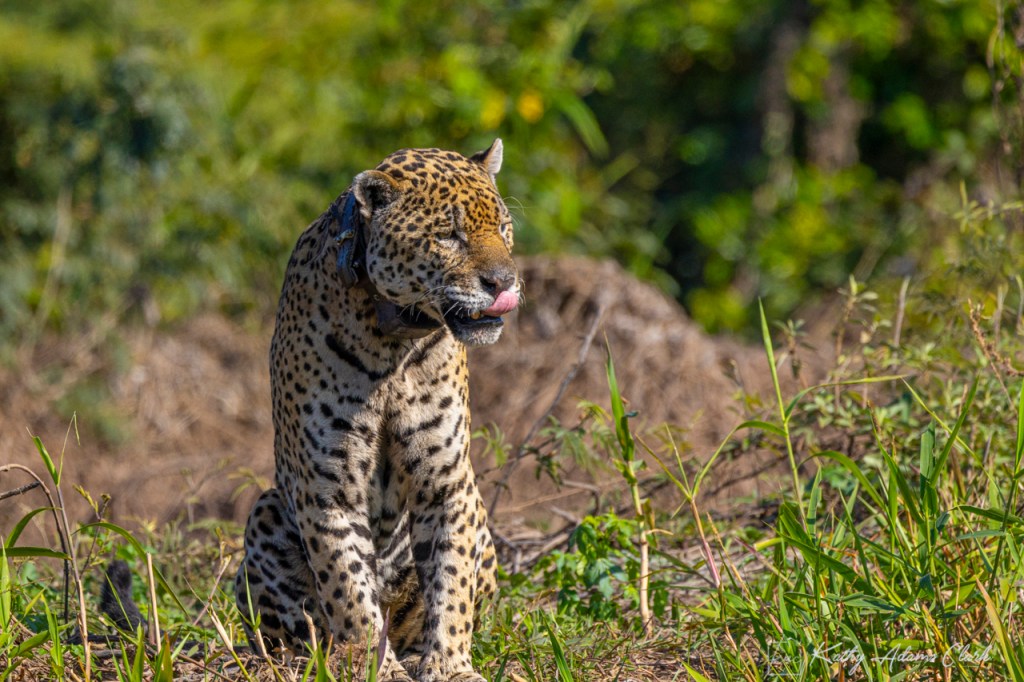
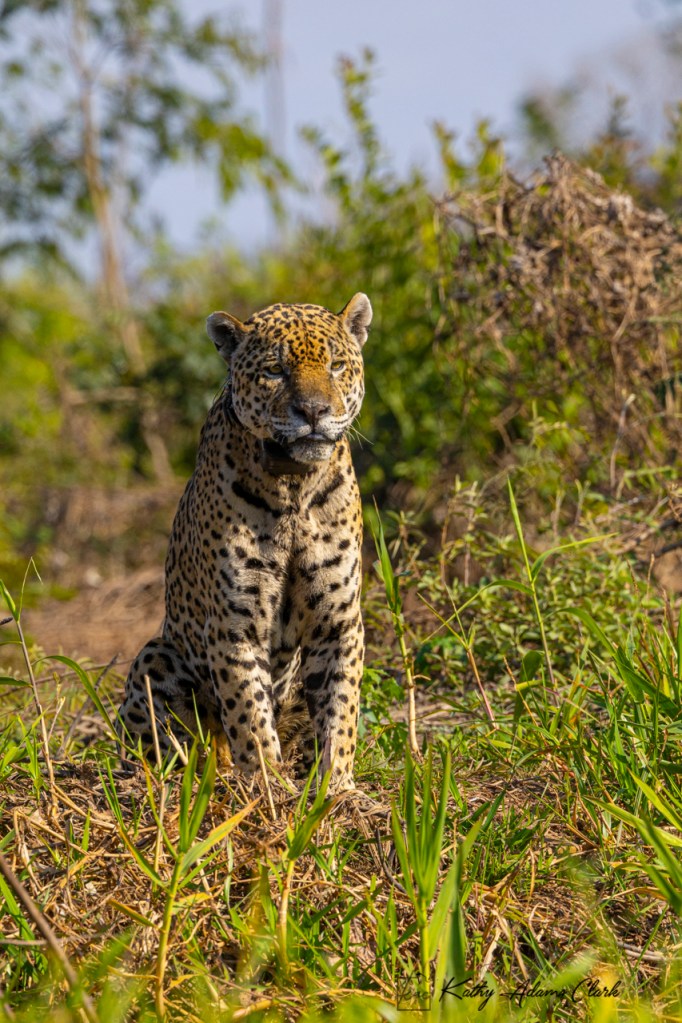
On our last day, we encountered a jaguar that locals had named Nels. He’s a handsome fellow with a huge collar. The collar is because he was rescued from wildfires in a previous year, rehabbed, and then released into the wild.

We found Nels on the Rio Cuiaba near the Three Brothers Rivers. Nels was minding his own business but was hunting for a snack of a caiman or maybe a fat, juicy capybara.

We photographed and watched Nels for maybe 20-minutes and then heard this screeching sound off to the right. My guide, Raul Guarnizo, said the sound was great otters coming to attack the jaguar. Click for Giant Otter sounds.

Jaguar versus Giant Otters sounds like a kid’s futbol match. Let’s see how this plays out.

Jaguar versus Giant Otters
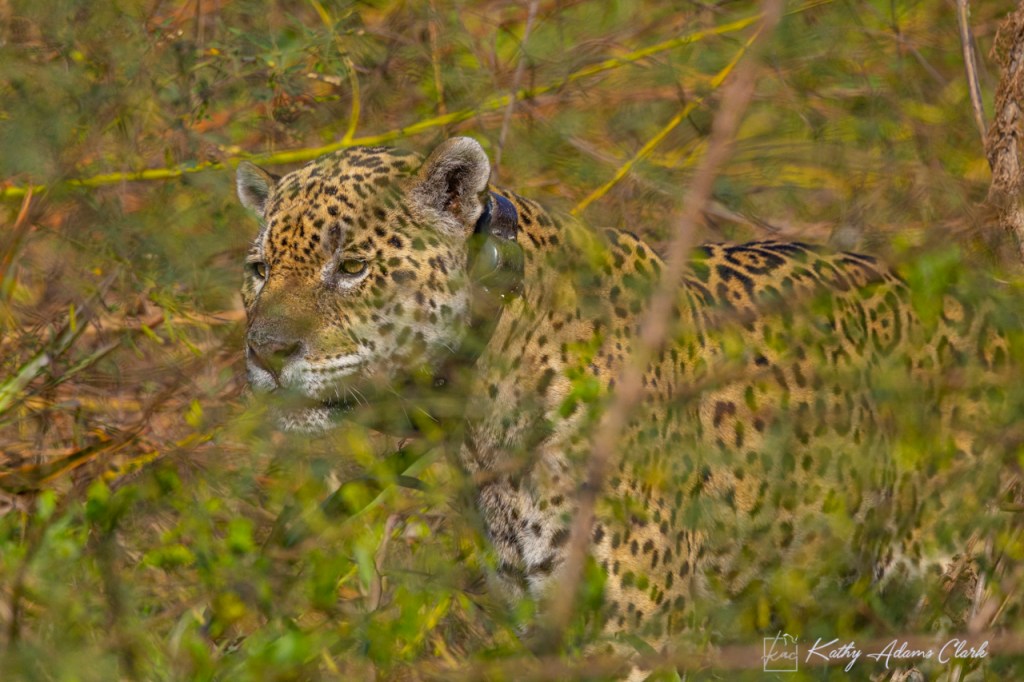
Here’s the jaguar named Nels minding his own business in the Pantanal of Brazil.
Jaguar Nels comes out into the open.
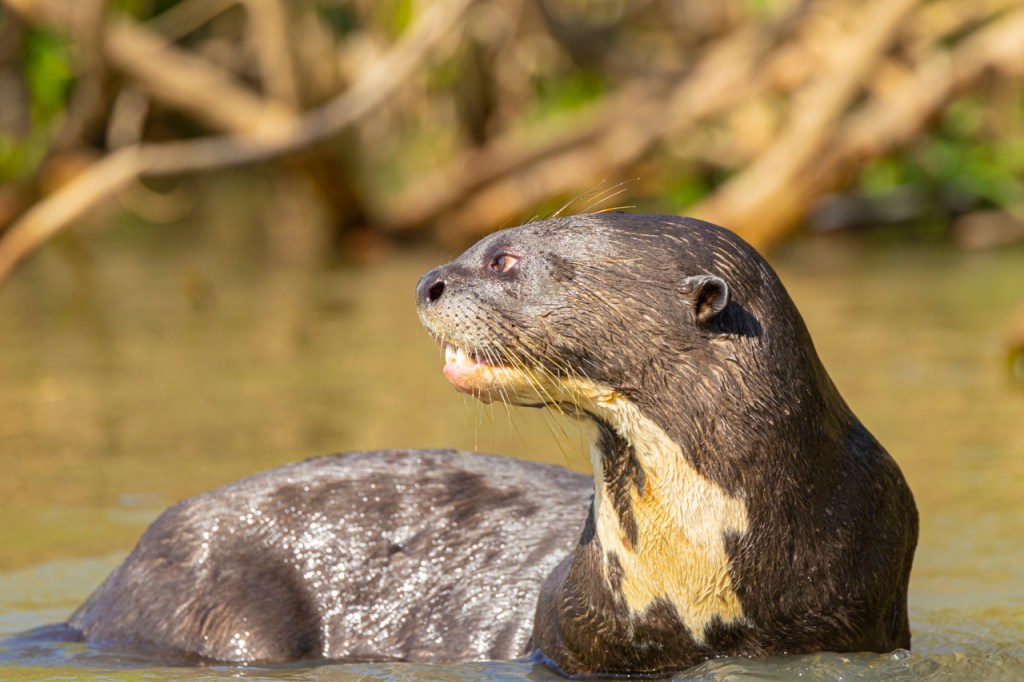
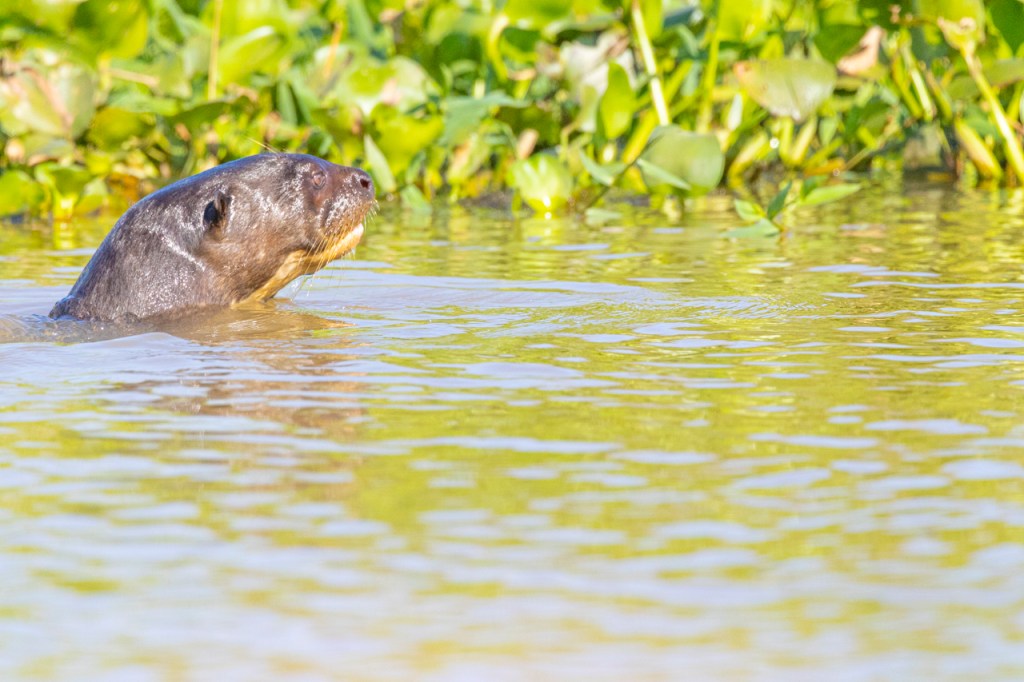
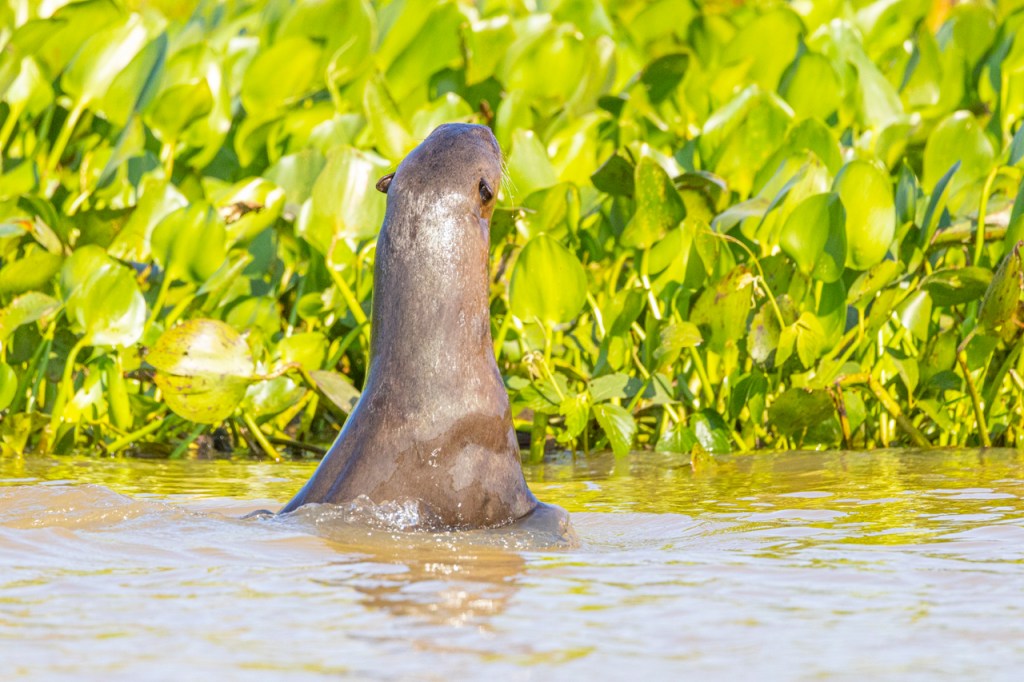
Giant otter sees the Jaguar and goes on the alert.
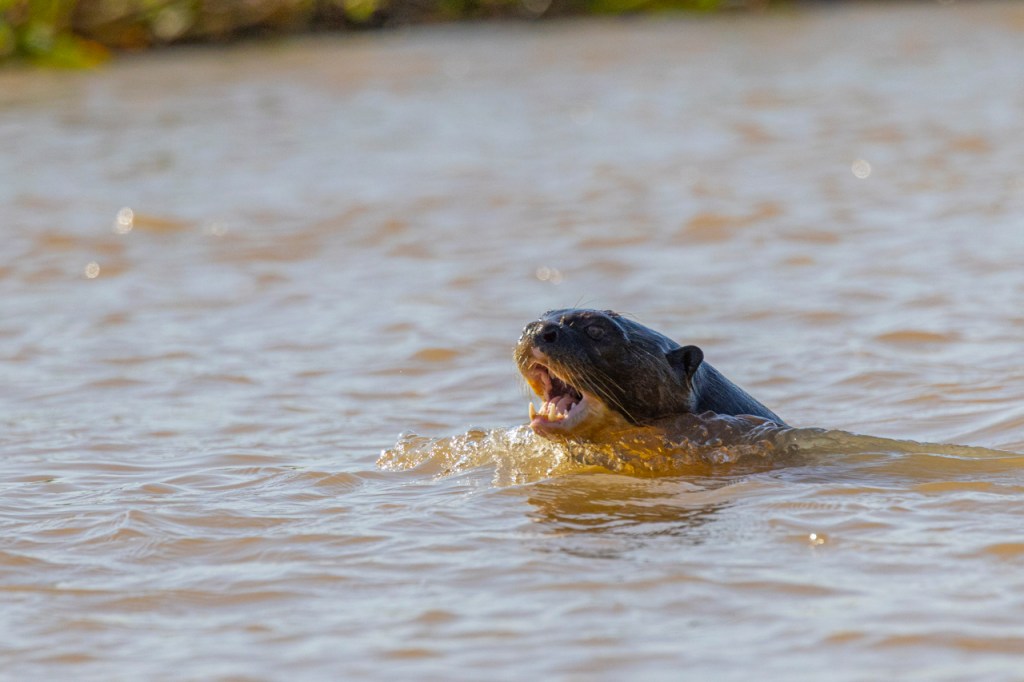
The giant otter starts bellowing. “I’m coming for you Jaguar! You’re in my territory, dude! Get out!” That’s what it sounded like to me. Here’s the reality, though. Click to hear giant otter sounds.
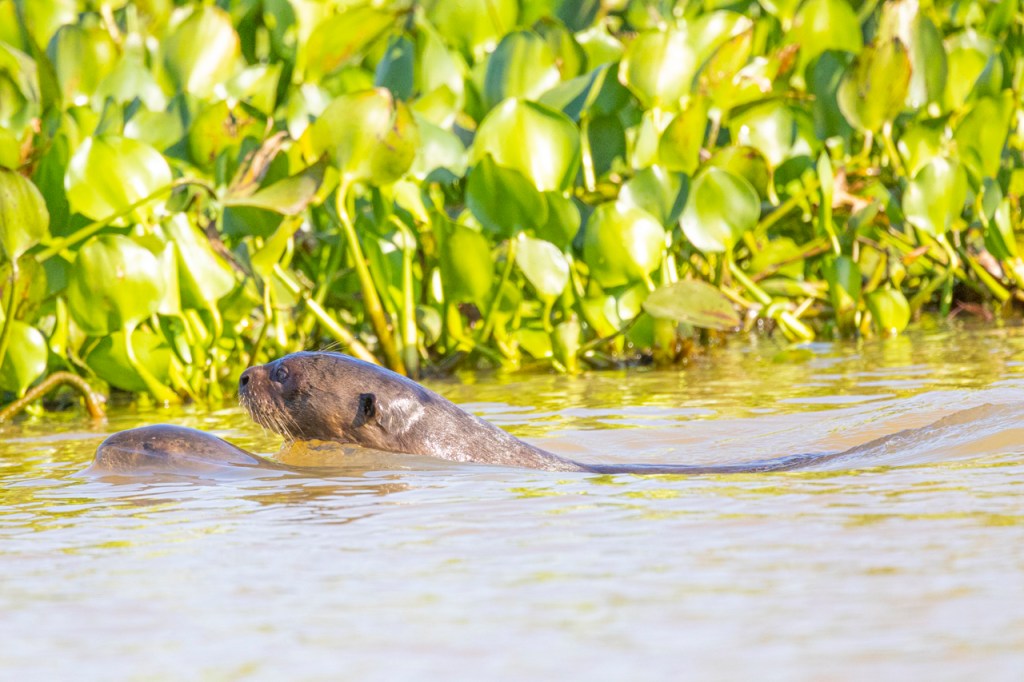
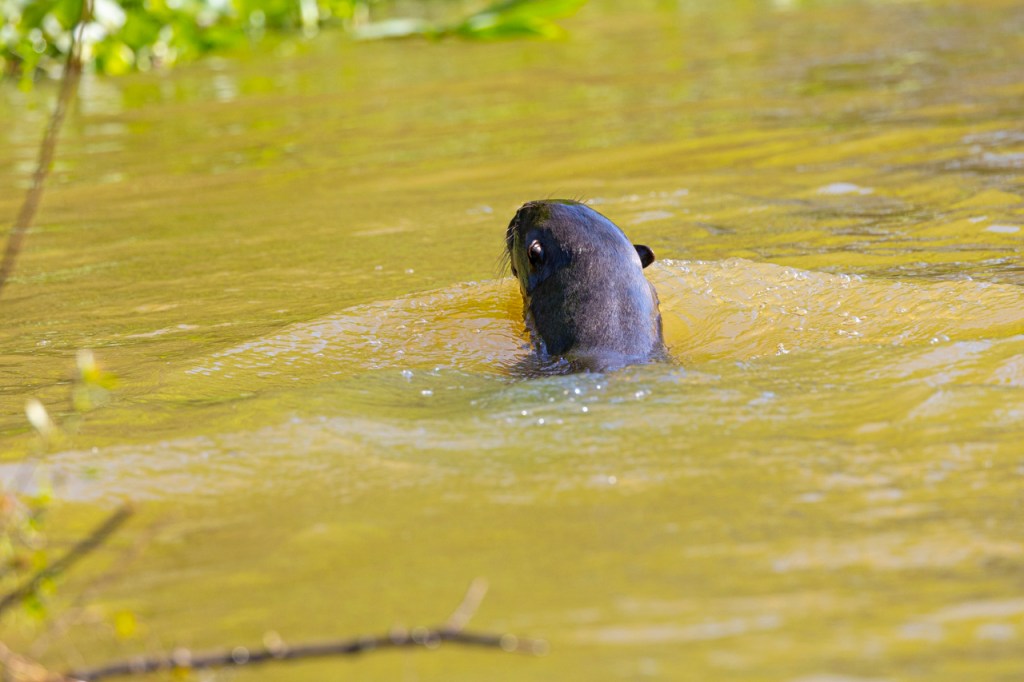
Giant otter makes the turn in the river and swims right toward the Jaguar. “I’m coming for you, Jaguar!!”
Jaguar Nels comes out in the open and looks around.
Giant otter comes up to the shore. “I’m coming for you, Mr. Jaguar!”
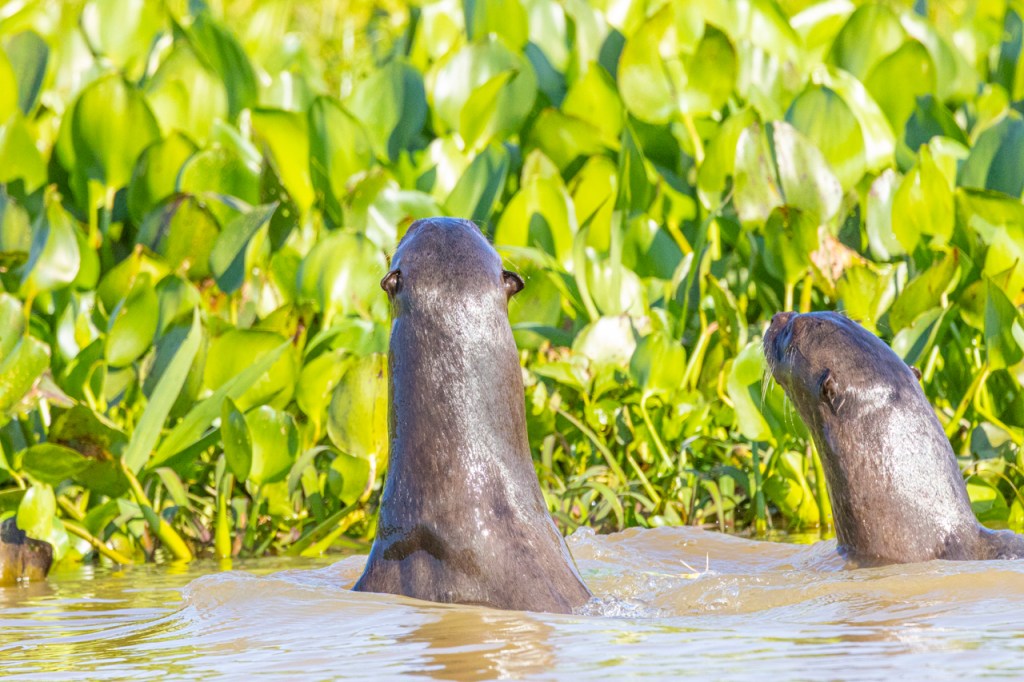
Giant otter yells, “I’ve got my buddy, Jaguar. We’re coming for you!!”
Giant otter and his buddy start popping up and down. “We see you, Mr. Jaguar!!” The entire time they are hollering. Click here to listen to Giant Otter chatter.
Jaguar Nels appears to say “Bring it on, Mr. Otter. I’m ready for you!!”
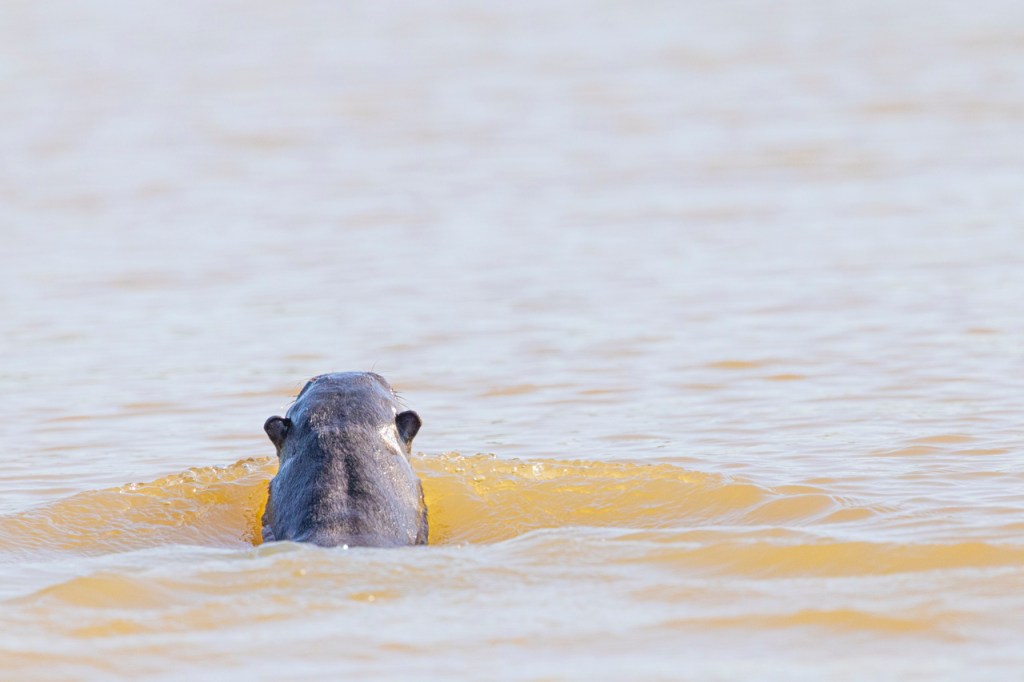
Giant otter seems to lose interest. One last, “I see you, Mr. Jaguar. Get out of here!”
Giant otter heads on down the river. He has more important things to do.

So that’s it! One defiant jaguar and two feisty giant otters.

What fun trying to figure out what’s going on in the animal world.

Thanks for reading! I appreciate your support. I hope you appreciate my humor.

African Safari: Which Camera Body?

Jordan asked:

Hi Kathy,

I hope all is well. I was hoping you could help me select a camera body for my African safari in Dec. I’m deciding between the Canon R6ii and R7. Do you think R7 crop factor is preferred to get more reach on the lenses. I will bring the 100-500rf lens. Any thoughts on a good 2nd lens? Will also bring my 7Dii as a second body. Thanks so much for your thoughts on this!

Jordan

My reply:

Thanks for asking, Jordan.  You’re going to find that the R6ii is a more robust camera.  I’d recommend the R6ii over the R7 in this situation.  (Nikon Z8 and/or Sony A7rV for others)

You already own the 100-500 RF lens so that with the R6ii will be perfect. 

I will suggest that you get the 1.4x extender for the 100-500 RF lens.  I use that on my lens all the time.

My current set-up is R6ii, 100-500mm RF lens with a 1.4x extender.  I used that all the time I was in Costa Rica and I’ll use it on my safari to Africa in May of this year. 

Keep a 24-105mm or other medium wide lens on your 7Dii.  The landscapes are amazing.  Photos of the animals in the landscape are always a treasure, too. 

Here’s a link to my photo safari in May 2025 with Strabo Photo Tour Collection

Canon R6 Mark II: First Look In The Field

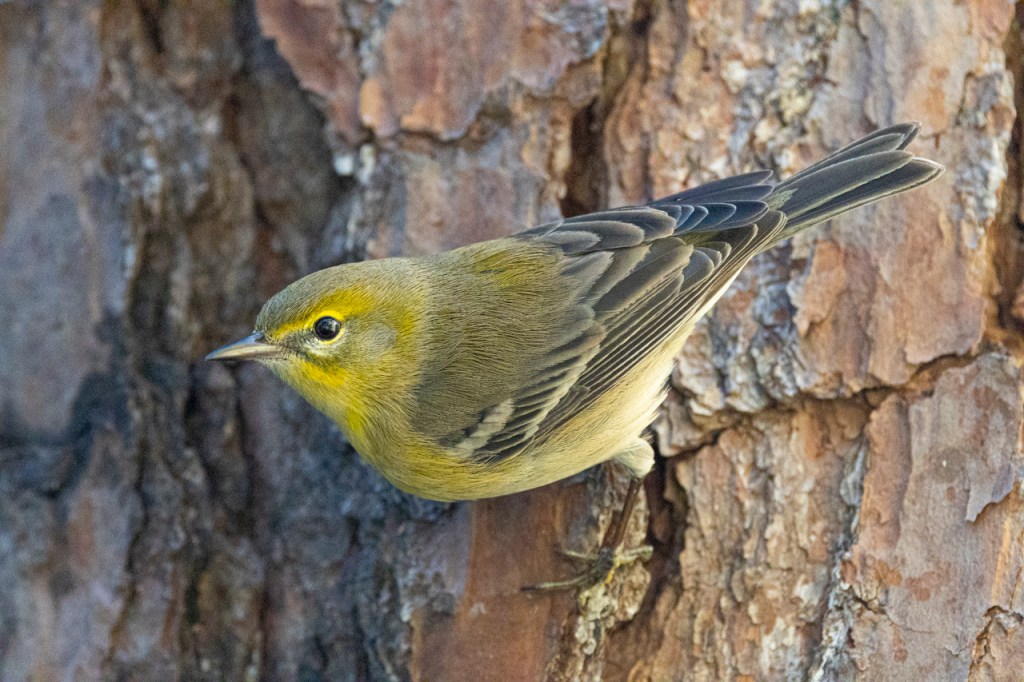
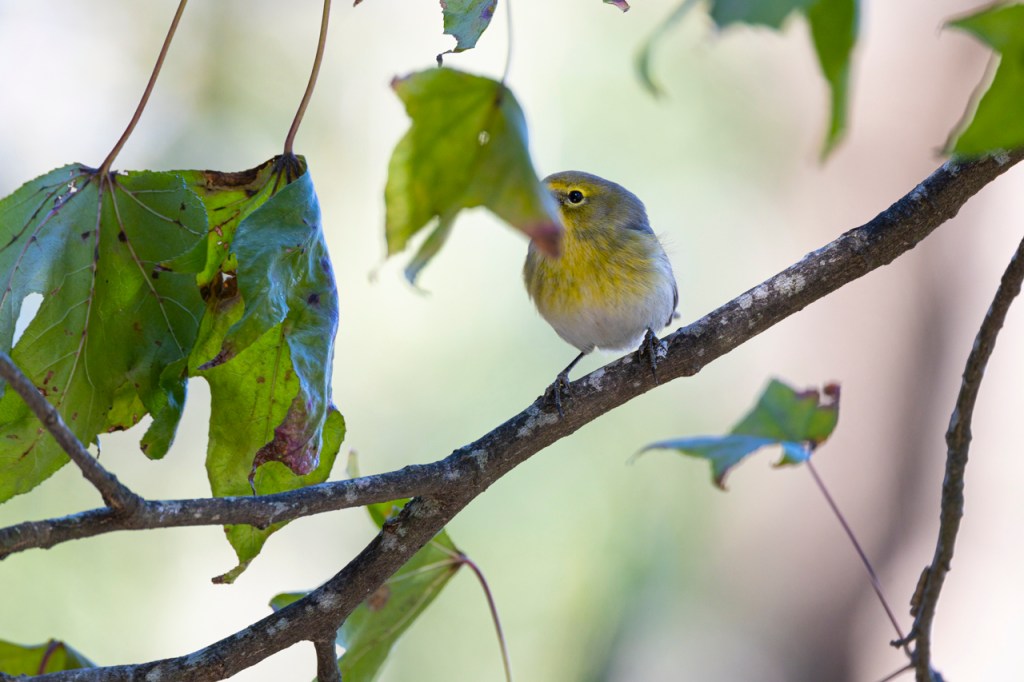
Pine Warbler photographed with the Canon R6 Mark II at ISO256000.

File Size

R6 Mark II files are 33 to 39MB in CR3. In 16-bit, these files are 4000 pixels wide by 6000 high.

R5 files are 42 to 61MB in CR3. In 16-bit, theses files are 5464 wide by 8192 high.

R3 files are 29 to 35MB in CR3. In 16-bit, these files are 4000 pixels wide by 6000 high.

So we get a smaller file than the R5 but the same size as the R3.

High ISO

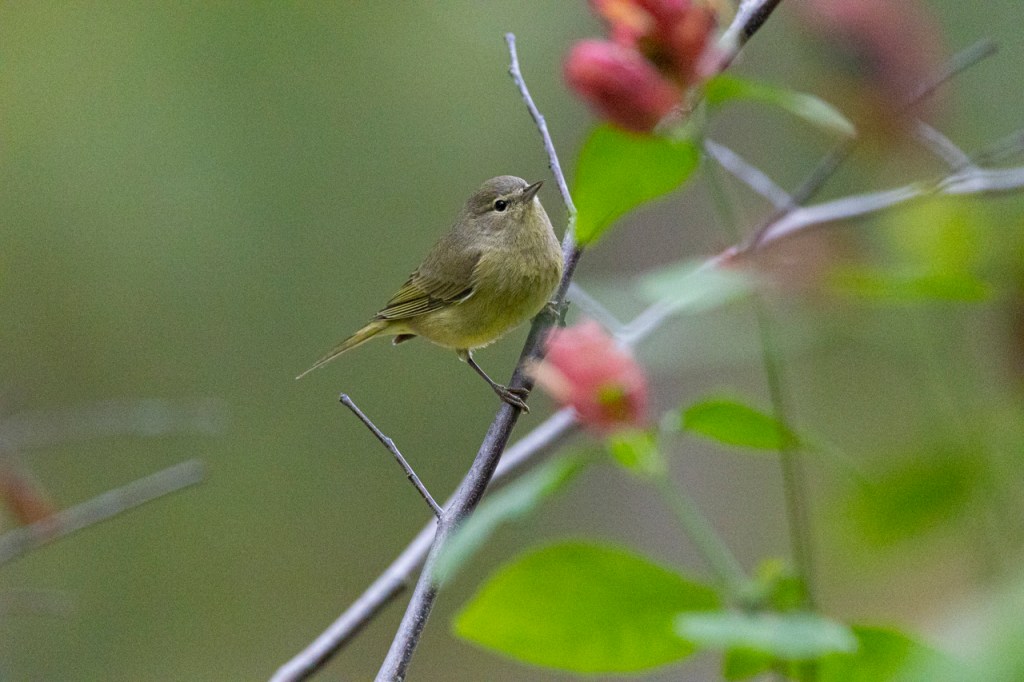
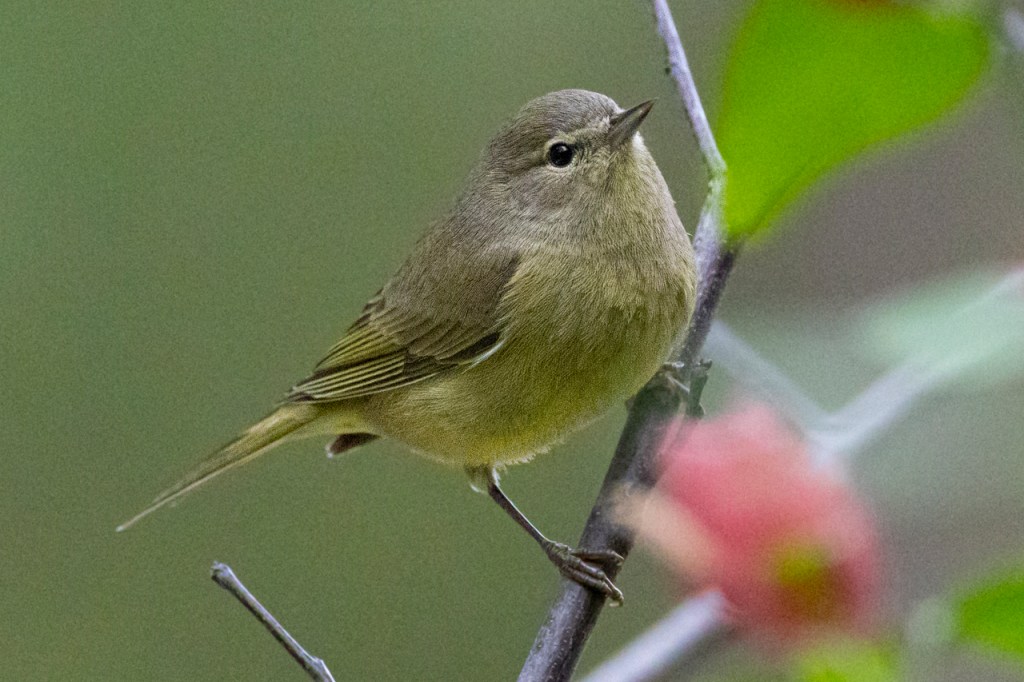
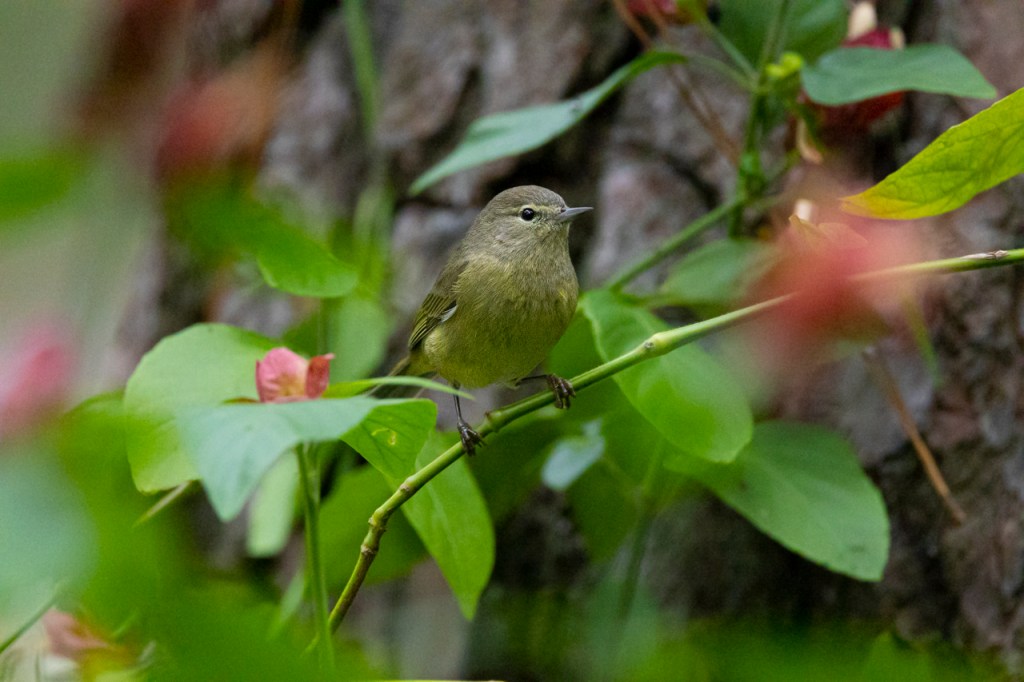
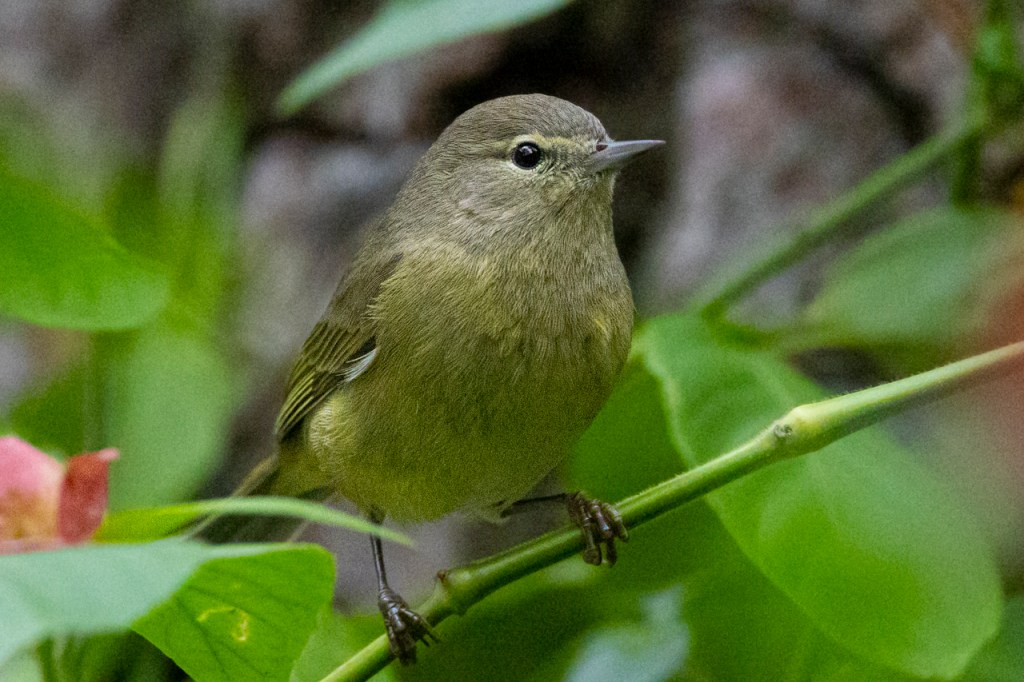
Orange-crowned warbler, enlarged to 100% and noise reduction added to background

Pine warbler photographed at 25,600ISO. Enlarged to 100%. Nice feather detail.

High ISO in low light is grainy. There’s no getting around it. The grain in a high ISO photo is no worse with a R6 MarkII than with an R5 or R3. To my eye, each camera is about the same. The files are usable to illustrate the bird while still retaining nice feather detail.

Low ISO and good light is always better, though.

Auto Focus

I’ve used the Canon R6 Mark II on three outings of an hour each. In each test, the camera locked on the bird quickly. Then it never lost focus once it got on the bird.

The auto focus stayed on the pine warbler’s eye even when the bird moved behind the leaf.

The camera found a small bird. The camera found the bird on perch.

In only one instance did the camera change auto focus to a distant background.

The auto focus was quick, stayed on the bird’s eye, and adjusted as the bird moved.

I haven’t had a chance to use the Canon R6 Mark II on flying bird, yet. Stayed tuned for that test.

Conclusion

So far, I’m impressed. The Canon R6 Mark II handles high ISO well and the auto focus is outstanding. I thought I’d find something lacking but this camera is living up to my expectations.

Thanks for reading. Let me know if you have any questions or comments.