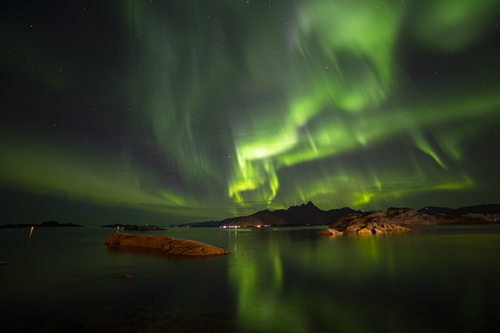
The days are getting shorter in the northern hemisphere so it’s time to start thinking about photographing Northern Lights or Aurora Borealis.
How to photograph Northern Lights :
Shutter Priority Mode: Shutter speed about 20” second, ISO Auto. This should give you a wide-open aperture with an ISO in the 800 to 1600 range.
Alternative with Manual Mode – 20” shutter, wide open aperture in the 1.4, 2.8, or 3.5 range, ISO 800 to 1600 to balance the light meter. NOTE: this will change as the lights dance across the sky so watch the light meter. Only change the ISO to balance the light meter.
Long Exposure Noise Reduction OFF.
Camera on tripod.
Shutter release attached to camera. My preference is the Vello Shutterboss II wired.
Focus 1/3 of the way into the scene. Turn off Auto Focus. Watch your focus during shooting.
Set Focus Peaking if you’d like. It works very well in the dark.
Mirrorless cameras have a focusing scale viewable on the back screen.
Usually there’s a line that you put in the middle of the infinity symbol.
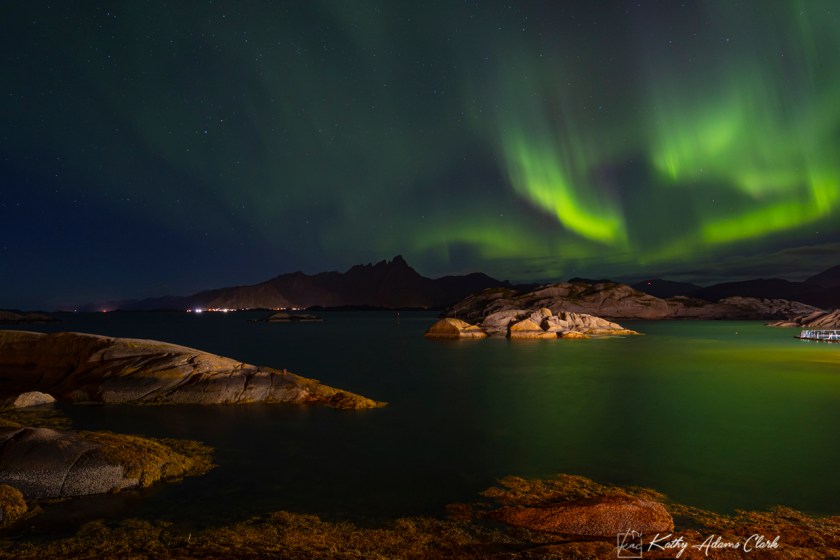
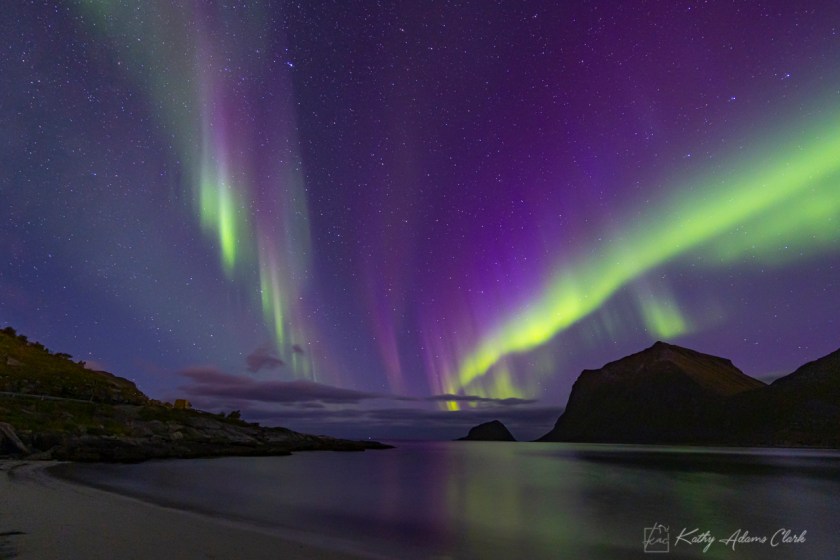
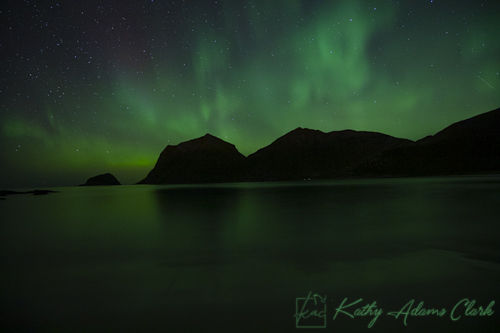
Compose so there’s an interesting foreground. Reflections in the water are nice.
Check the first photos to make sure the stars are pinpoints of light. Double-check the edges. We don’t want streaks on the stars. If the stars are not pinpoints of light, make the shutter speed faster. My lens likes 13” seconds.
When the lights are “dancing” across the sky, a faster shutter speed is needed to get defined streaks of color.
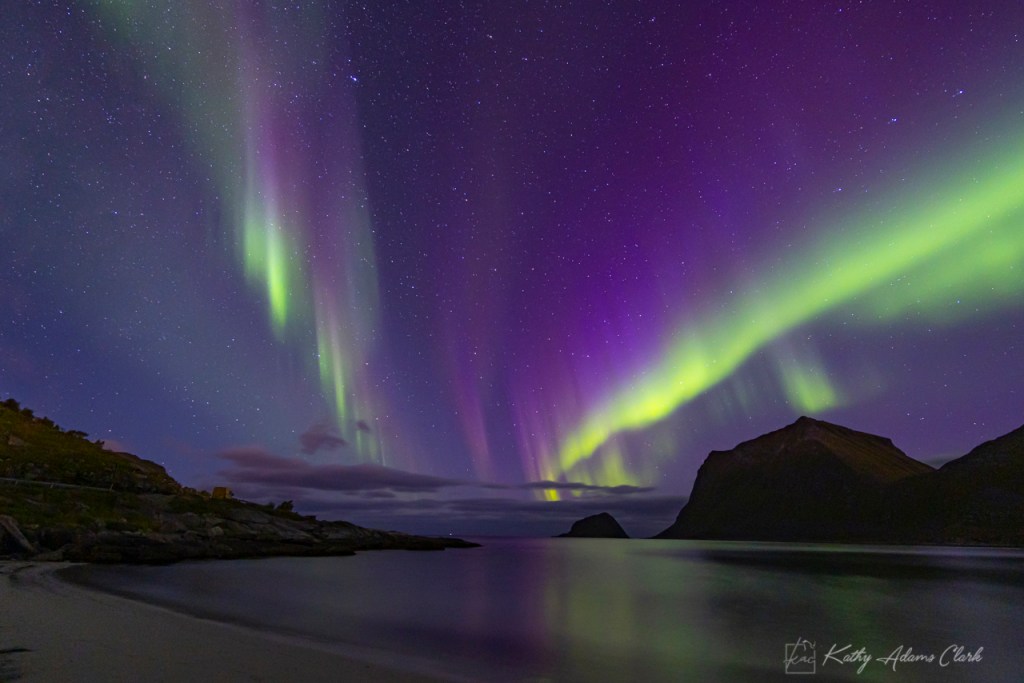
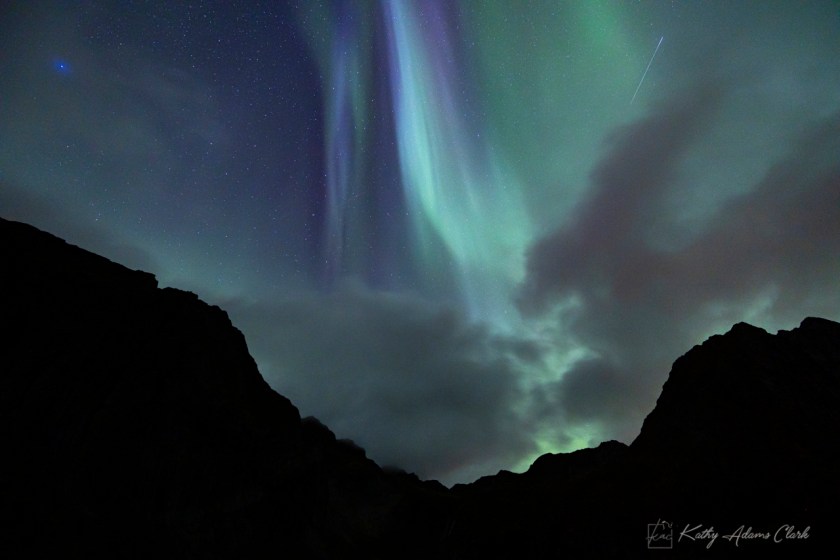
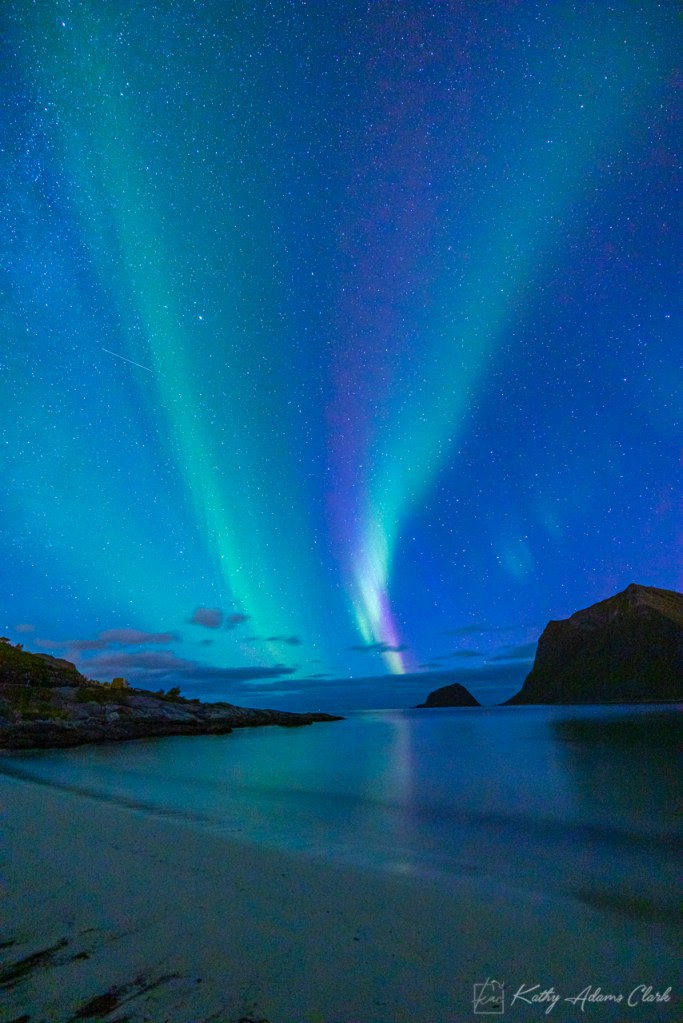
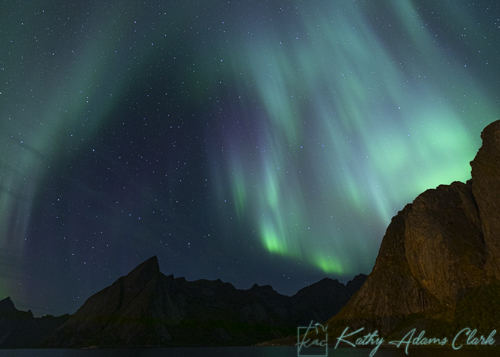
Green is the only color you’ll see with your naked eye. The reds, blues, and purples look like hazy clouds. We see those colors on the finished photo.
I had the pleasure in September of leading a photo tour to the Lofoten Islands of Norway for Strabo Photo Tour Collection.
Norway was amazing. It’s a pretty easy flight over to Oslo. Then you have to overnight in Oslo and take two flights up to Leknes. It’s above the Arctic Circle so takes some time to get there. Luckily, the Norwegians run a super-efficient air travel system and all the flights were right on time.
The Oslo airport, by the way, is quiet. There are large halls typical of any airport. People are quiet with their voices in low tones. Conveyor belts and people movers are quiet. Overhead announcements are quiet. It was so amazing.
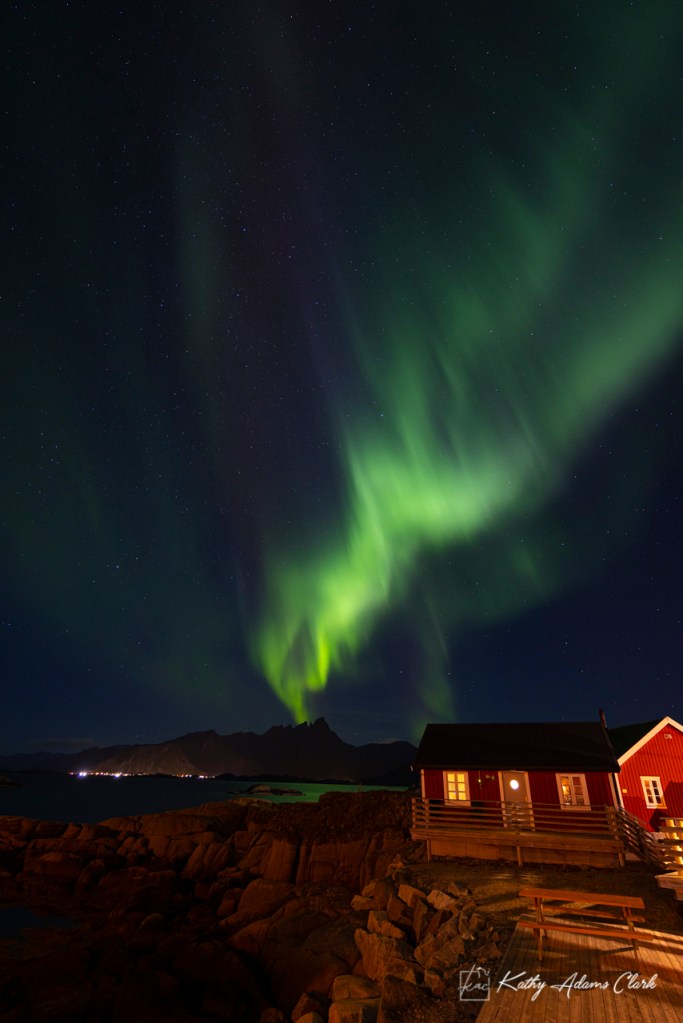
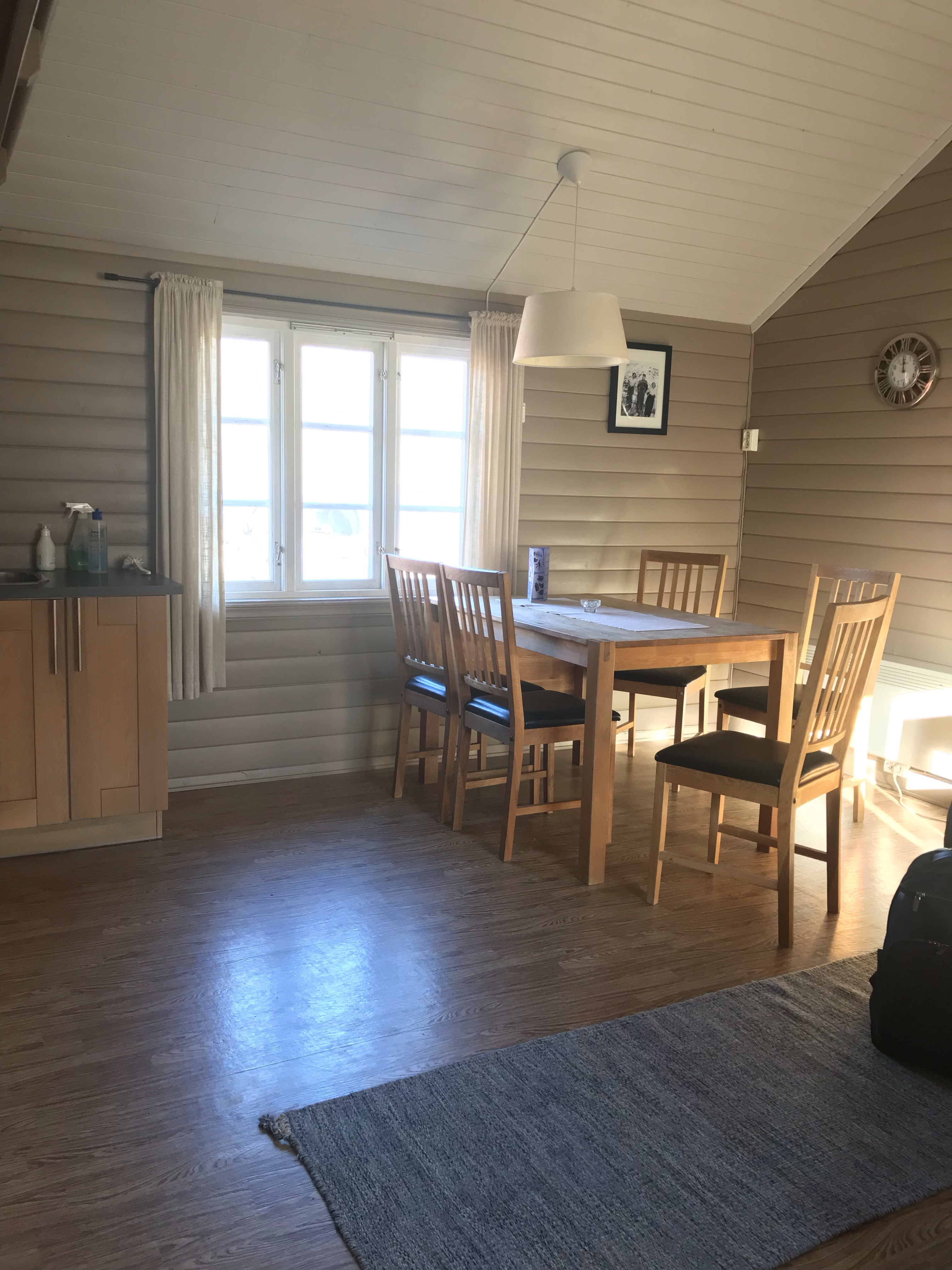
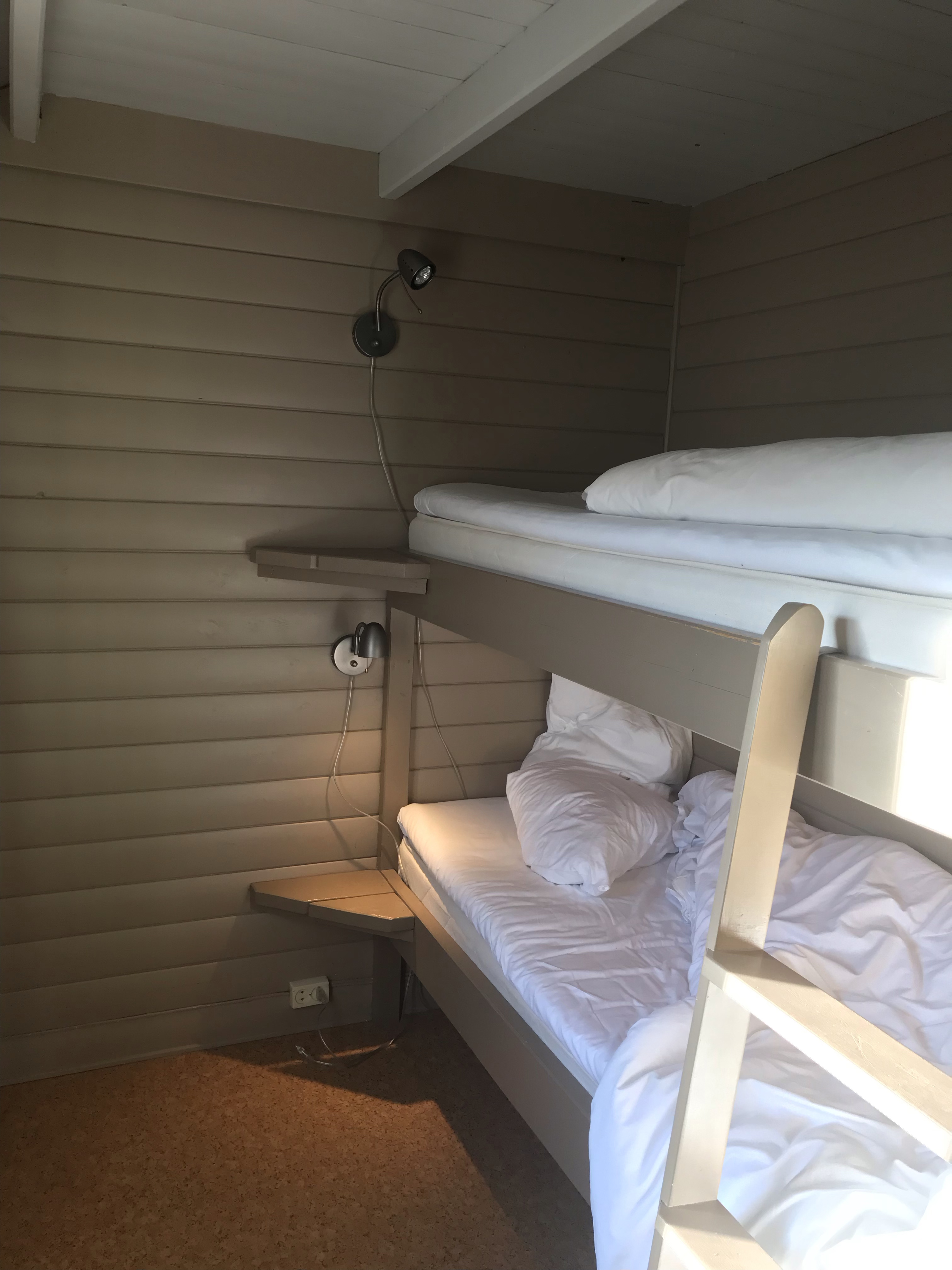
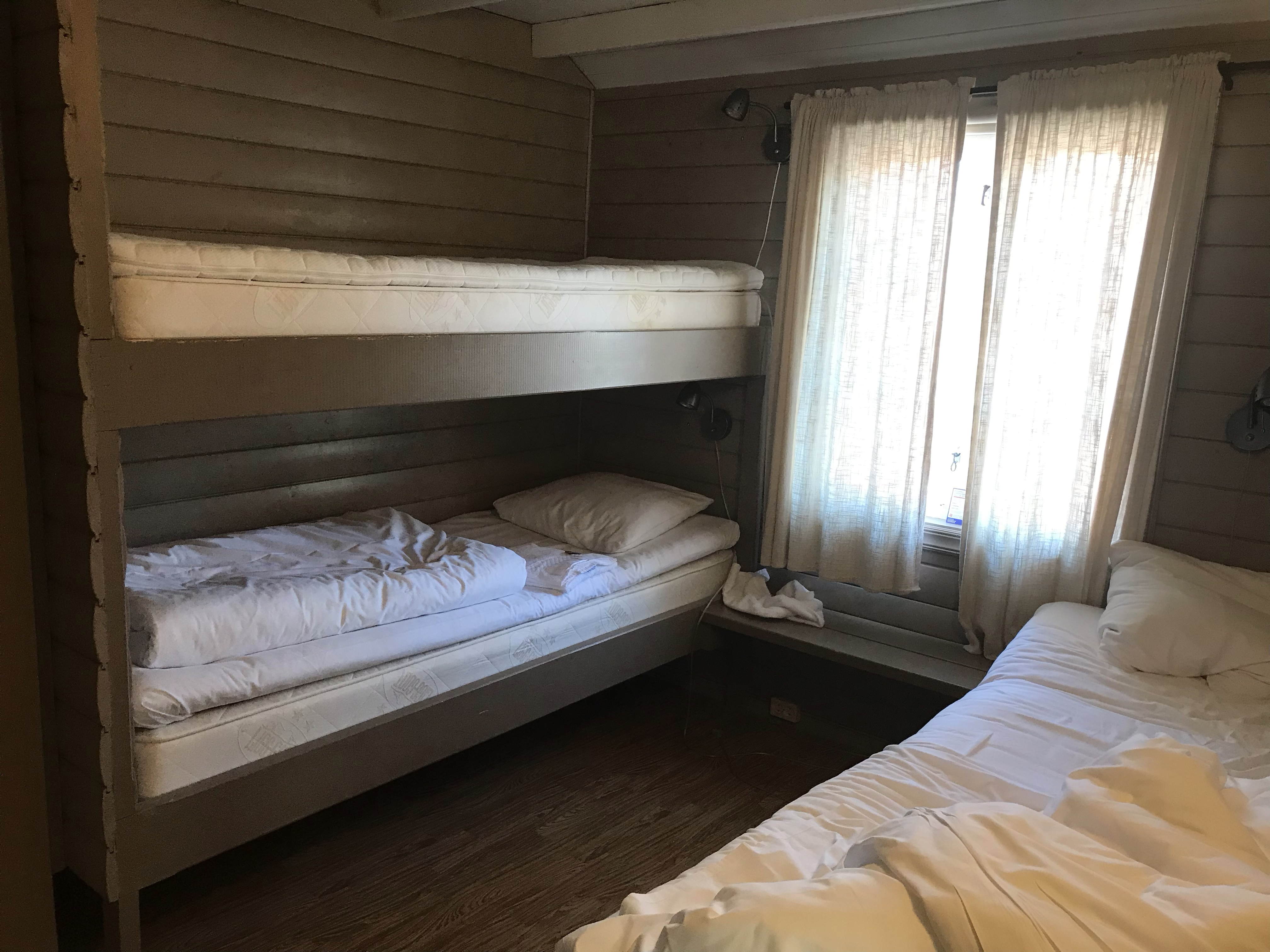
The Lofoten Islands form a peninsula that goes out into the Norwegian Sea. There’s a road system connecting the larger islands so travel is quick and efficient. Our hotels were near Hamnoy, Leknes, and Svolvaer. All the hotels were rorbuer-style or styled like a fishing cottage community. Little red houses clustered around the rocky shoreline. Made for great photos. The little fishing cottages had two bedrooms, a shared bathroom, with a living room and kitchen. Very cozy as long as you don’t mind sharing a bathroom. One hotel had two bedrooms in one house and each bedroom had a private bathroom. That was my favorite arrangement because we had private bath but still shared a living room and kitchen.
During the day we tooled around the area photographing towering mountains over crystal clear water. The little villages were usually filled with real fishing cottages with boats, nets, buoys, etc. That meant we always had something to photograph from a grand landscape to tiny details. We went to an old whaling village that’s now a UNESCO site. Lots of neat stuff from the late 1800’s and early 1900s plus museums all in a tiny village setting. I went nuts photographing the general store with all the old tins, advertisements, and cash register.
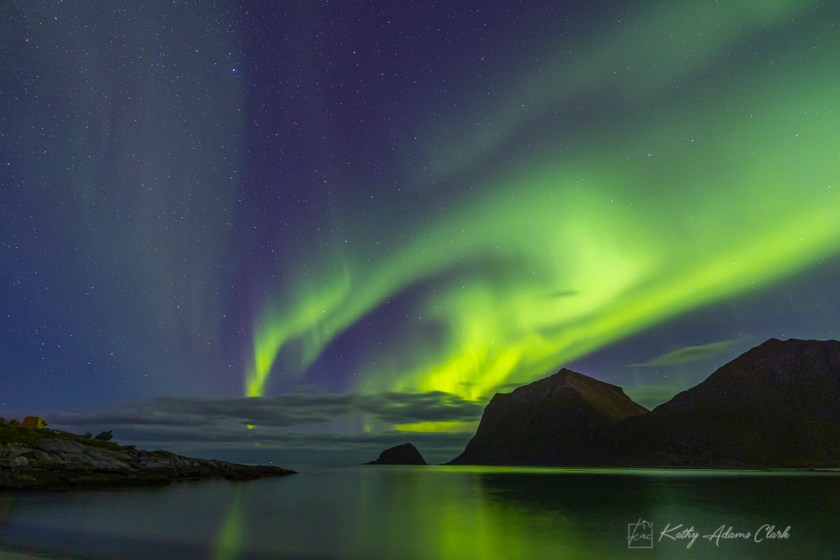
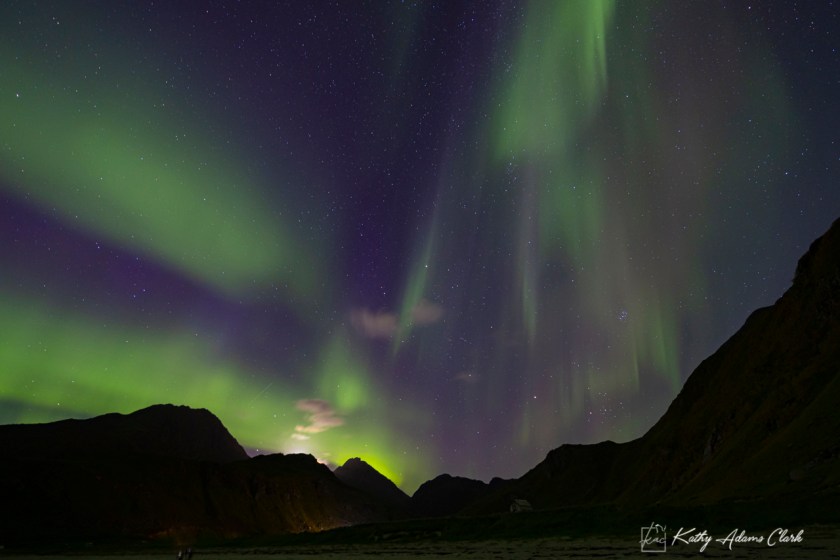
At night we shot based on the aurora activity. Our first night out was pretty good. It was especially nice since we didn’t have to leave the rorbuer to shoot. We just walked across the parking lot and stood on the rocky shoreline. Everyone got great photos of the aurora that night and worked on their skills. We had a visible aurora in the middle of the trip but activity wasn’t predicted until after 11:00pm. Several people decided to stay back at the rorbuer but the rest of us loaded in the van and headed off to a wide, sandy beach. We had great aurora activity and got to play with reflection of the lights in the ocean. Our third chance at the aurora was our best night. Predictions were for spectacular lights and they began right about twilight. I saw them on my way to dinner and had ants in my pants the whole time we were eating. After dinner we drove to a nearby beach and stayed for several hours. It’s amazing how you don’t get tired when green lights are waving across the sky. Our guides said it was one of the best nights they’ve seen. We quit shooting about 2:00am and that was because batteries were dead and cards were full.
Temperature the entire trip were in the 30-degree to 70-degree range. We had rain on our last day as we drove to the airport. I wore my down coat as an outer layer almost all the time. Longjohns as a base layer and then pants and a long-sleeved shirt as a middle layer. I only wore gloves at night when we were shooting the aurora.
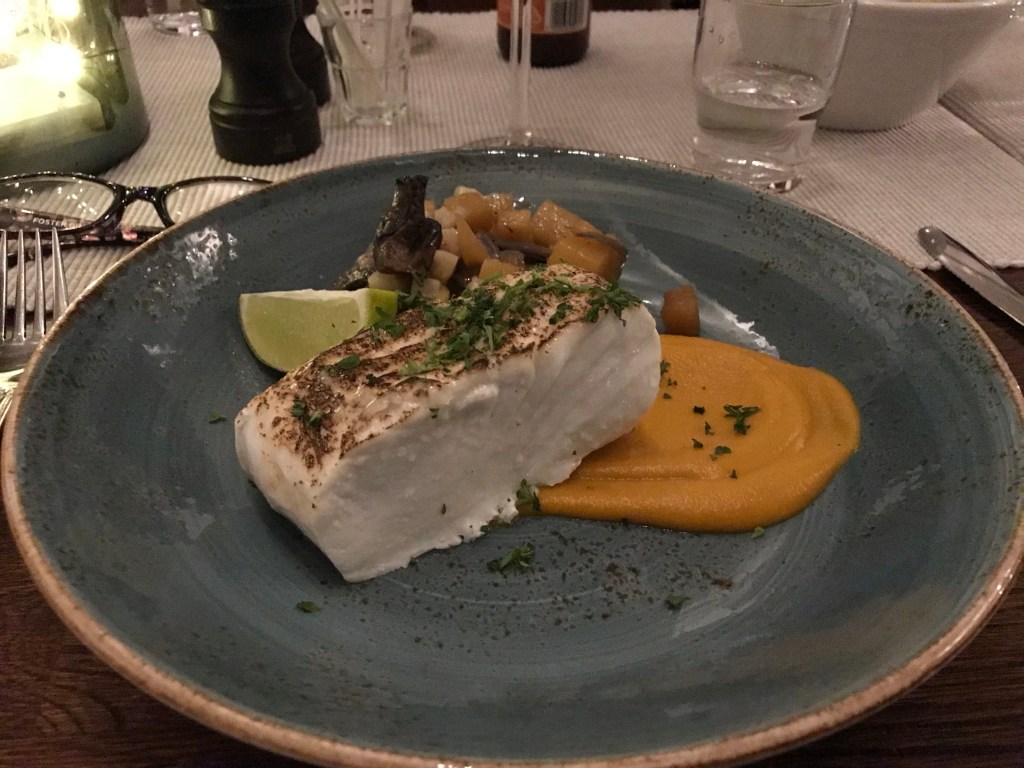
Food was amazing. I thought it would be gross things or super bland stuff. The fish wasn’t fishy tasting. The meat, pork, and lamp the others had looked really nice and tender. We had plenty of root vegetables with familiar carrots and potatoes. Breakfast was the basic European buffet of sliced meats, cheese, fruit, eggs, and breads. The breads were all hardy, whole-grain that I added fresh butter and jam to. The coffee was weak but we learned to make strong coffee in our rooms.






 Kathy Adams Clark