We were in the Pantanal of Brazil photographing jaguars, birds, and other critters in July of 2024. Our main target was jaguars since one can see more jaguars in Pantanal than any other place in the world.
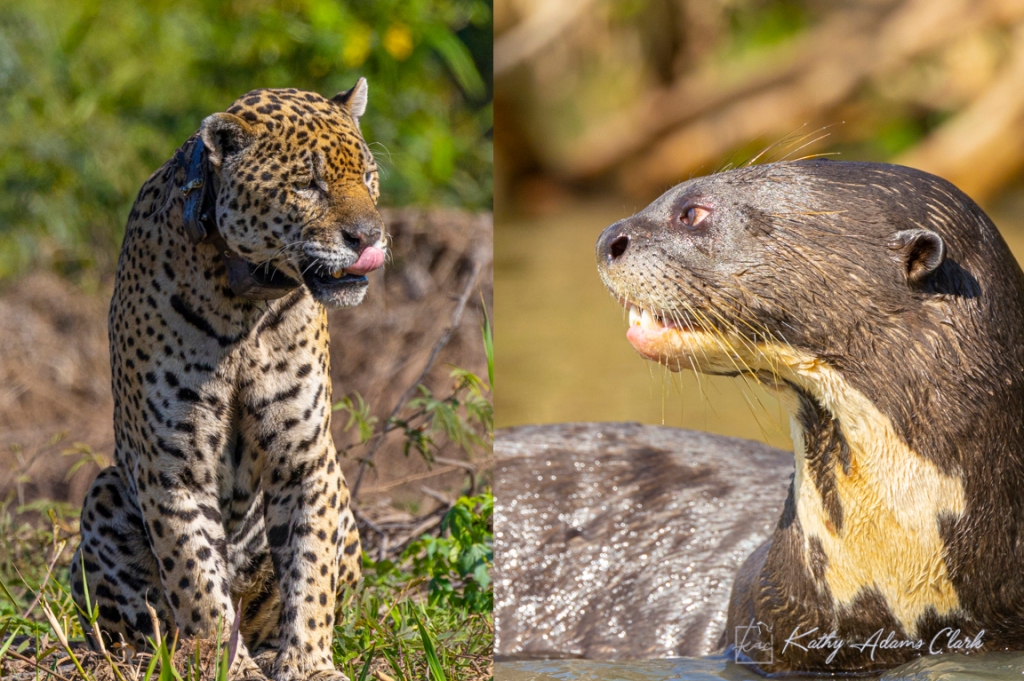
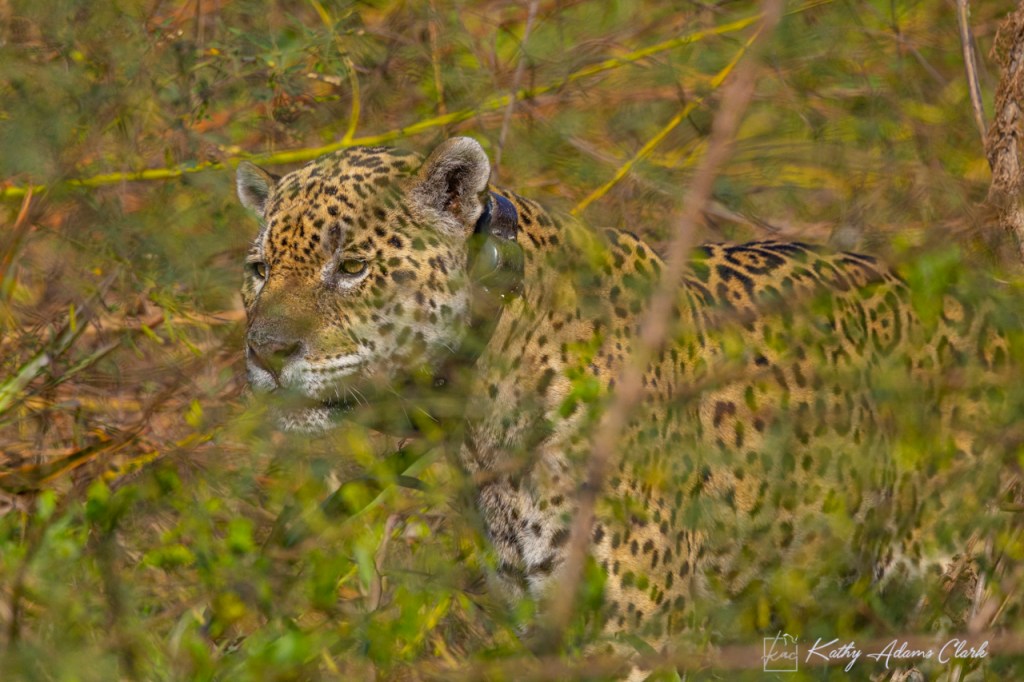
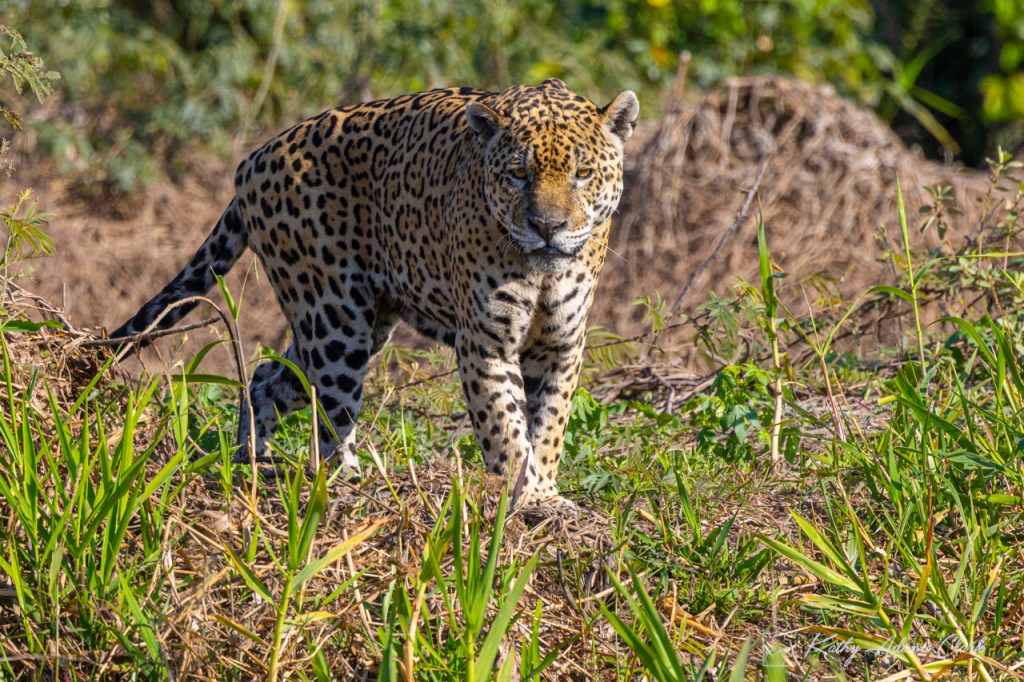
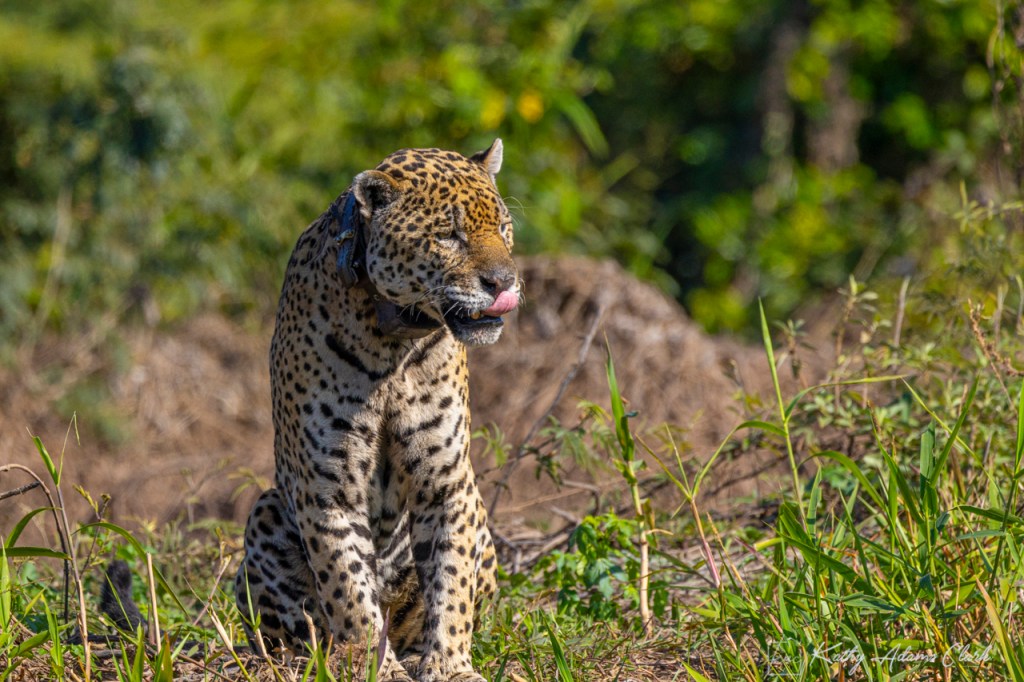
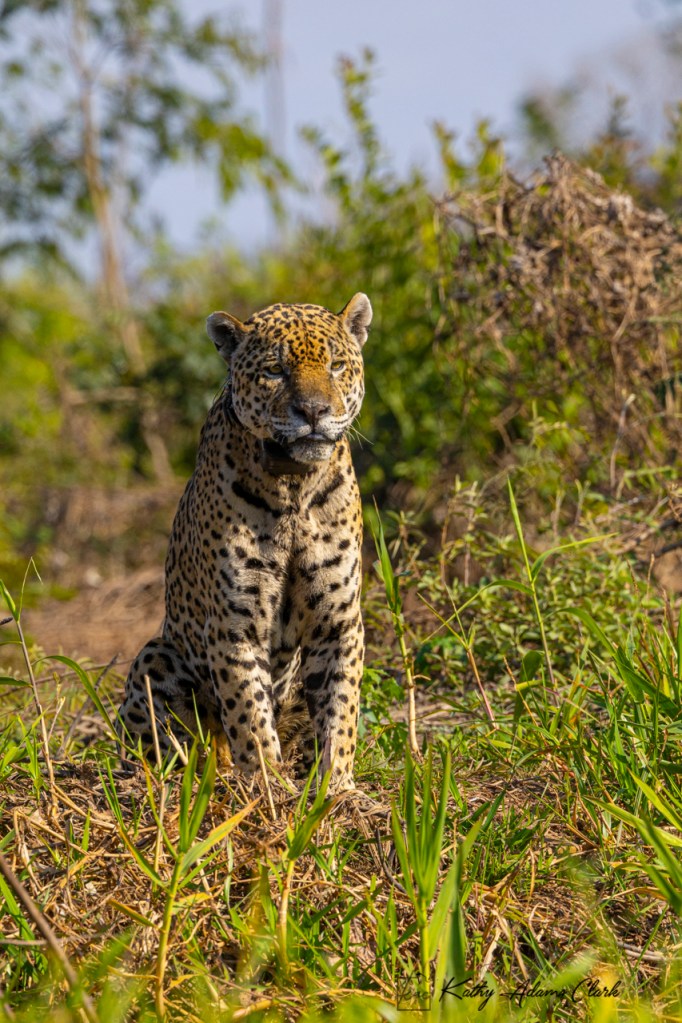
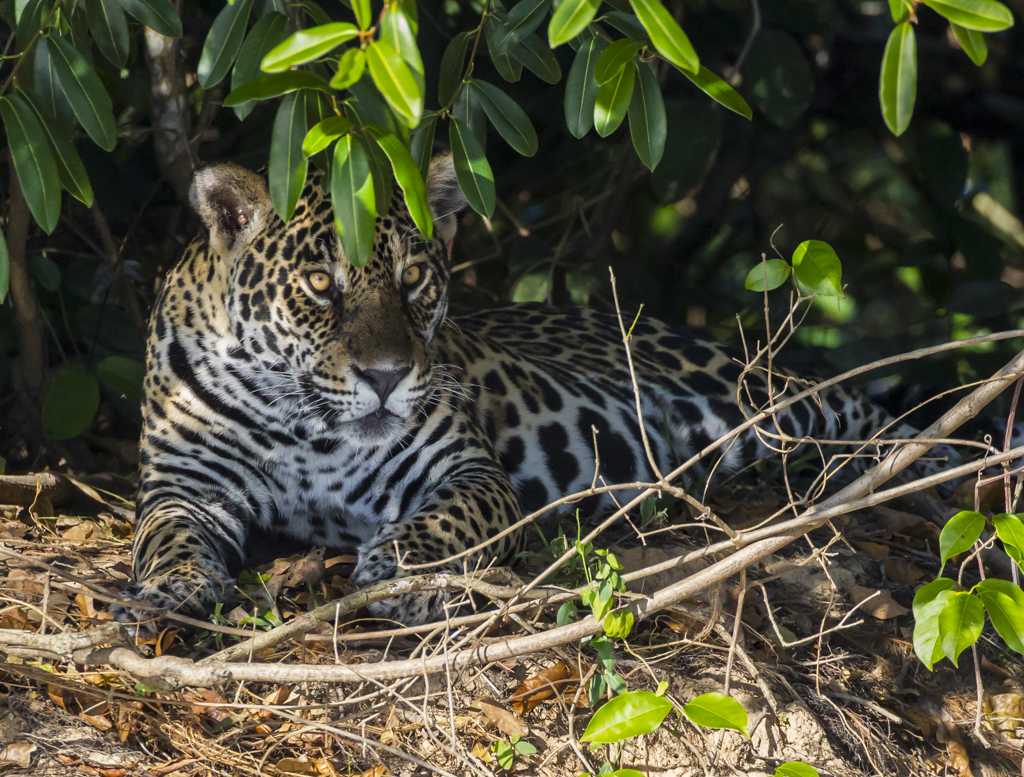
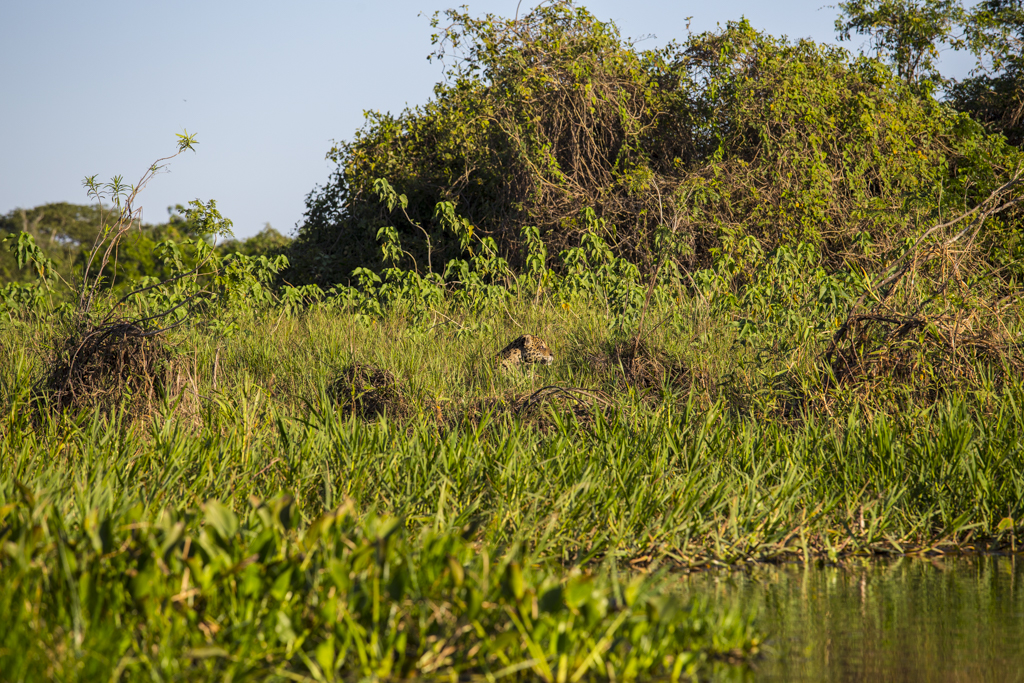
On our last day, we encountered a jaguar that locals had named Nels. He’s a handsome fellow with a huge collar. The collar is because he was rescued from wildfires in a previous year, rehabbed, and then released into the wild.
We found Nels on the Rio Cuiaba near the Three Brothers Rivers. Nels was minding his own business but was hunting for a snack of a caiman or maybe a fat, juicy capybara.
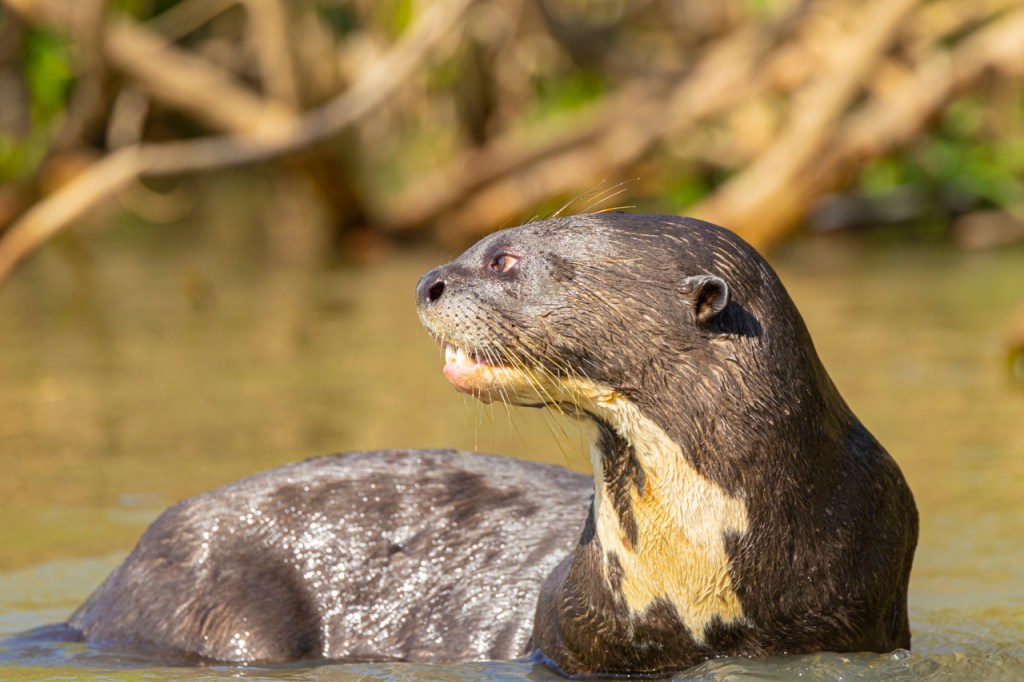
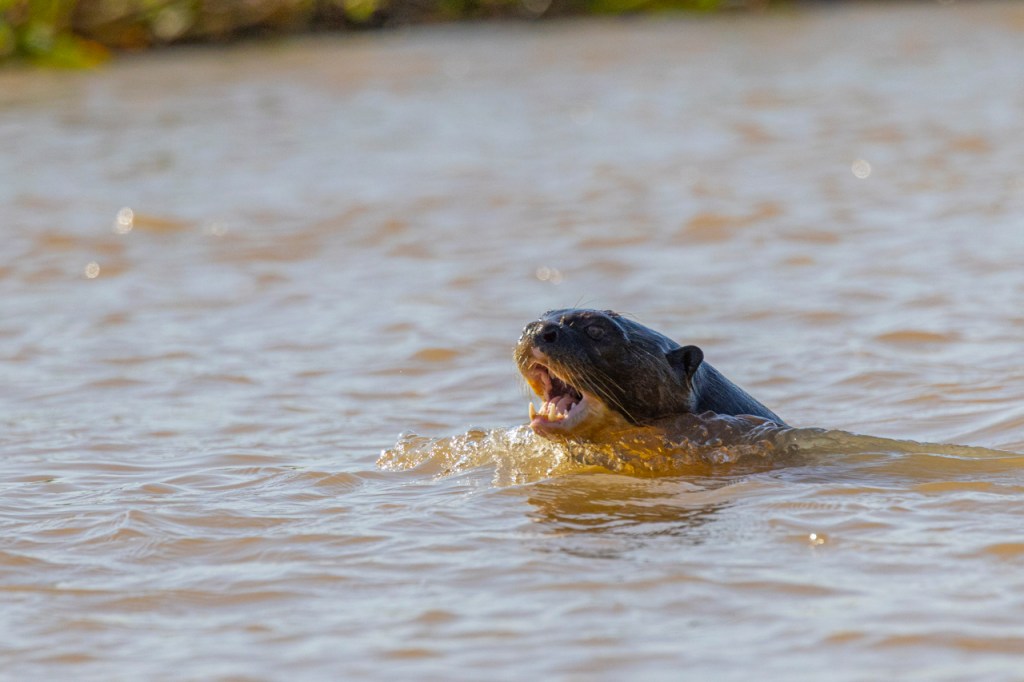
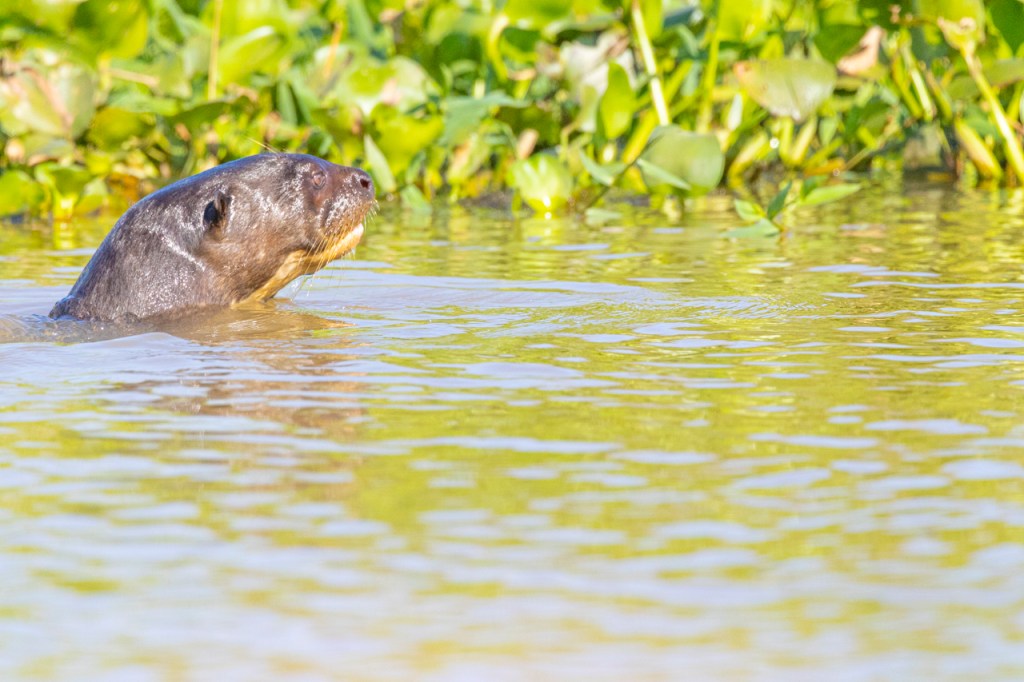
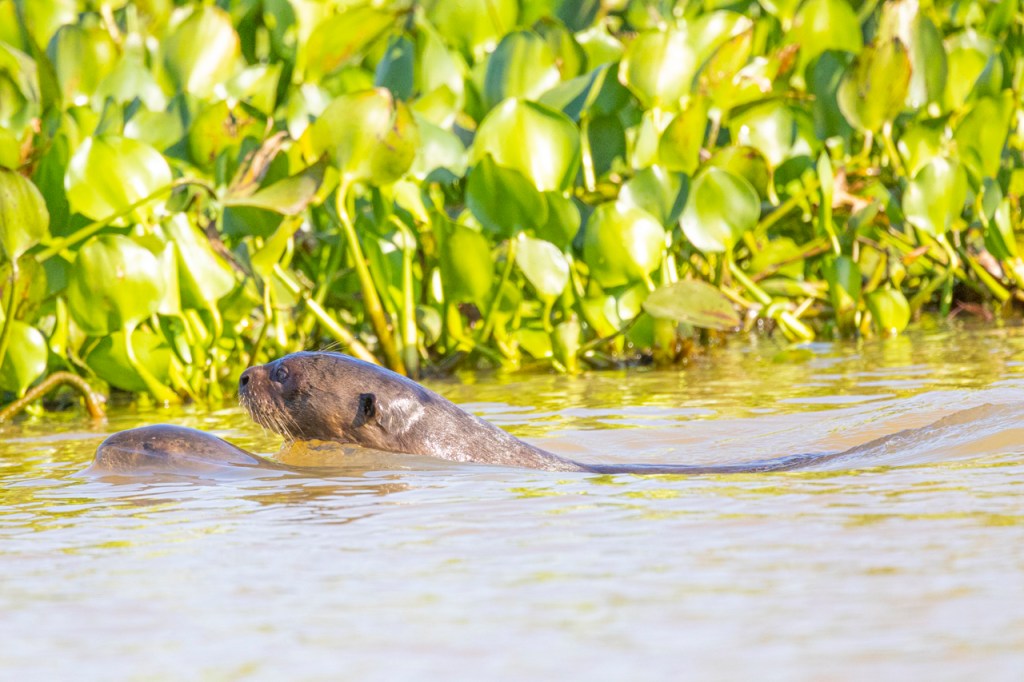
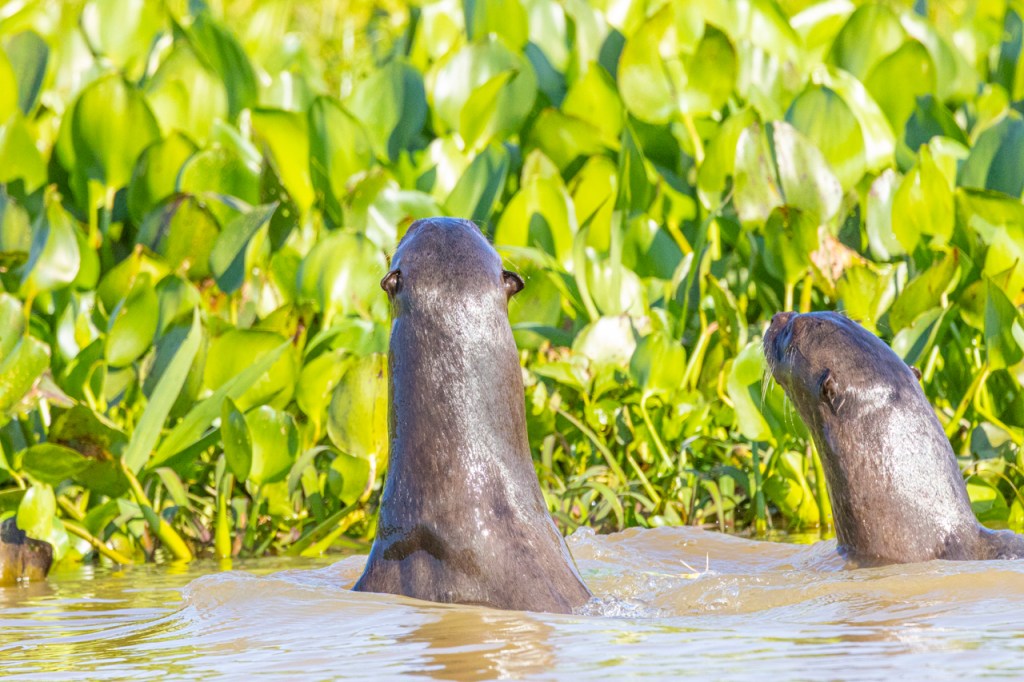
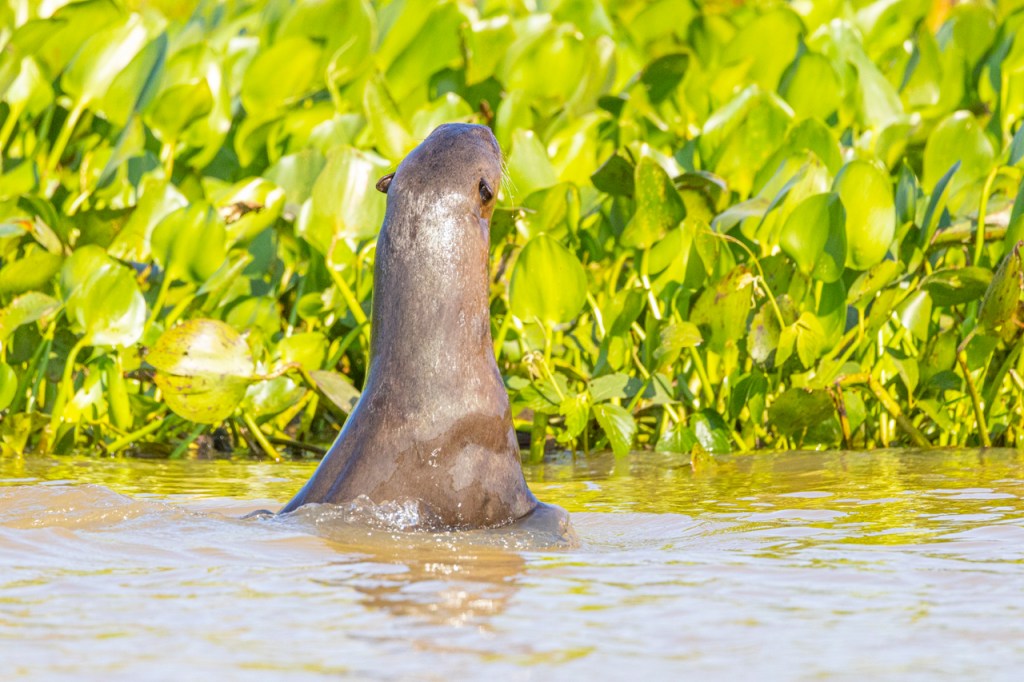
We photographed and watched Nels for maybe 20-minutes and then heard this screeching sound off to the right. My guide, Raul Guarnizo, said the sound was great otters coming to attack the jaguar. Click for Giant Otter sounds.
Jaguar versus Giant Otters sounds like a kid’s futbol match. Let’s see how this plays out.
Jaguar versus Giant Otters
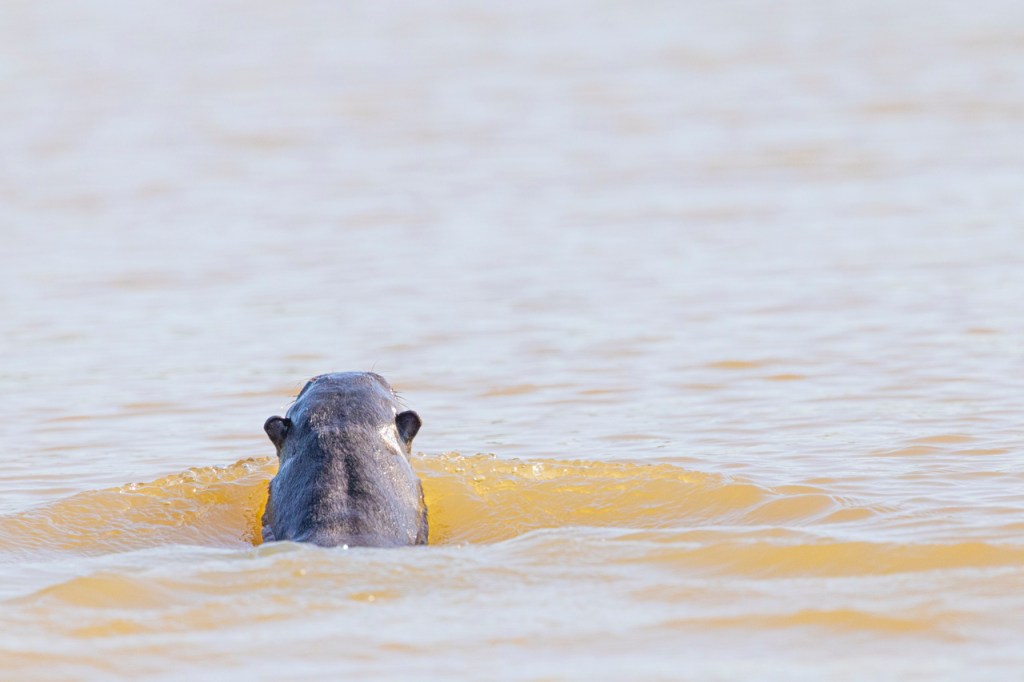
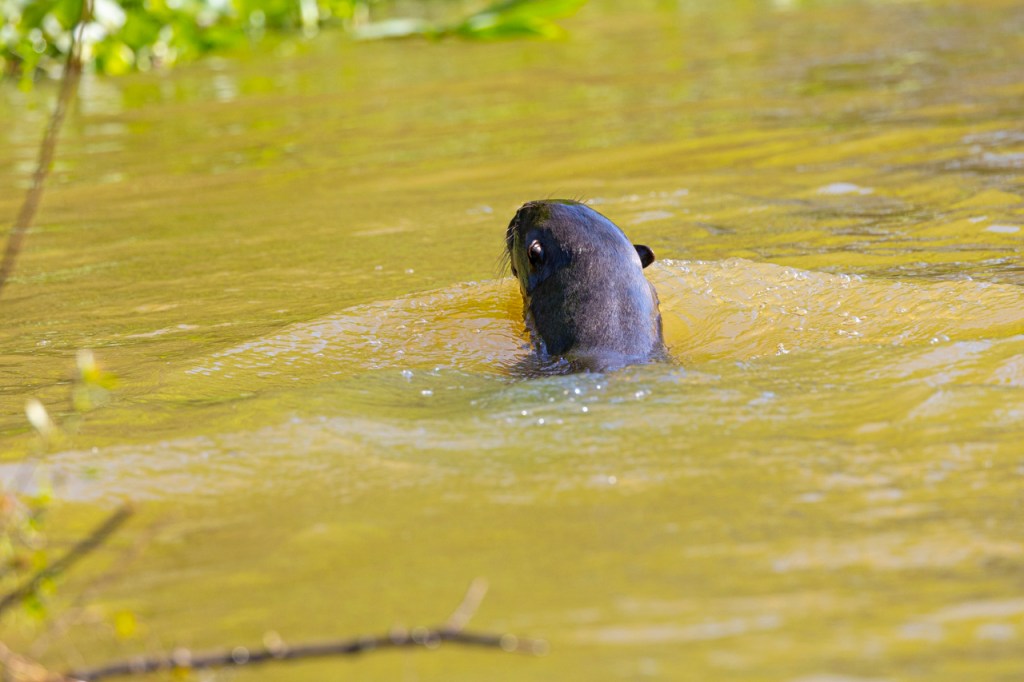
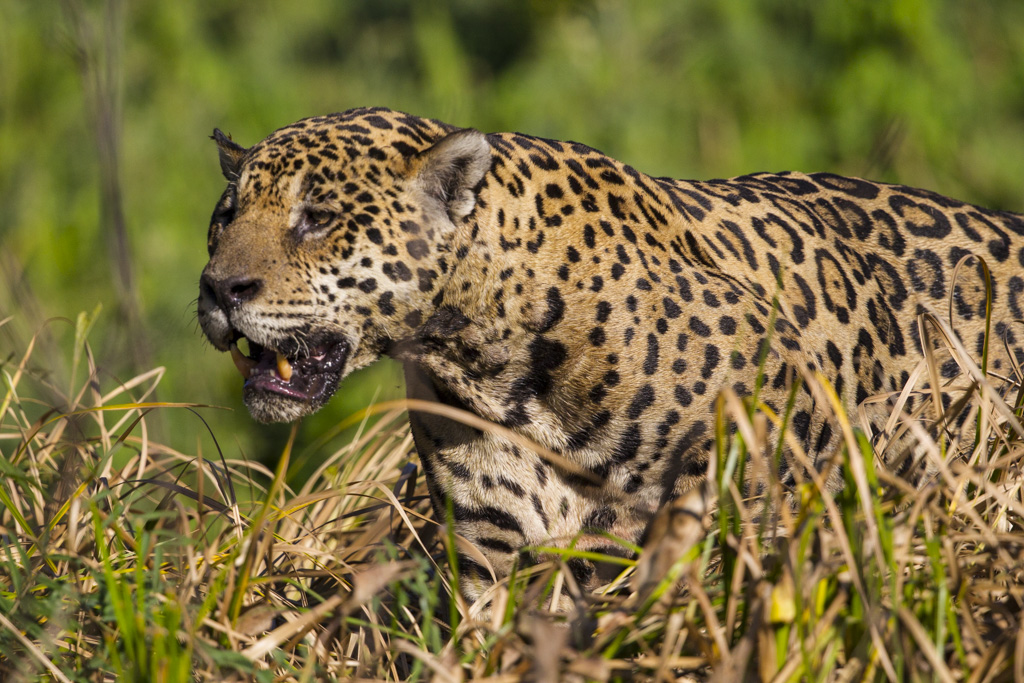
Here’s the jaguar named Nels minding his own business in the Pantanal of Brazil. Jaguar Nels comes out into the open. Giant otter sees the Jaguar and goes on the alert.The giant otter starts bellowing. “I’m coming for you Jaguar! You’re in my territory, dude! Get out!” That’s what it sounded like to me. Here’s the reality, though. Click to hear giant otter sounds.Giant otter makes the turn in the river and swims right toward the Jaguar. “I’m coming for you, Jaguar!!”Jaguar Nels comes out in the open and looks around. Giant otter comes up to the shore. “I’m coming for you, Mr. Jaguar!”Giant otter yells, “I’ve got my buddy, Jaguar. We’re coming for you!!”Giant otter and his buddy start popping up and down. “We see you, Mr. Jaguar!!” The entire time they are hollering. Click here to listen to Giant Otter chatter.Jaguar Nels appears to say “Bring it on, Mr. Otter. I’m ready for you!!”Giant otter seems to lose interest. One last, “I see you, Mr. Jaguar. Get out of here!”Giant otter heads on down the river. He has more important things to do.
So that’s it! One defiant jaguar and two feisty giant otters.
What fun trying to figure out what’s going on in the animal world.
Thanks for reading! I appreciate your support. I hope you appreciate my humor.
I’ve traveled to the Brazil’s Pantanal region several times to photograph jaguars, Toco toucans, giant anteaters, and other amazing wildlife. This part of the world reminds me to Tanzania. There’s wildlife at every turn and the photo opportunities are amazing.
Jaguar, Mick the Jaguar, older male with wounded eye, Pantanal, Brazil, South America.
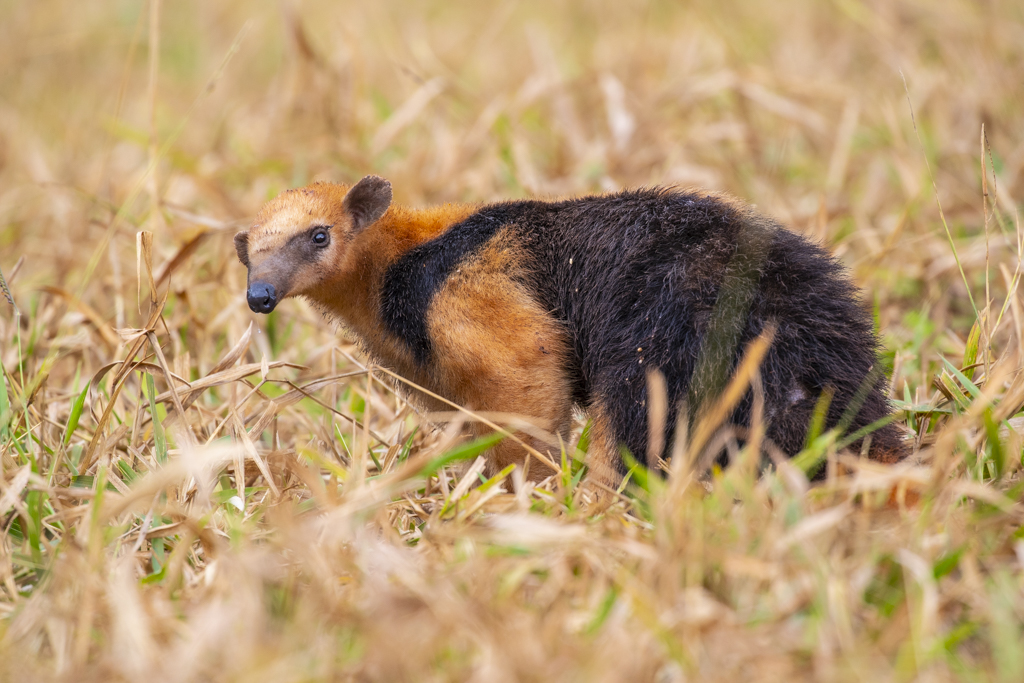
Southern Tamandua; Tamandua tetradactyla; lesser anteater; collared anteater; Mato Grosso de Sul; Southern Pantanal; Brazil
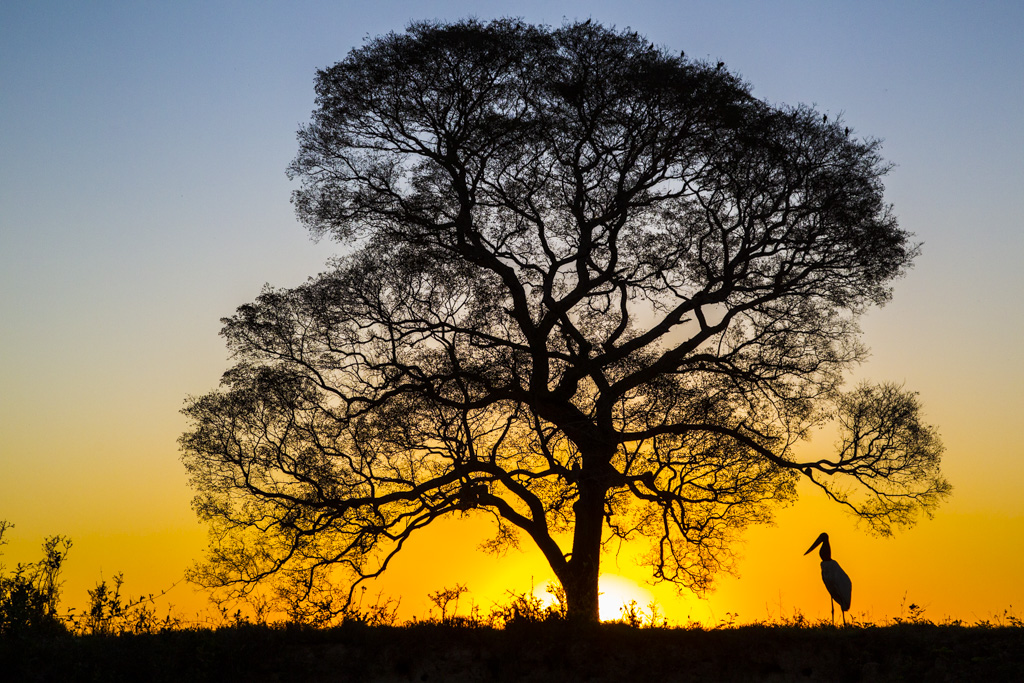
Sunset, Jabiru; Jabiru mycteria, silhouette, Pantanal, Brazil, South America
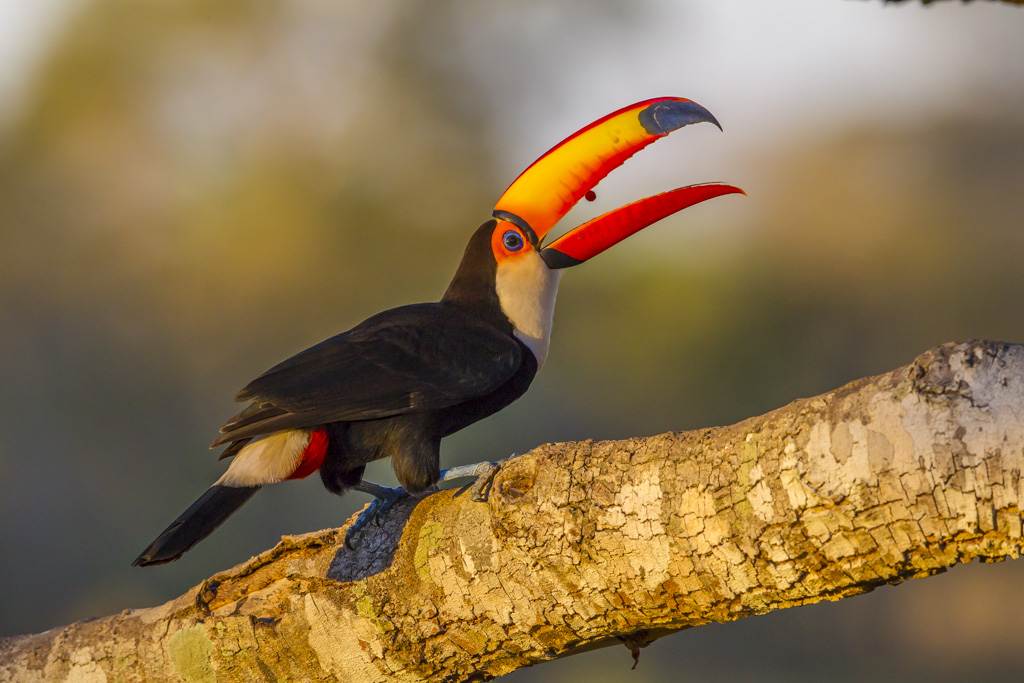
Toco Toucan, Ramphastos toco; feeding, Pantanal, Brazil, South America
During the summer of 2020 we started seeing news reports in the US about the horrible fires in the Pantanal. One especially heartbreaking photo showed a jaguar rescued from the flames in a rehab facility with bandaged paws.
Fellow photographers were sending me links to news reports. So I thought I’d send an email to Charles Munn, founder and owner of SouthWild. SouthWild is the tour company Strabo Photo Tour Collections uses to coordinate all my trips to Pantanal.
Here’s the update Charles Munn sent about the Pantanal:
“The pantanal is half the size of California. It is and always has been a fire-adapted ecosystem, designed to have periodic dry season fires, originally set by lightning prior to humans arriving 12,000 years ago, and then set every year or two or five by humans. The plants and animals evolved with periodic, widespread fires, for perhaps 100,000 years. The Pantanal had a longer, drier dry season this year than any time in the last 47 years. The extra dry year and the fires set by some ranchers here and there have caused about 25% of the Pantanal to burn. By early October, the fires were done and the first rains have started, thankfully. “A report from 3 weeks ago from two naturalist guides at different times in different boats ..(the guides who have guided for SouthWild) said that they racked up 18 good Jaguar sightings in a week. That is a high or extra high number of sightings. Yet another colleague had 11 Jaguar sightings in 2 days. All of these Jaguar results involved NO assistance from radio calls from other boats, because the pandemic has reduced boats in Jaguarland to the point where there is no radio system this season. There was a lot of fire in the heart of Jaguarland in August and September, but it is done now, and all of these Jaguar reports have come from AFTER the fires were over. None of our lodges in the Pantanal has had its birding trails or lodges affected by the fires. There were some fires near SWP lodge, but the fire was kept out of the forests that we use for birding. As tragic as the fires have been, they now are done, and it would appear that things will look pretty normal normal next year, that is assuming that rains that have started in Oct will intensify in Nov and continue for the normal rainy months of Dec, Jan, Feb, March.“
Charles Munn
“One more detail I should make clear: Most of Pantanal is …seasonally flooded (and then seasonally dried out) grasses.. not forest for decades, perhaps millennia, the Three Brothers River in the heart of Jaguarland has a thin ribbon of forest along 80% of the riverbank, and just grasses along the remaining 20%. where there is forest along the riverbank, it averages only 20 meters wide….almost nothing….. and in many places it is only 10 meters wide and then all the rest of the habitat behind this narrow gallery forest…for km and km…. is …grass….. Therefore, the fires were worse this year than in decades, but the Pantanal is designed to survive and bounce back from fire.“
Charles Munn
I hope Charles’s information adds to what you’ve read or seen in the US news. My hope is to one day return to the Pantanal and enjoy the fabulous photography and people in that area of the world.
At sunset in July we were cruising down the Rio Piquiri in the Pantanal of Brazil. Junior, the boat driver, killed the motor and pointed to a pair of jaguars sitting on the riverbank.
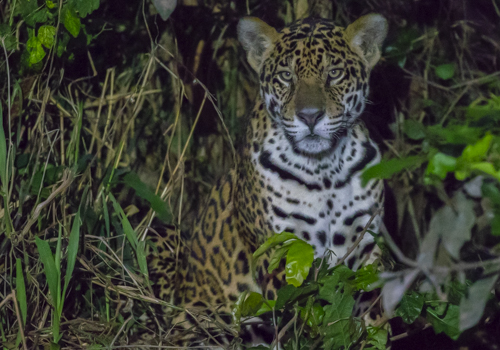
Jaguar photographed at 51,200 ISO with the aid of a flashlight. Canon 1Dx, f/8, 1/160th shutter speed.
There were 10 people in the boat and all were squirming to get their cameras and find the jaguars. The boat was bobbing in the water. There was a lot of movement to try to photograph something after sunset.
I pushed the ISO button on my camera and rolled the dial all the way to 51,200. I could only get a 50th of a second shutter speed. No way the photos were going to work with a shutter speed like that!
Raul, our guide, had been bragging about this high-powered flashlight that he’d received as a gift from a previous guest. His little flashlight was nearly a spotlight.
“Raul, point that flashlight at the jaguars!” I yelled. It was magic! The light was enough light to give us shutter speeds in the 1/160th or 1/200th of a second range.
A modern high-power flashlight and modern cameras with high ISO gave us the ability to photograph a jaguar in the dark. I love it!

 Kathy Adams Clark