Which Lenses for Canon R10?

I took your Mastering the Manual class in June, and you mentioned that you would be open to making lens suggestions via email. I’ve been researching, and I’m still at a loss. I would appreciate any suggestions you have. 

I’m a complete beginner (the manual mode class was terrific!).

I have a Canon R-10 with two lenses: 18-45mm (standard kit lens) and 55-210mm f5-7.1

Two primary areas where I’d like to use my Canon (rather than my iPhone camera).

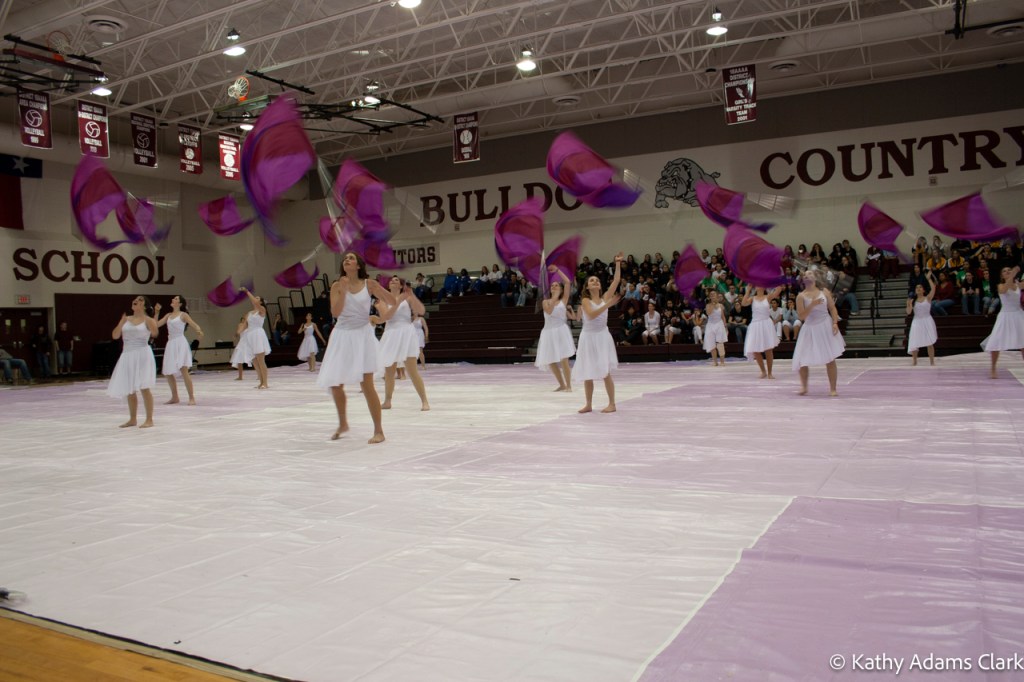
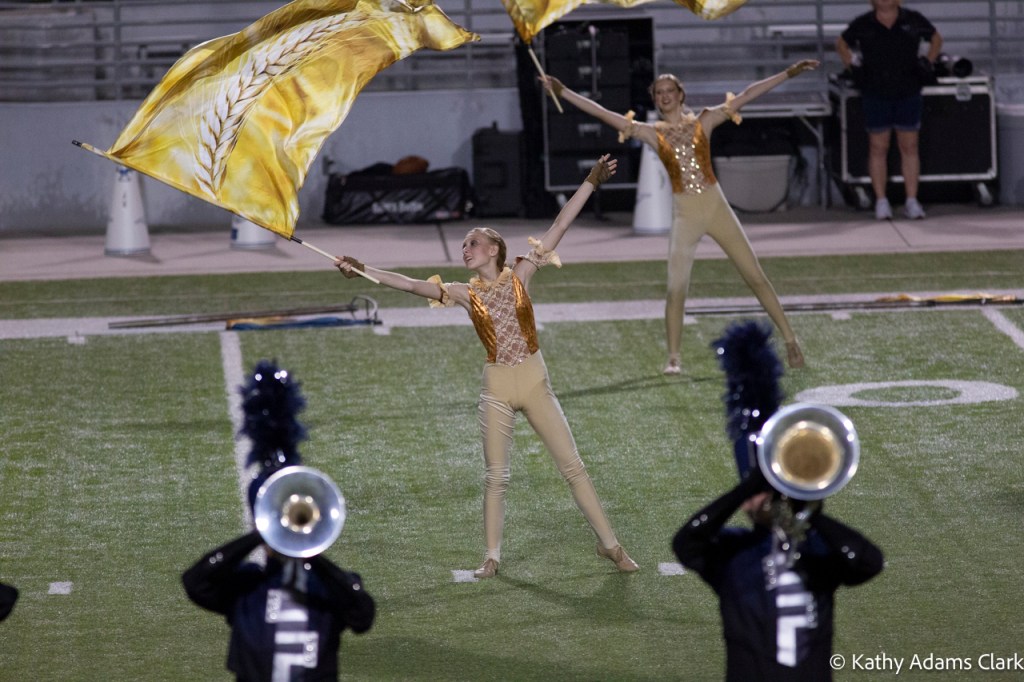
– High School Marching Band – shooting often in evenings or in gymnasiums/stadiums in low light, quick movement. I’d love to focus on the kids (with bleachers and backgrounds blurred out) and catch movement of the Band and Guard. I’m also doing a lot of candids (up-close of kids’ faces) in the stands for social media content. 

– Work – I work for a nonprofit in communications. We just use our iPhones for most things, but I’d love to start adding better photos with my camera. A lot of group shots of people (mostly indoors, occasional outdoors). We also do a couple of big events in the evening indoors with low light.

Other band photographers are telling me I need the Canon RF 70-200mm f2.8. I’m seeing a range of pricing from $2800 to $4,000 for that kind of lens. At my level of photography and my camera, I’m not ready to make that kind of financial investment. 

I know from the manual mode class I need a lens with a larger f-stop. Any f2.8 lens that are more reasonably priced that would work for a beginner in the two scenarios above? Ideally, I’d like to spend less than $1,500. 

I appreciate any guidance. I’m not sure I’m ready for the Lens class you teach at Precision, but if it’s offered in the future, I hope to register. — Erica

My Answer: Let’s get real on your lens choice.  

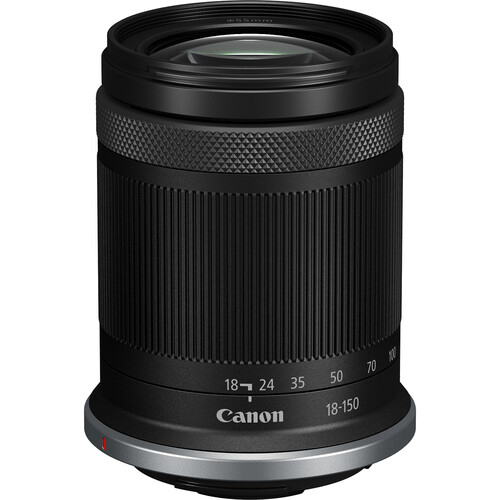
Canon is putting out a series of moderately priced lenses for the R10 and R7 cameras.

The RF100-400mm f/5.6-8 IS is only $700.  That would be great for your band photos.

The RF 24-105mm f4-7.1 is reasonable, too.  Only $429.

These two lenses would put you in great standing with your camera.  I’ve used both.  They are not your top of the line Canon lenses but they are VERY good.  

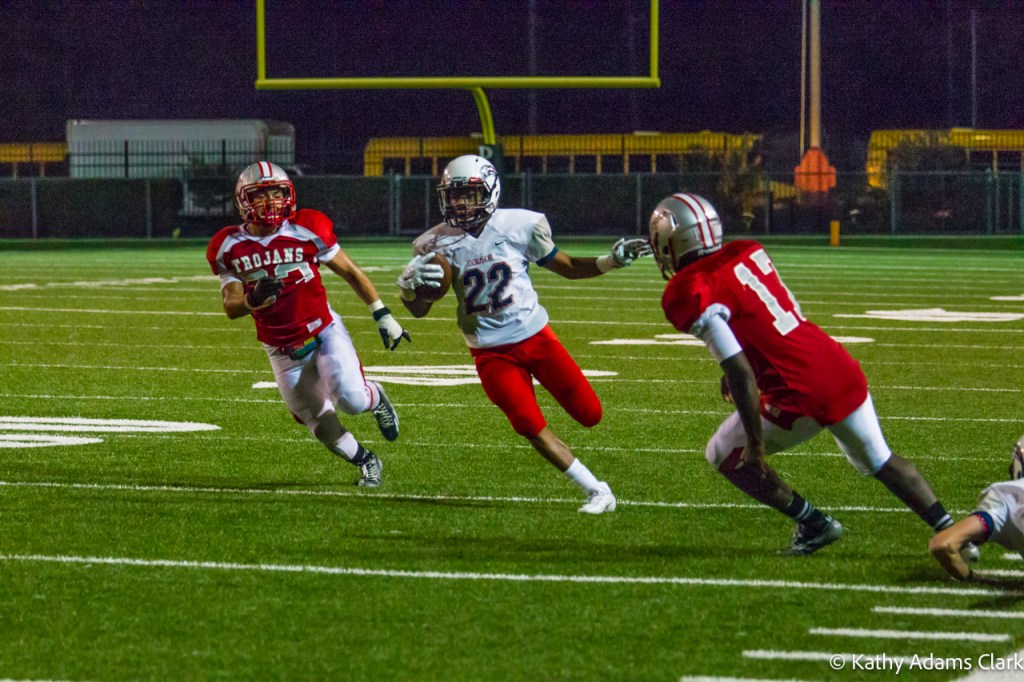
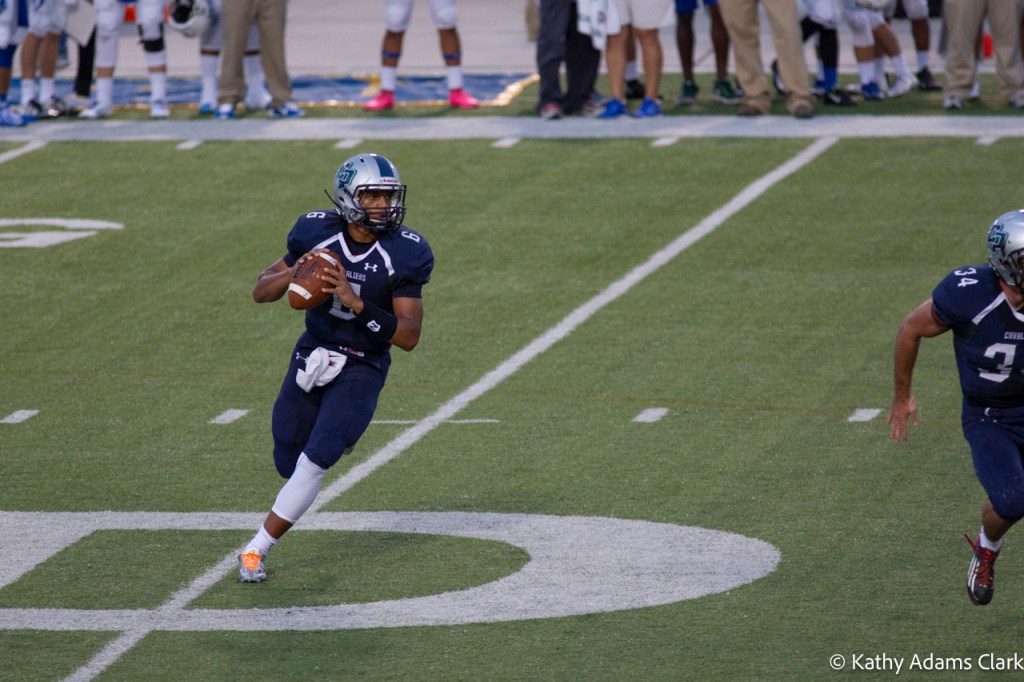
Photographed with an fstop of 5.6

Your R10 has nice high ISO so you don’t need the 2.8 lenses.  Those were needed when we didn’t have exceptional high ISO or software to process high ISO.

The reality, too, is you’re never going to blur the background from the bleachers.  You need to be down on the field to do that.  You can blur the background, though, for your candids of the students in the bleachers during the game.  Either lens will do a great job.

In all the photos below, I used a fstop of 5.6.

Canon EOS R7 — Autofocus

I was eager to try the autofocus on the R7 with a variety of subjects.

I used the same settings on all the photos: Servo, AF[1], Subject Tracking, Subject to Detect is Animals, Eye detection is Enabled. Servo AF is on Case 2 which is “Continue to track subjects, ignoring possible obstacles.”

For those of you new to AF[1], it is a wide zone where the camera looks for a subject based on face and/or motion. Once the camera has found a subject, the focus point lights up with blue dots. Then we can move the camera around to compose the shot while the camera stays on the subject.

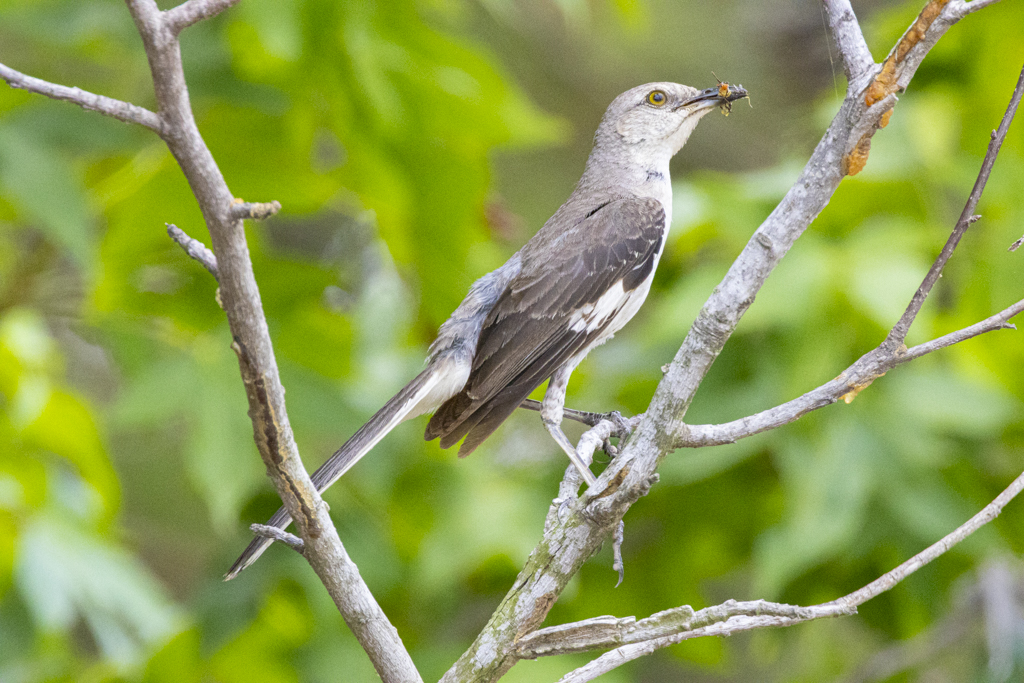
Northern mockingbird. The R7 found the bird without hesitation and locked on to the eye.
Great-tailed grackle. I didn’t push the focus button until the bird’s face came into view. Once the eye was clear of the pine needles, then the R7 found the eye and locked on.
Gray Hairstreak. Tiny butterfly. The Flexible Zone AF 1 (AF[1]) was not the best choice for this small butterfly. The R7 found the subject because it was moving. The focus point bounced between the butterfly’s real eye and the fake eye at the base of the tails. I should have changed to 1-point AF and put that point on the butterfly’s eye. Not bad, though.
Gray Hairstreak. Same as above with a slight change in my angle to get a green background.
Clouded Skipper. The R7 found the butterfly’s eye without a problem. It locked on and held focus.
The same clouded skipper perched on a purple passionflower. The R7 stayed on the butterfly but I confused the camera. The R7 tried to focus on the structure on the passionflower. This camera is smart but the photographer has to remember to give clear directions. My error in not changing to the 1-point AF area. Then the camera would have known exactly where to focus.
Honeybee on bee bush. The AF[1] focus area stayed with bee without any effort.

I found the Autofocus on the R7 quick and precise. The R7 is not a mind reader (though it does amazing things) so we have to remember to change AF Areas based on the subject.

The only time the R7 failed to acquire focus was on a tiny subject at the top of a stick. I moved the camera down the stick until it acquired focus. Then I moved the camera back up to the subject and the R7 held. This is not unusual with AF in mirrorless but not as bad as I’ve seen in earlier cameras.

All photos in this post were taken with the 100-500mm RF lens, 1.4x extender. All the insects were at the edge of the minimum focusing distance of 3.94 ft.

All photos are uncropped.

Questions? Post below. I’d love to hear your comments and feedback. Thanks for reading.

Canon R7 and R10 Announced

Canon has finally announced their less expensive line of R mirrorless cameras. Both the R7 and the R10 look like great cameras to me. Each is smaller, lighter and less expensive than the R3, R5 or R6. Yet, each is loaded with a ton of features that will make any photographer happy.

Both come with a cropped sensor and their own line of lenses.

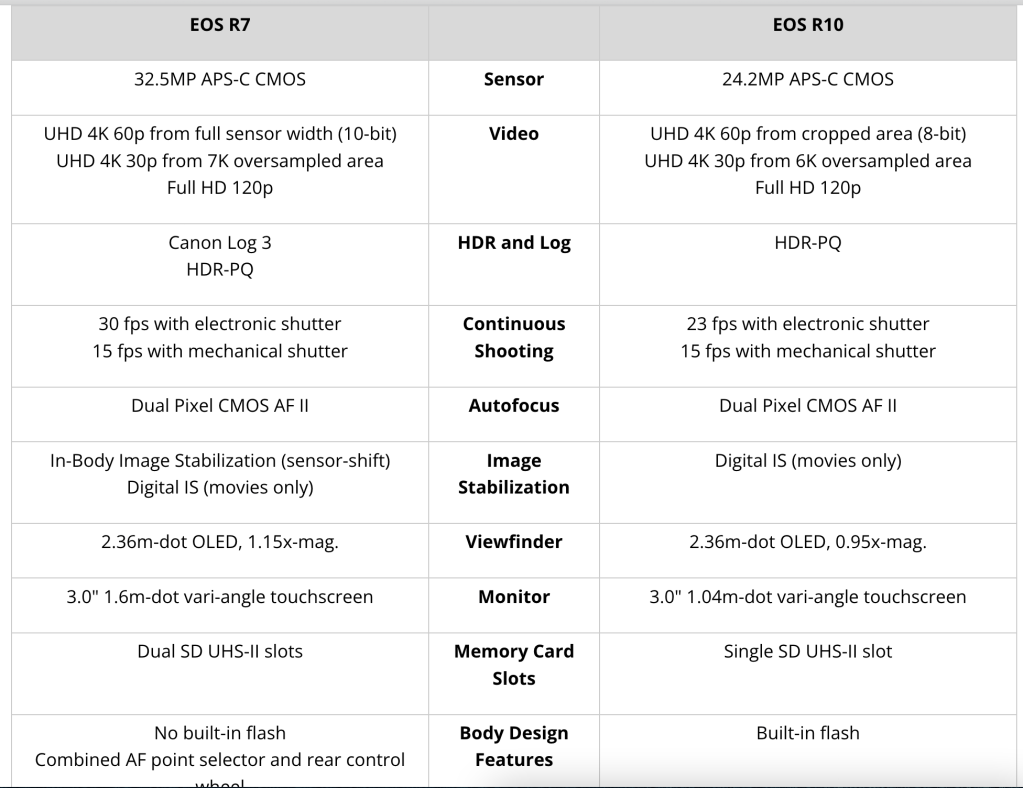
I haven’t had a chance to touch or feel the R7 or R10 yet. The folks at B&H Camera, though, have put together a nice comparison chart.

Have a look:

Copied from B&H Photo Video

Here’s a link to B&H’s full analysis.