I’m completing my “final” travel equipment which is the do-it-all lens for my R7. I picked up the R7 recently by selling several of my way-to-heavy EF lens (ended up with a gift card of $250 bonus in addition to the R7). Now I need to get the RF lens.
Have you heard any comparisons between the Sigma and Tamron. I’m looking through B&H, Adorama and DPReview which are my go to’s.
With the EF versions, I had ended up preferring the Tamron. It didn’t last as long as a Canon lens, but I didn’t treat it as gently getting in and out of the buses. ~~~ Terry
I love the R7. It’s a really nice camera with a lot of great features.
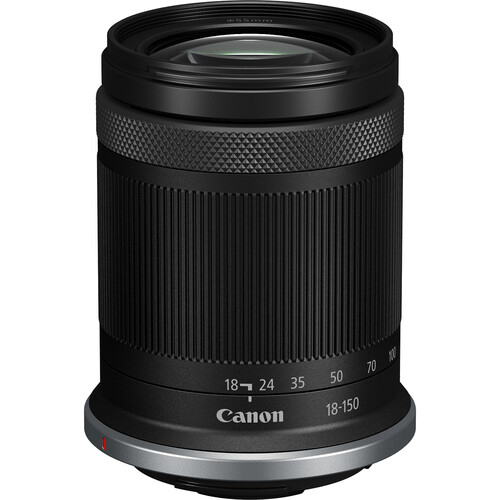
I’d get the RF-S lenses before the Tamron or Sigma. I’ve used the RF-S 24-105mm and was impressed. Same with the 100-400mm. The RF-S 18-150mm might be what you want. Take a look.
I’d recommend the Canon lenses first because of the complex electronics. Yes, I know Tamron and Sigma are “just as good” but Canon is always going to be better.
That said, you’re looking for a lens with a lot of range. I use two lenses where you’re looking for one that does it all.
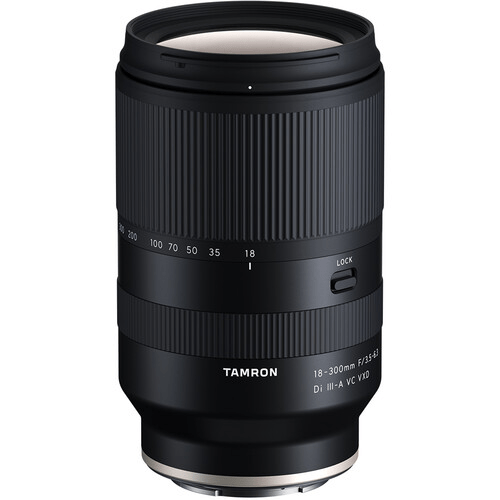
Tamron 18-300mm is $629. It has a 29-480mm equivalent view. That means the wide is not really very wide. You’d use this more for the reach or for things that were further away. Minimum focusing distance is 6 inches so that’s not bad. Weighs 21.9 ounces. I’m curious how long it gets when you zoom out to 300mm?
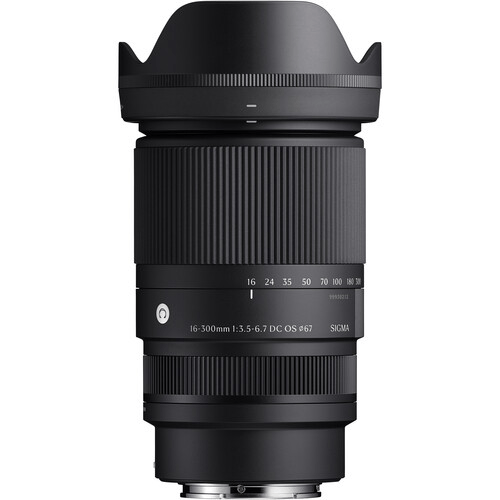
Sigma 16-300mm is $694. It has 24-450mm equivalent view. That means the wide is enough to photograph the interior of a room. More to my liking that the 29mm view in the Tamron. Not as much reach as the Tamron but I’d take the extra width over the extra reach. Minimum focusing distance is 3.44 feet. Weight is 21.7 oz.
So in conclusion, these lenses are pretty compatible. I think you can’t go wrong with either. I’d use the added width of the Sigma more on the photo tours. A 24mm view is great for interiors. The other is a bit narrow for my tastes.
Durability is an issue. I’ve heard people say the Tamron didn’t last as long as they wanted. I used to own a Tamron so I guess I was listening for that feedback. I’ve never owned a Sigma so haven’t listened for feedback on that one.
I hope this helps.
Any readers have experience with either lens? Can you provide feedback? Your actual experience with one of these lenses could help.
Below is a recap of the Strabo Photo Tour Collection trip to Greenland in September 2025. We’ll do this trip again in September 2027 if you’re interested in joining us.
We flew round trip out of Newark. Some flew to Iceland first and then to Greenland.
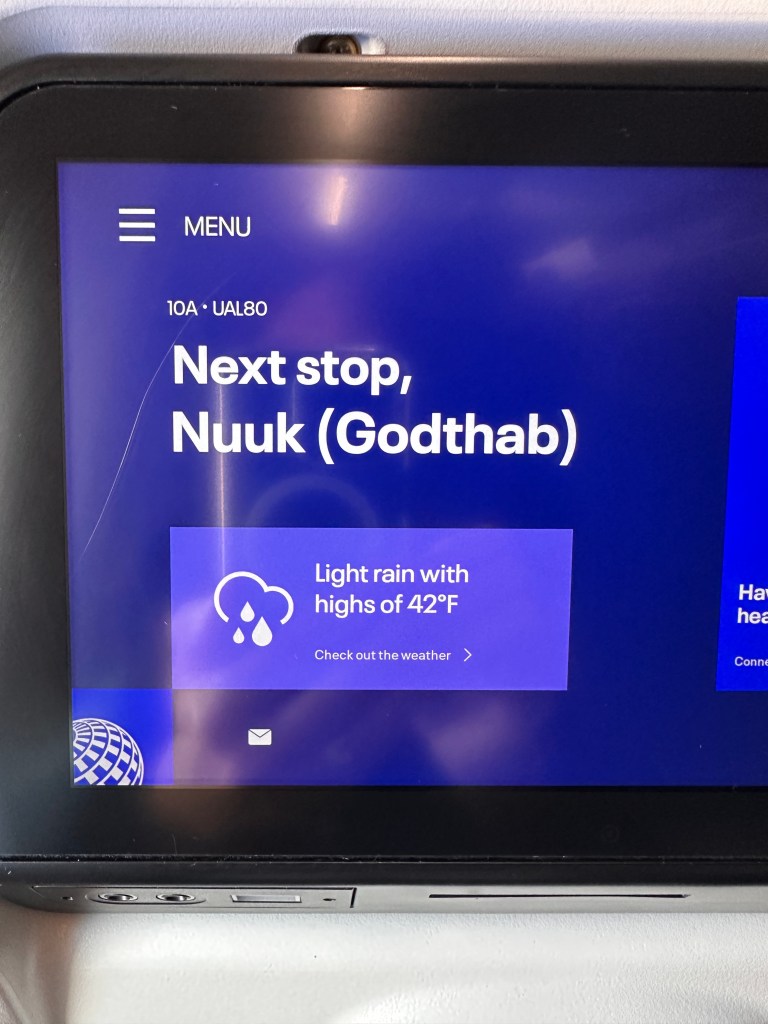
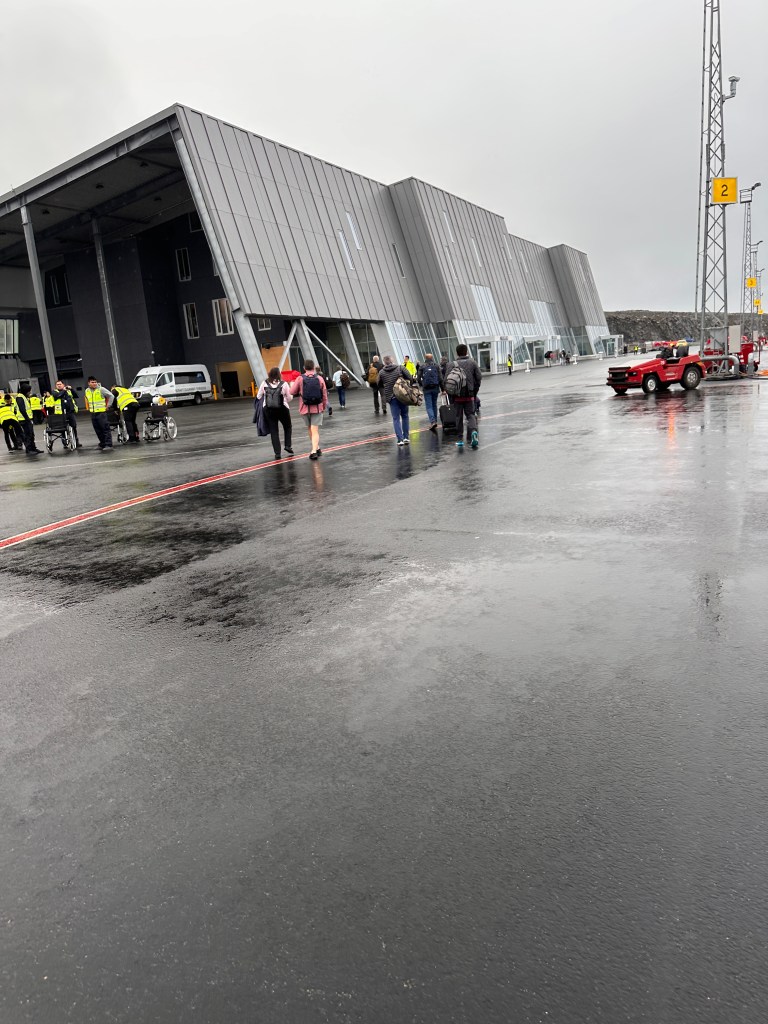
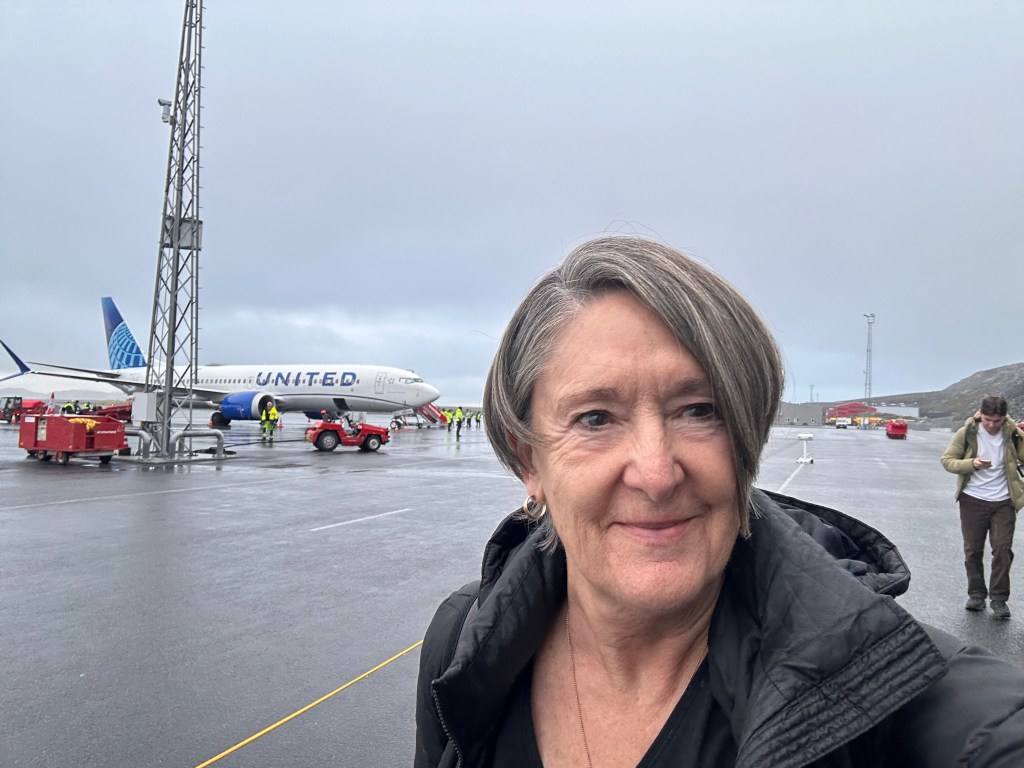
Arrival in Nuuk at 6:45pm. Travel time was 4 hours and 15 minutes. Meal on the plane but that was lunch. Pack your puffy jacket where you can get to it. There’s a walk across the tarmac and it is cold.
Terminal is a gray, modern facility built against the rocks. Efficient and easy to get around. (Click one of the photos below for a slide show. The images will show full-frame.)
Arrived at Hotel Egede. Modern and efficient. My room had two single beds, desk, and couch. Nice amount of room. No fridges in the rooms. Coffee makers, though.
Our first day in Nuuk, we walked to the Nuuk Cathedral and Hans Egede statue. Church was closed but we stayed there for an hour. I explored the graveyard behind the church. Climb to the statue was easy but could be difficult. The terrain is large round rocks with a bit of moss and dirt between. A cruise ship was in port so we had 20 or 30 people around us doing the climb and exploring. (Click one of the photos below for a slide show. The images will show full-frame.)
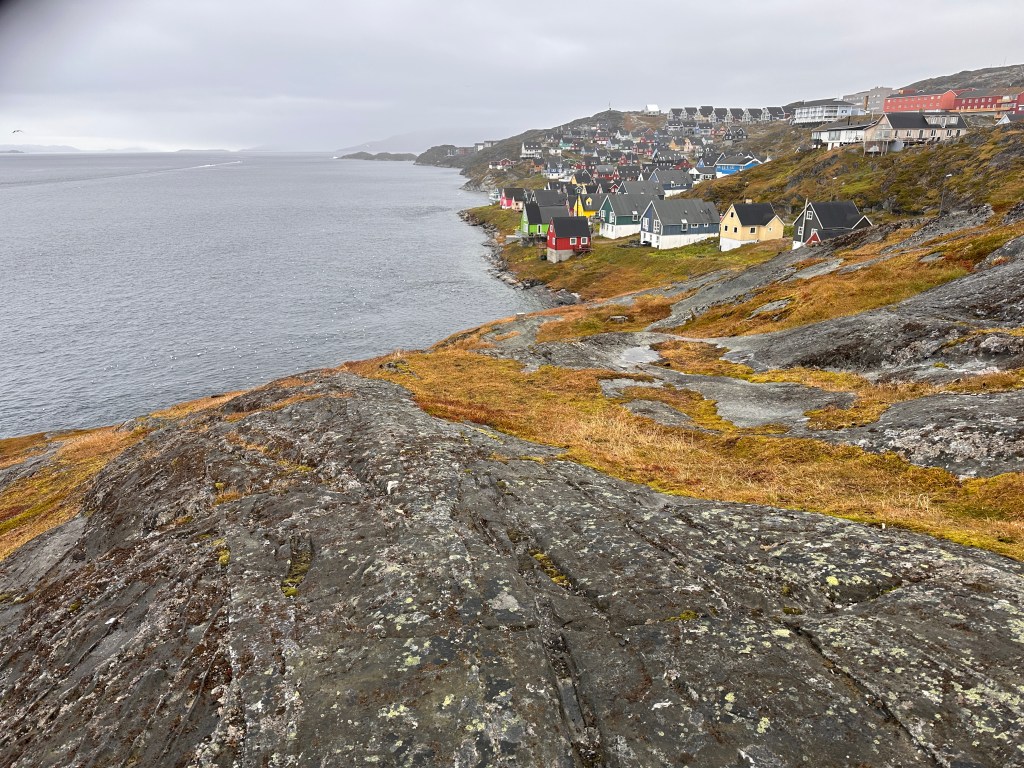
We walked toward the shoreline and up a street to Myggadalen or the Pano Viewpoint. Ocean to the left and colorful houses to the right. Cold, slippery, and rainy.
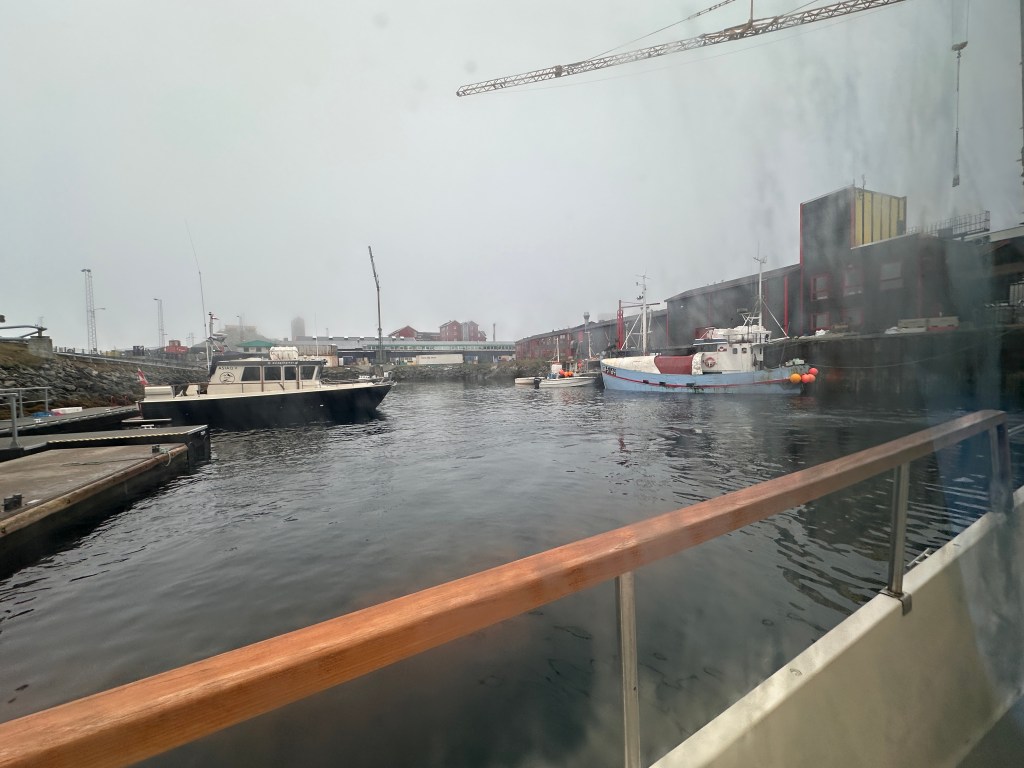
Backtracked to the Old Colonial Harbor and the “Lady of the Sea” statue along the shoreline. The tide was in so we didn’t see much of the statue. The group agreed to return at low tide so we could photograph the statue.
We wandered, photographed and then stopped for coffee and bathroom. Found a little place near the Nuuk Local Museum and the ferry dock where we’d depart the following day. Coffee, pastries, and ice cream were very good.
Continued our walk to the boardwalk that follows the shoreline to the south. The group spread out and enjoyed the photography.
The walk continued around the old, industrial housing blocks. Then past a school and back to the road with the Hotel Egede. We decided on Café LoLo for lunch.
Back to the hotel and then the grocery store for lunch on Thursday. Fun to walk the isles and see what they eat. I found flat bread (30K), cheese (30K), and an apple. Turned out to be perfect for me for two days. There are no refrigerators in the hotel rooms, so sandwiches were out. Several went over at 7am the following morning to buy their sandwiches.
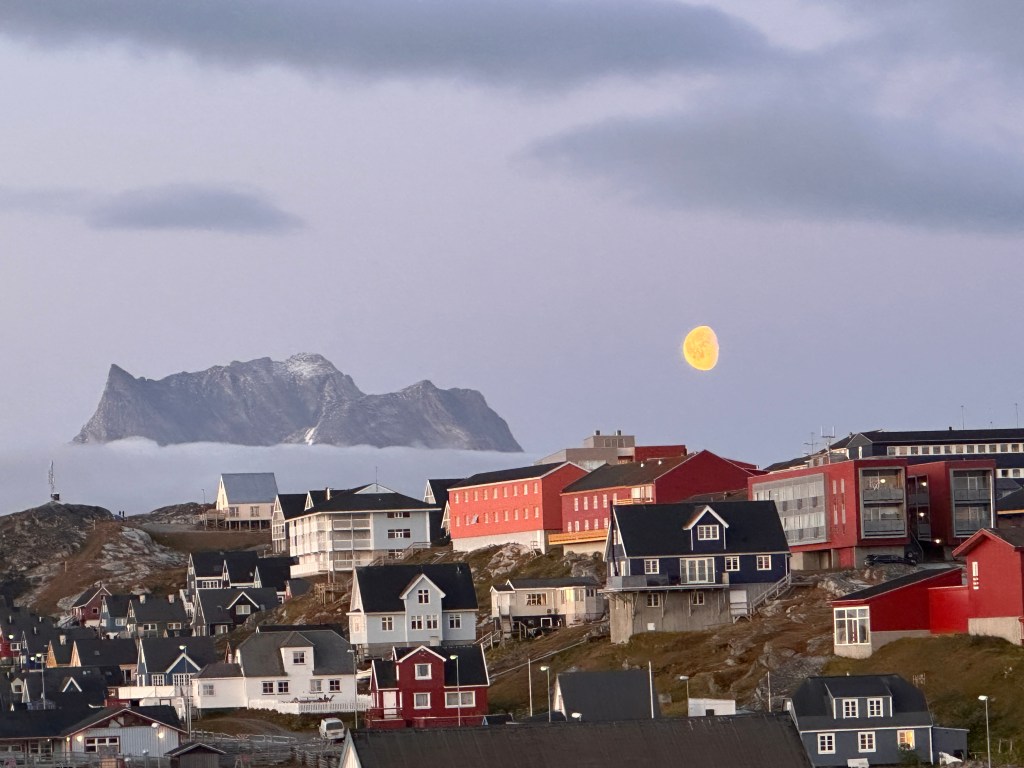
Left the hotel at 9pm for possible northern lights at the church and statue. Stayed out until 11pm when it was just too cold to stand anymore. Very nice half moon coming up at twilight. Walked back to the hotel.
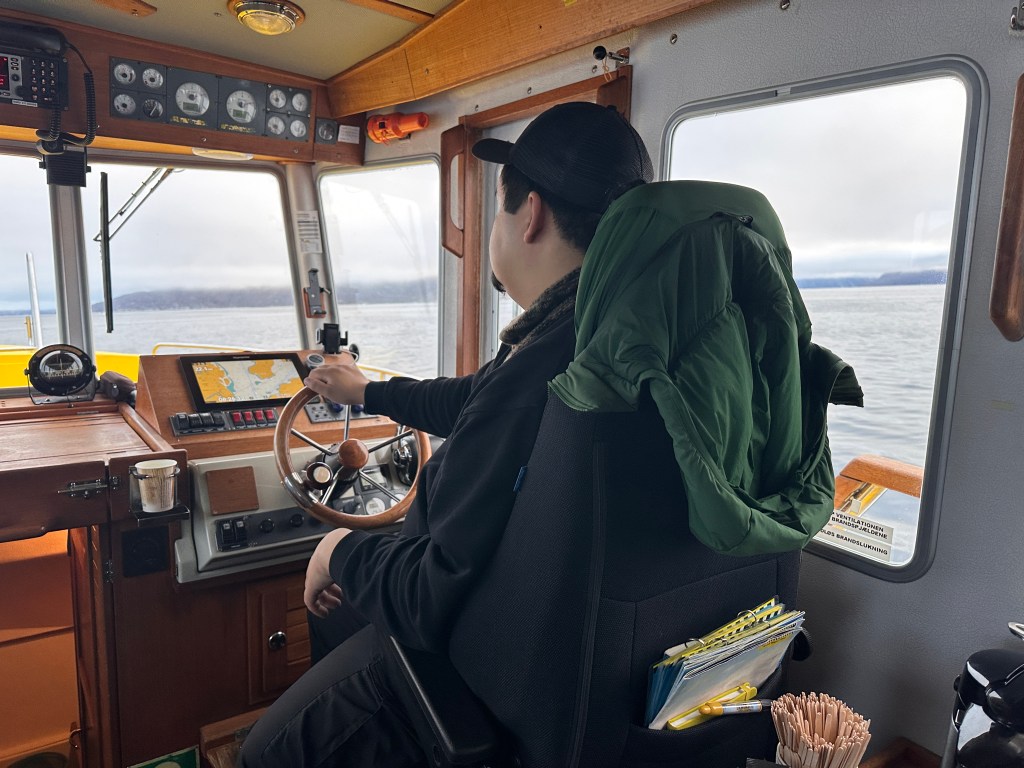
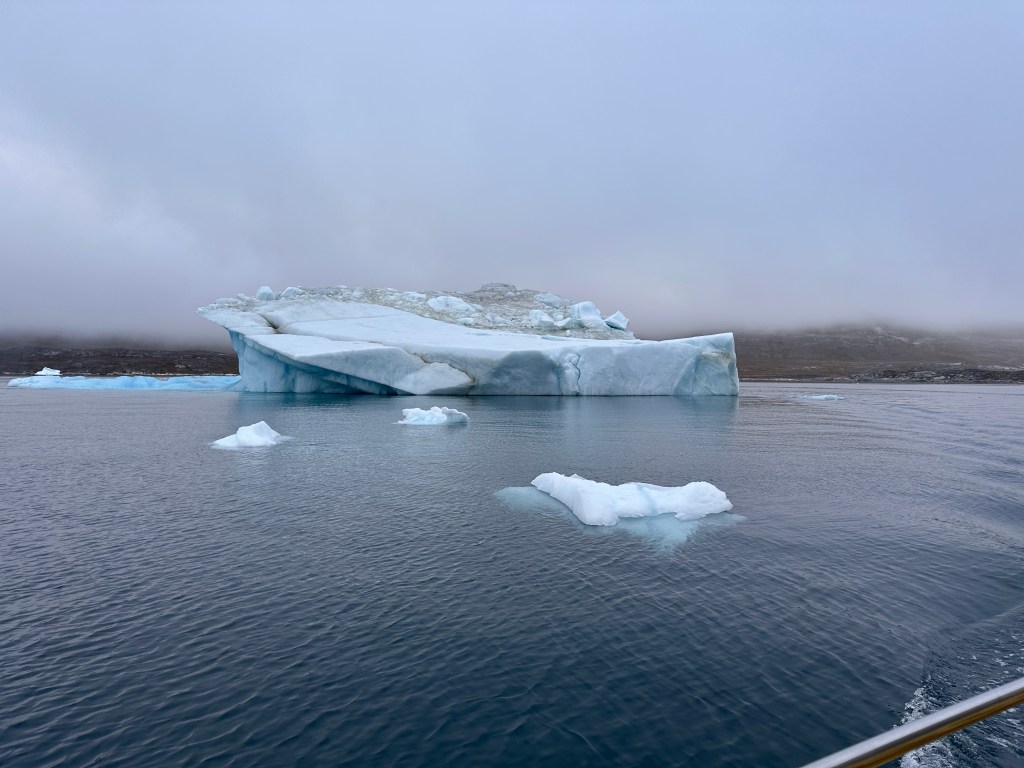
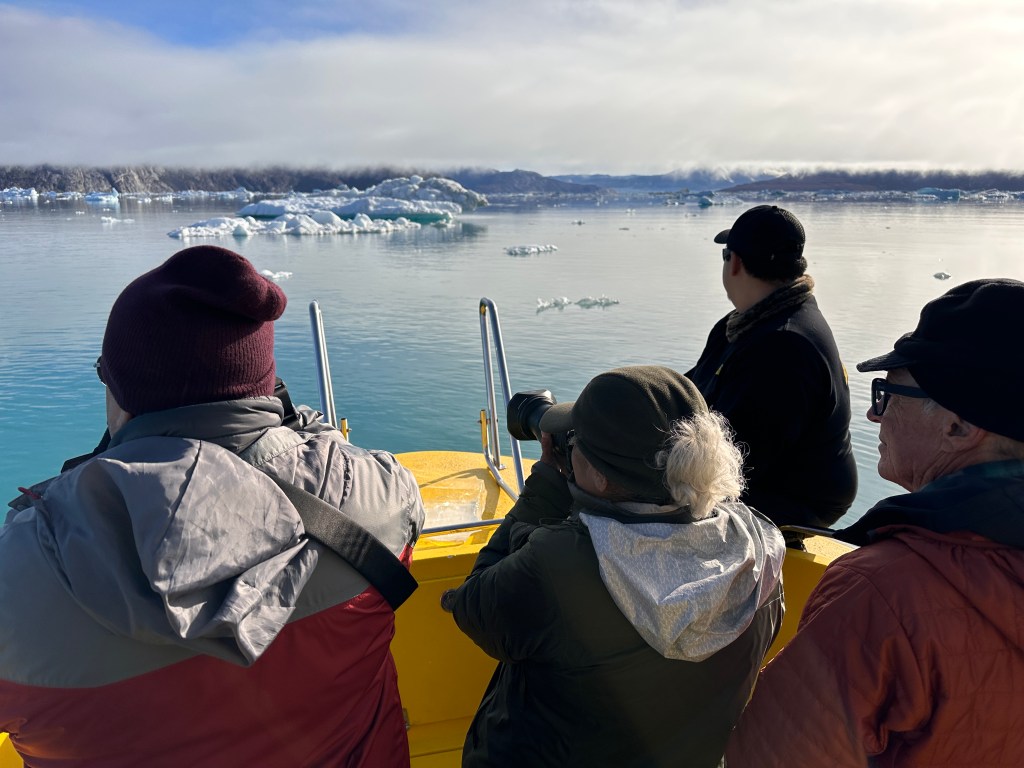
Thursday, Sept 11, we met in the lobby at 8:15am for a private excursion up the fjord to the icebergs. Our captain and Sebastian, our English-speaking guide, were both native Greenlanders.
Both were amazing to be with. Sabastian answered all our questions. He once lived in the abandoned settlement an hour from Nuuk. He was also a photographer so pointed to things that were interesting. (Click one of the photos below for a slide show. The images will show full-frame.)
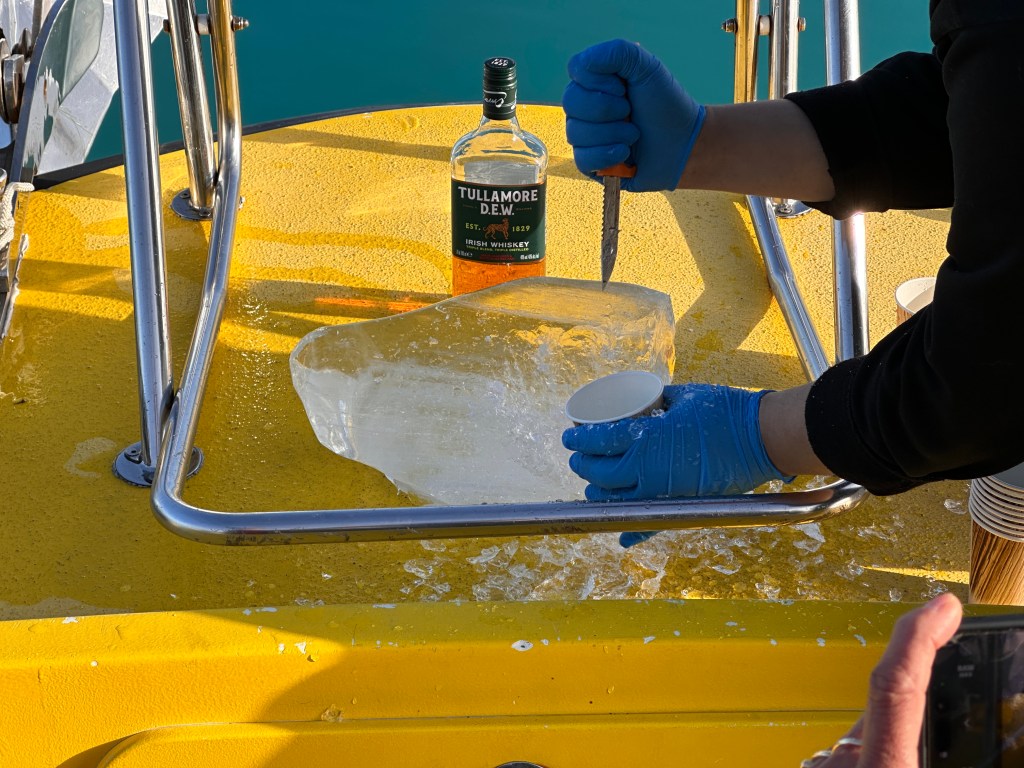
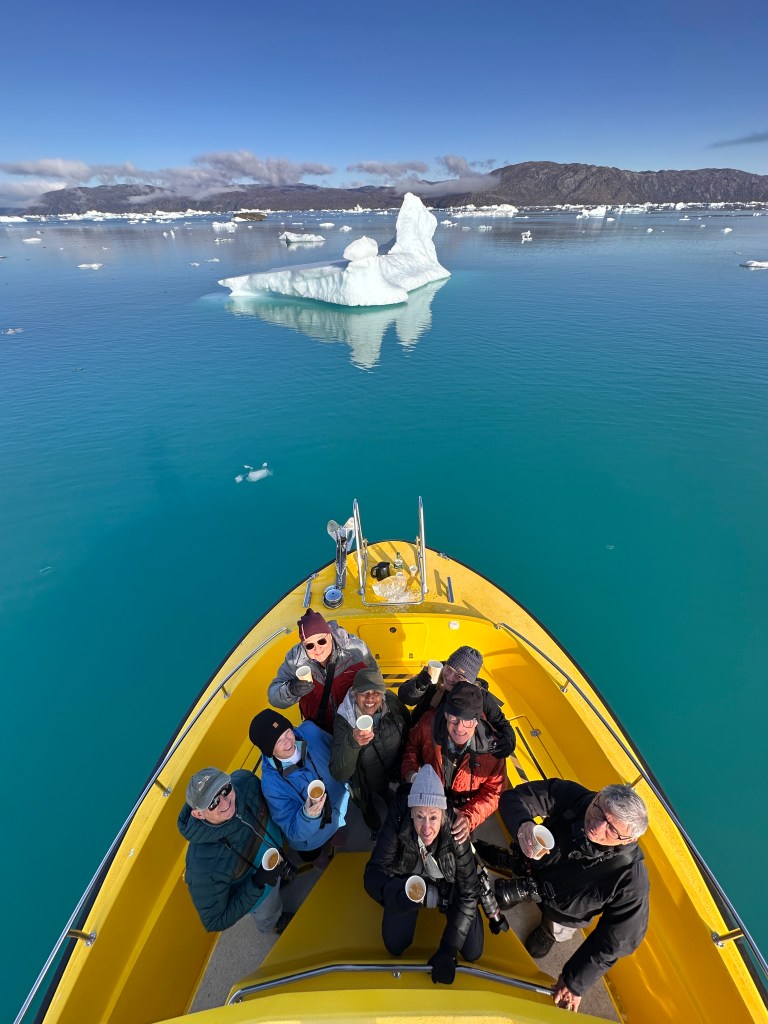
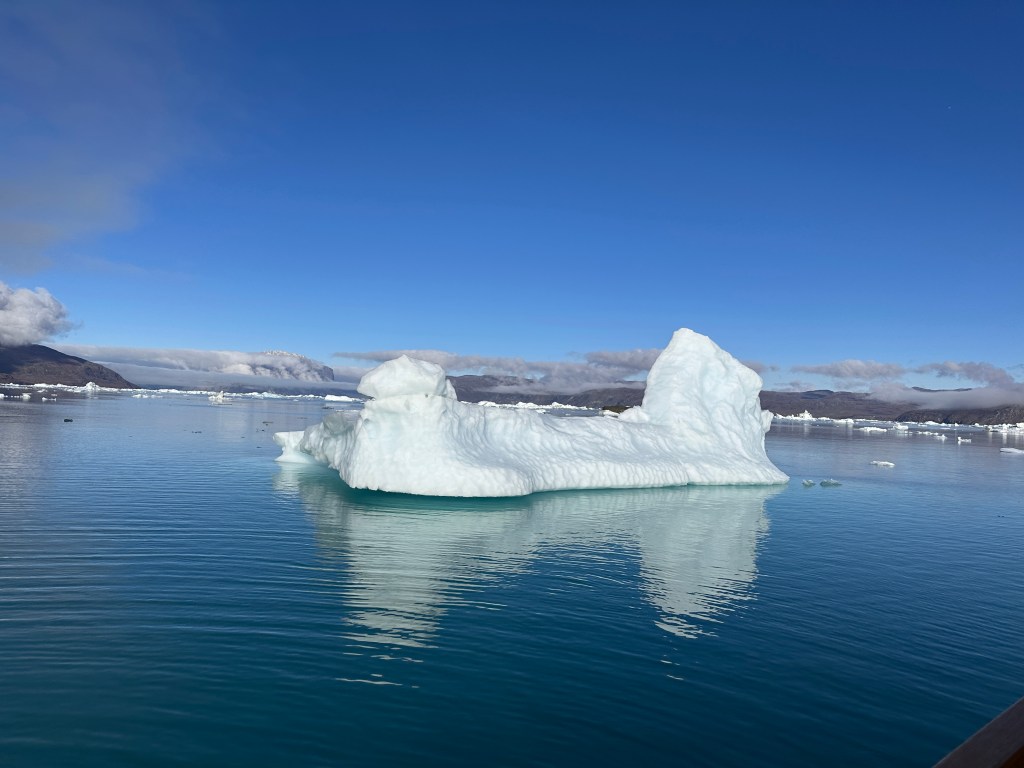
The sun came out when got to the base of the glacier, probably Ilulialik, and the captain killed the engine. That gave us a chance to enjoy the quiet and photograph the icebergs. The captain grabbed a piece of clear ice with his net, rinsed it off, and then let it dry in the sun. Then he chipped it into cups and poured a bit of whisky over the ice. We saluted, celebrated, took photos, and enjoyed the drink. I just ate the ice, which was very hard, since I’m not a fan of whisky.
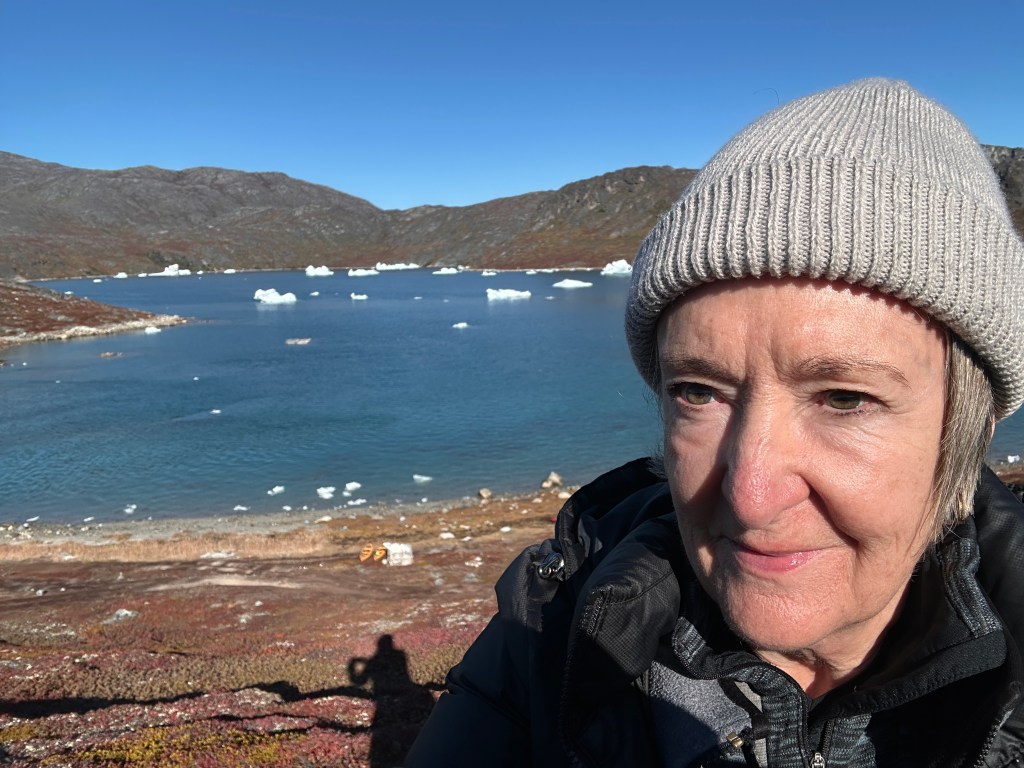
Icebergs in a quiet fjord.
We returned to Nuuk and arrived around 2pm. Dinner at one of the restaurants in town.
Walk after dark to maybe see the northern lights over town.
Friday, Sept 12th was our journey to glamping at Kangiussaq. Overnight luggage was stored below. Boat was full so no room for camera bags in the passenger compartment.
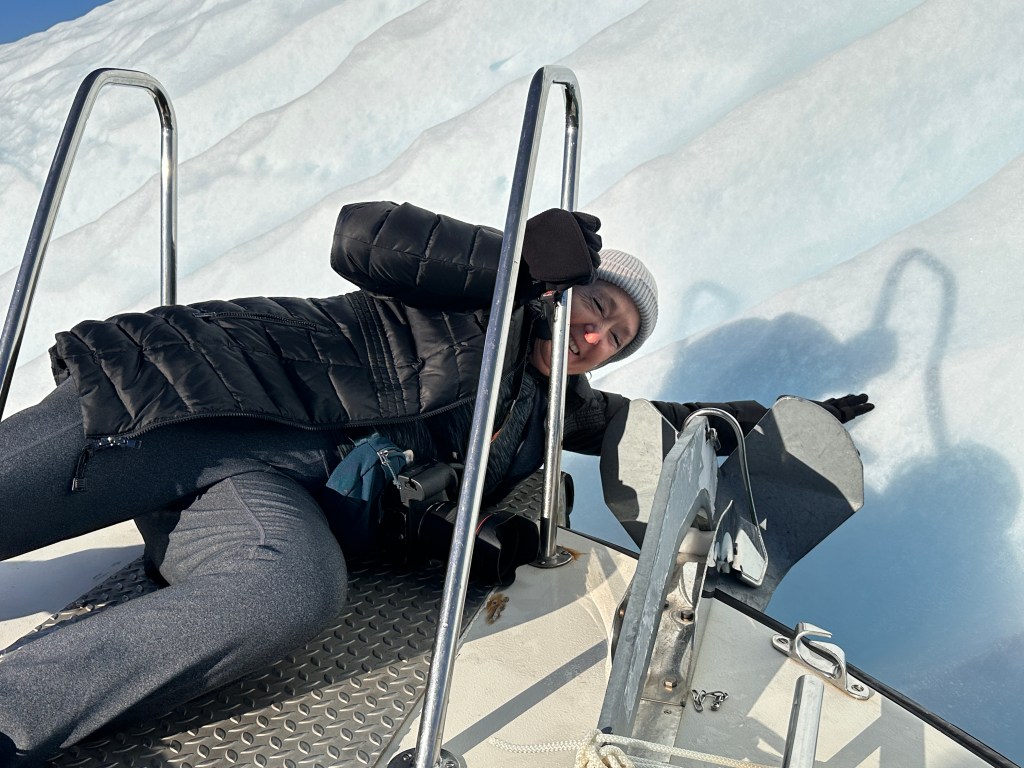
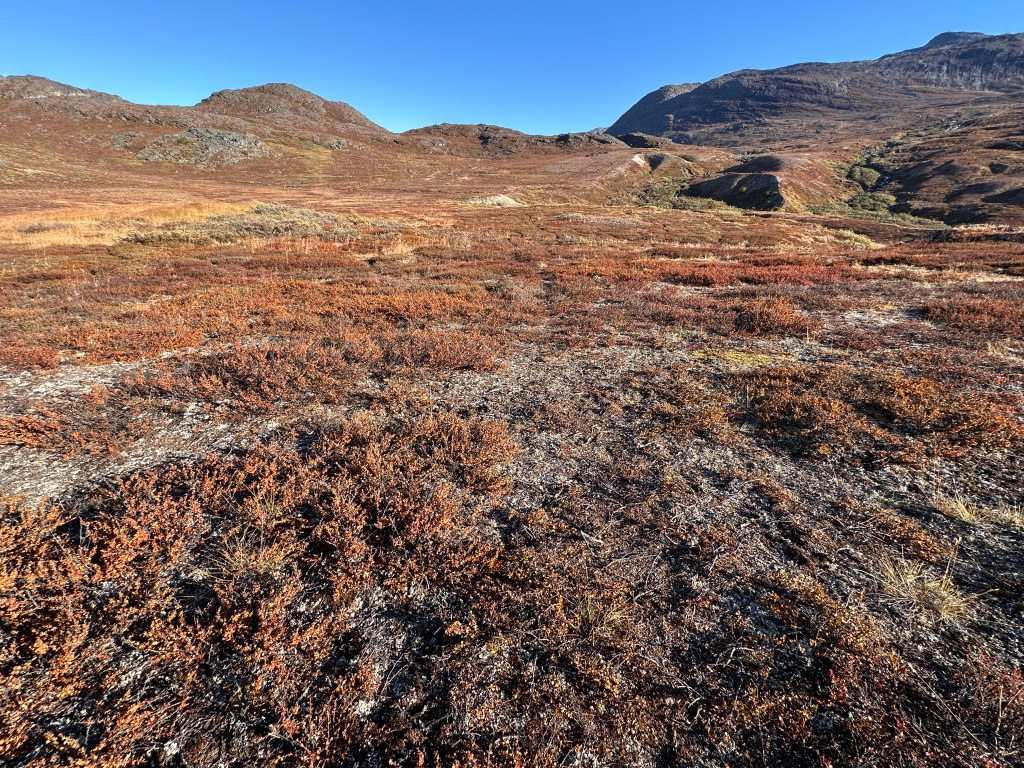
Arrived at the glamping site at 12pm. The boat captain circled an iceberg so we could all touch it. We took pictures of each other with our hand on the iceberg. ATV came down for luggage. Some hiked directly over the hills to the dining tent. It was steep. Others walked the road that the ATV used.
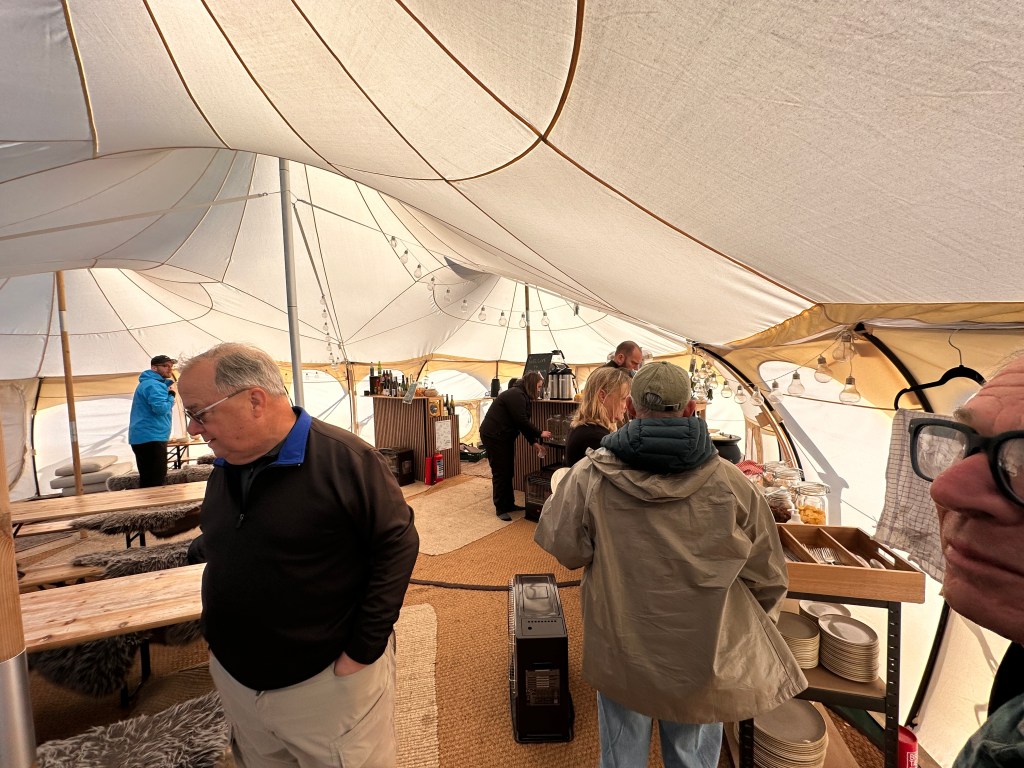
We gathered in the dining tent for a lunch of cheese and cold cut sandwiches. After settling in, some went hiking with a guide to see a lake on top of the mountains.
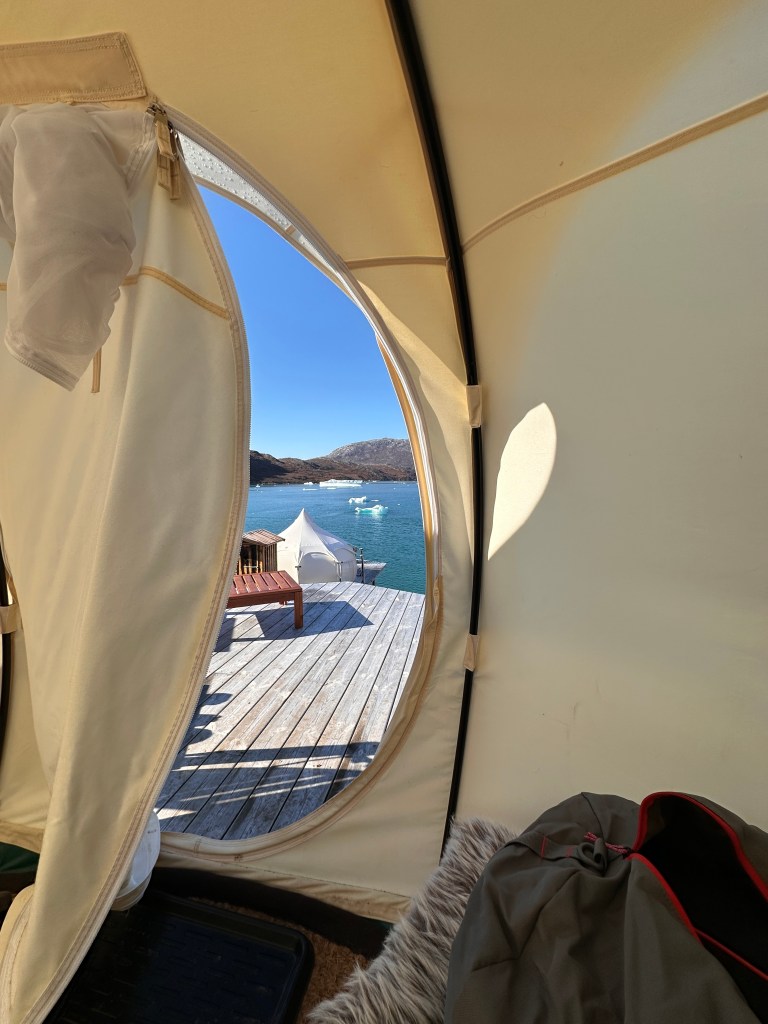
Sleeping Tents have a kerosene heater that’s turned on at night. Twin beds on very comfortable mattresses. Each had a fluffy down comforter and pillow. There were a couple of pieces of furniture around the tent such as a shelf and small stool for dressing. (Click one of the photos below for a slide show. The images will show full-frame.)
Dinner of muskox stew over pasta and tomato sauce over pasta for the vegetarians.
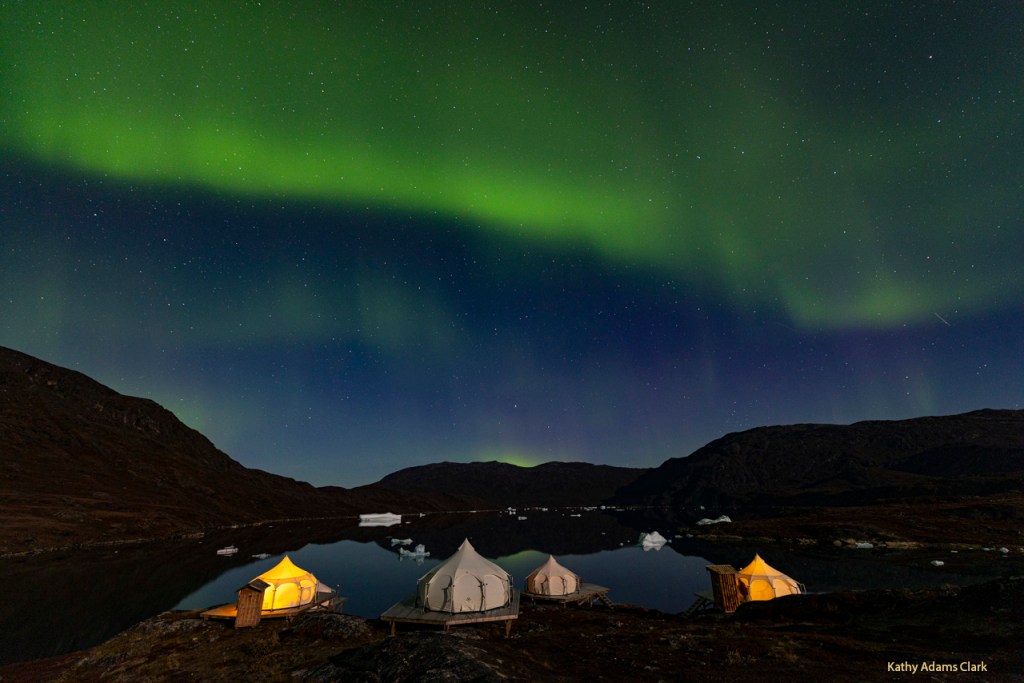
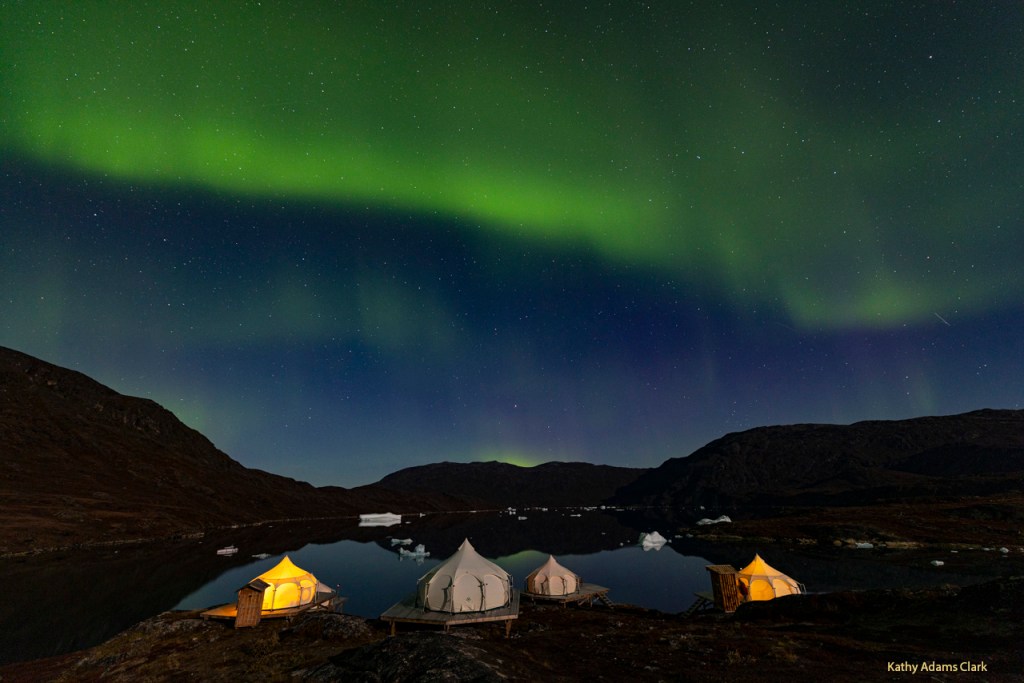
We were so lucky. It was clear when we arrived and the forecast was for a clear night. After dinner, we reviewed the instructions for the camera settings. Everyone got their tripods ready and attached to their cameras. We then divided the night so each person would set their alarm clock for a specific time.
I got the 11:00pm time slot. The camp staff said the northern lights would be around 2am. When I looked out my tent at 11:00, there was a streak of light right across the sky. The white cloud effect and not the green light. I knew what it was so started hollering at the group. Everyone cooperated with an “I’m awake” so I knew we were all awake and ready to photograph.
I walked from tent to tent to get some kinks worked out. Folks were nervous and cold so brains weren’t clicking on all cylinders.
We all got great shots but the couple in the back tent got the greatest shot! All the tents in the foreground with not distortion in the tents. (Click one of the photos below for a slide show. The images will show full-frame.)
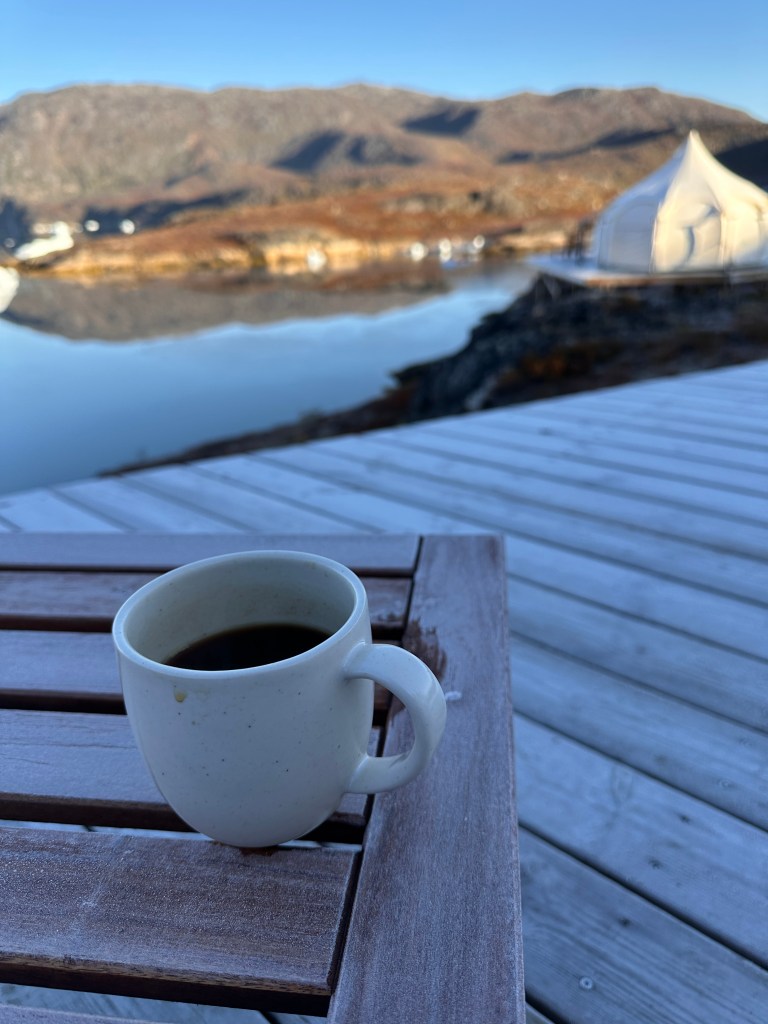
Morning of Septembrer 13 was so cold. There was frost on the ground everywhere. Getting washed up in from of the heater was miserable. It was cold.
Breakfast in the dining tent. There was cheese and cold cuts on bread. One bread was made with left over rice. It was a sort of spoon bread with great flavor. We made lunch from the breakfast spread.
Everyone was super happy because they got photos of the northern lights. Very upbeat attitude. I did bit of hiking on my own. We photographed the kayakers as they made their way around the island in the center of the inlet. We talked and visited with the staff. Everyone answered our questions.
Out of tents by 10:00am. Waiting for the boat to arrive at 11:30. Departure at 12pm. Back at the Nuuk harbor at 2pm.
Sunday, September 14, we got to the airport and checked in by 7:00am. Vouchers from the hotel for breakfast. Departed right on time for Newark. NOTE FOR THE FUTURE: Leave heavy coat out for the walk across the tarmac.
We were in the Pantanal of Brazil photographing jaguars, birds, and other critters in July of 2024. Our main target was jaguars since one can see more jaguars in Pantanal than any other place in the world.
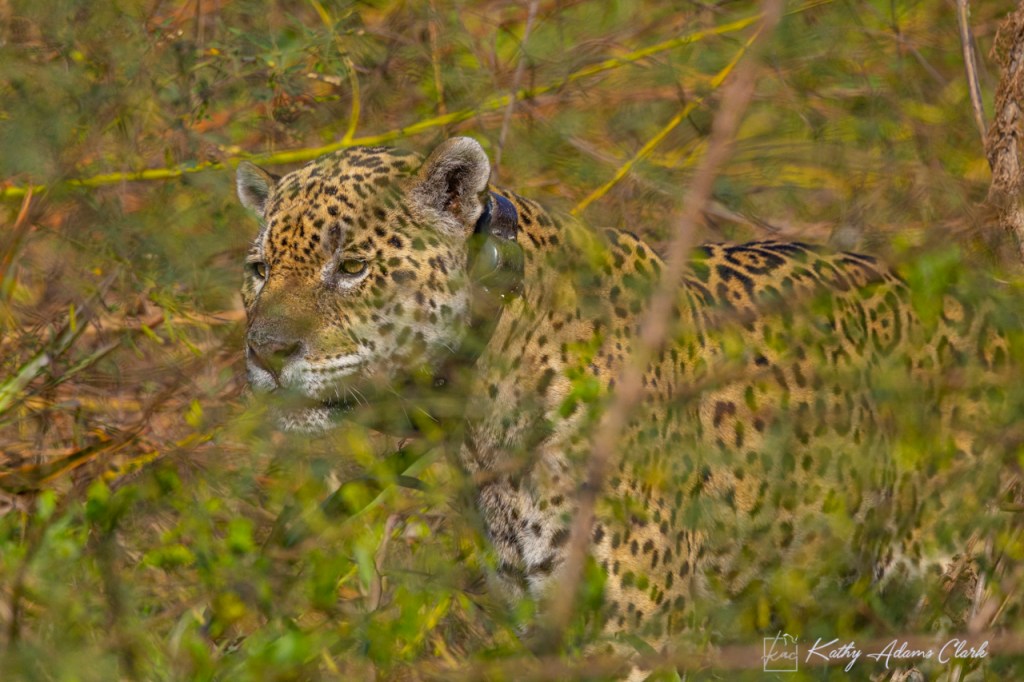
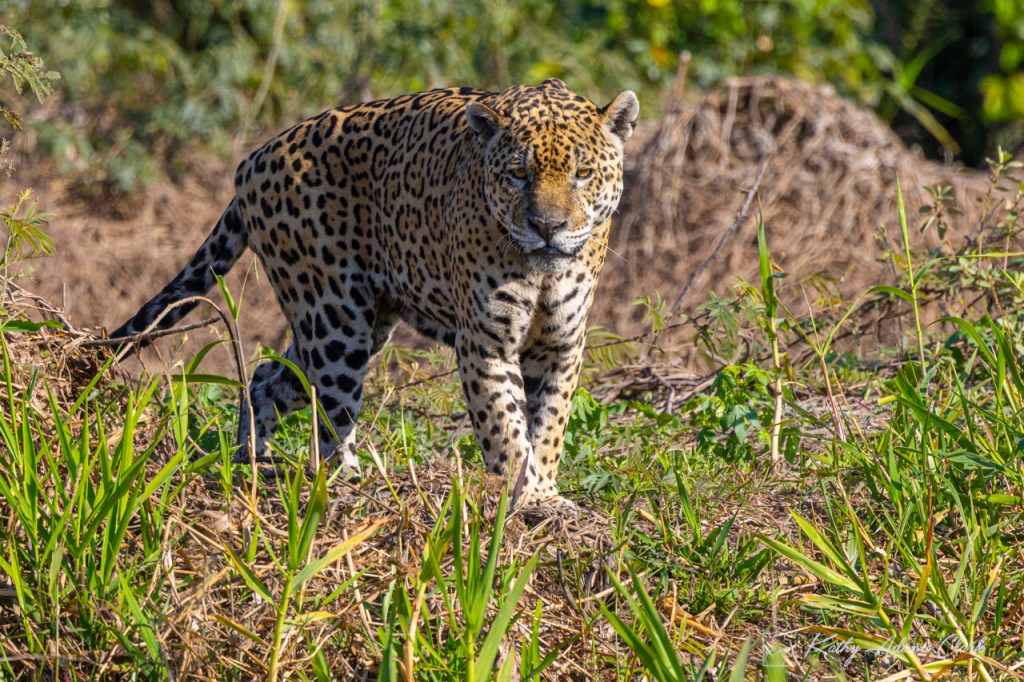
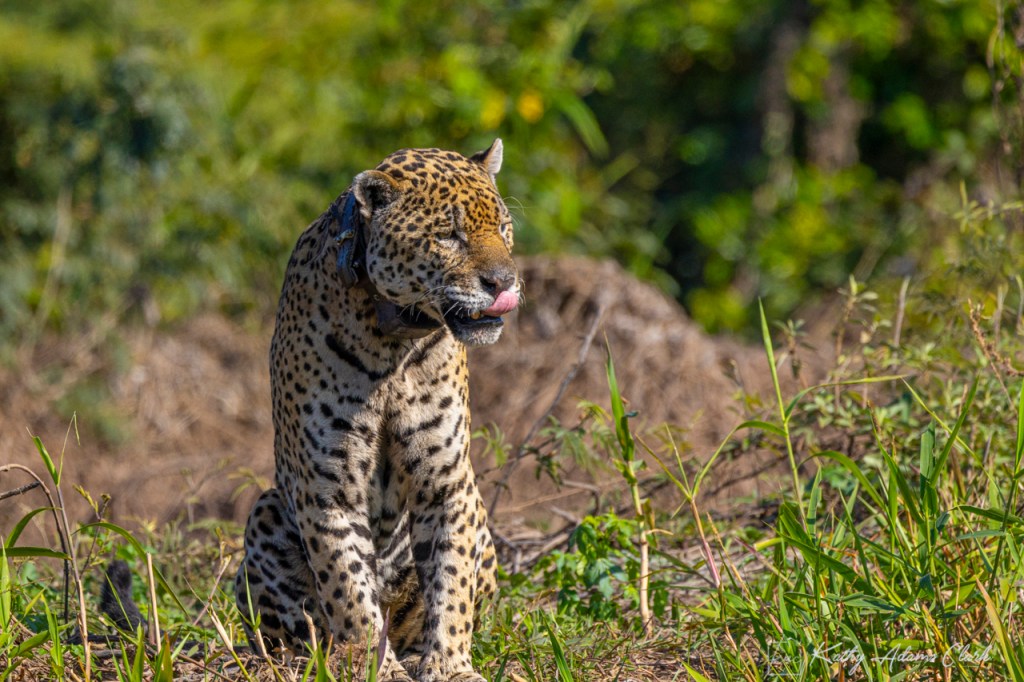
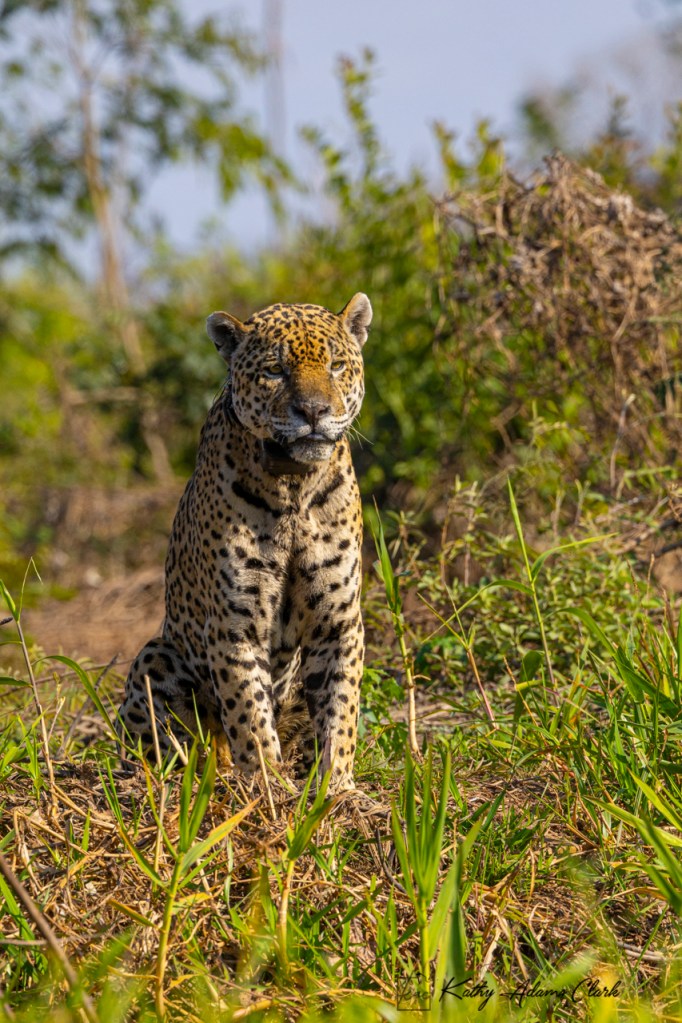
On our last day, we encountered a jaguar that locals had named Nels. He’s a handsome fellow with a huge collar. The collar is because he was rescued from wildfires in a previous year, rehabbed, and then released into the wild.
We found Nels on the Rio Cuiaba near the Three Brothers Rivers. Nels was minding his own business but was hunting for a snack of a caiman or maybe a fat, juicy capybara.
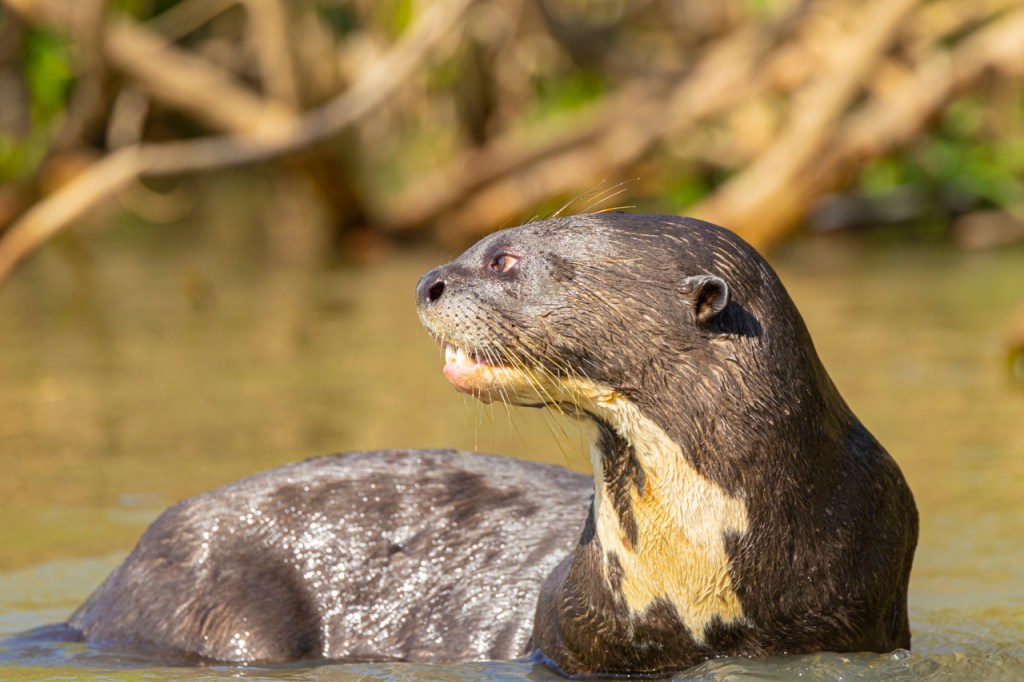
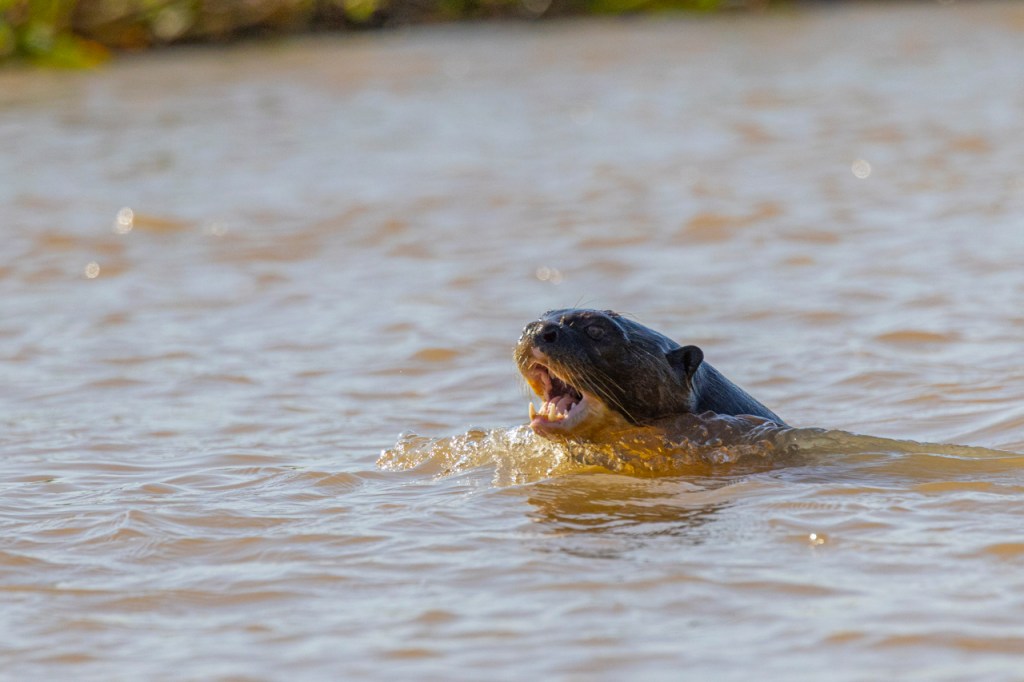
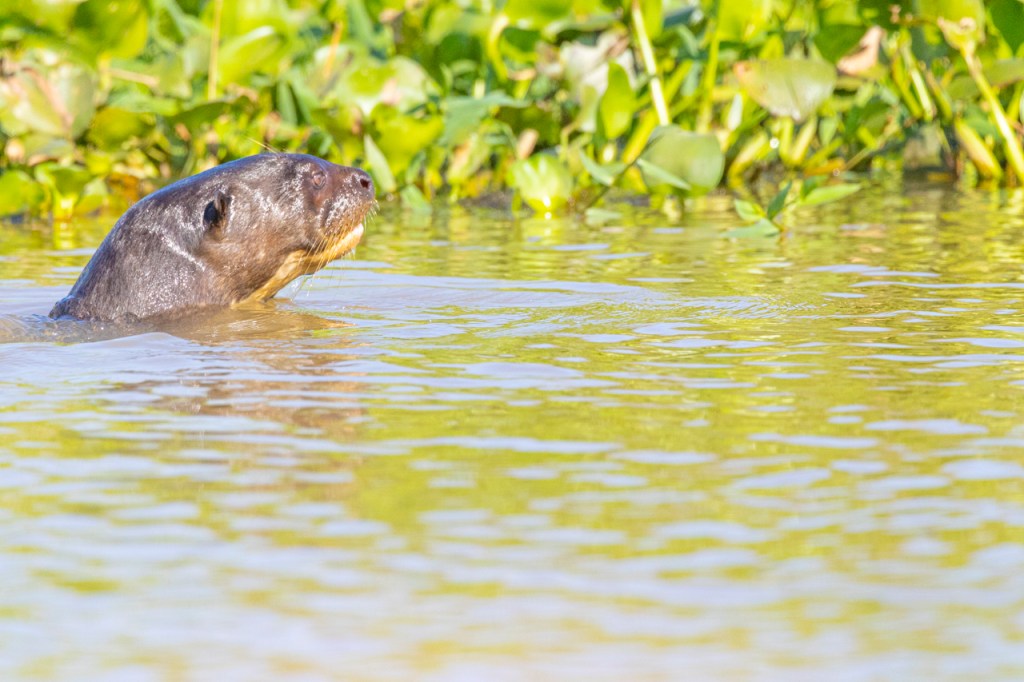
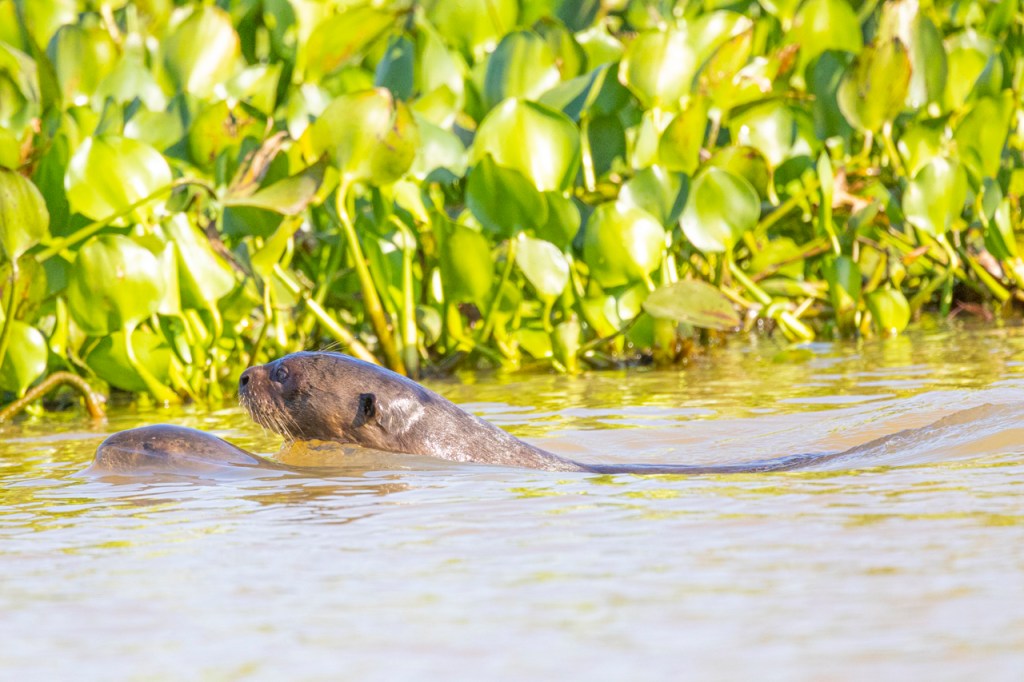
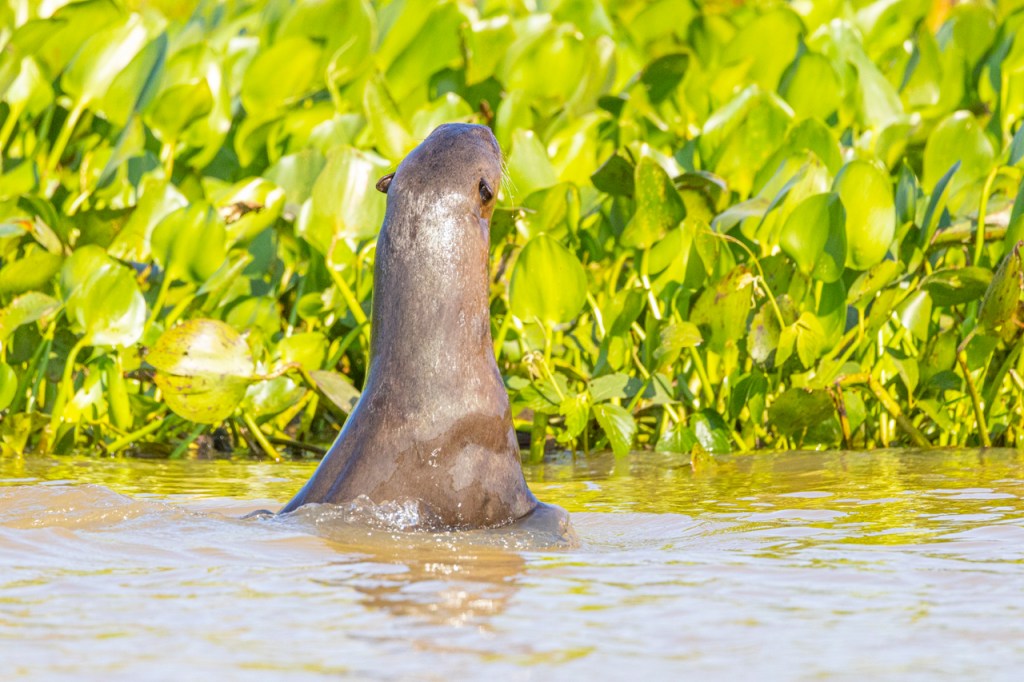
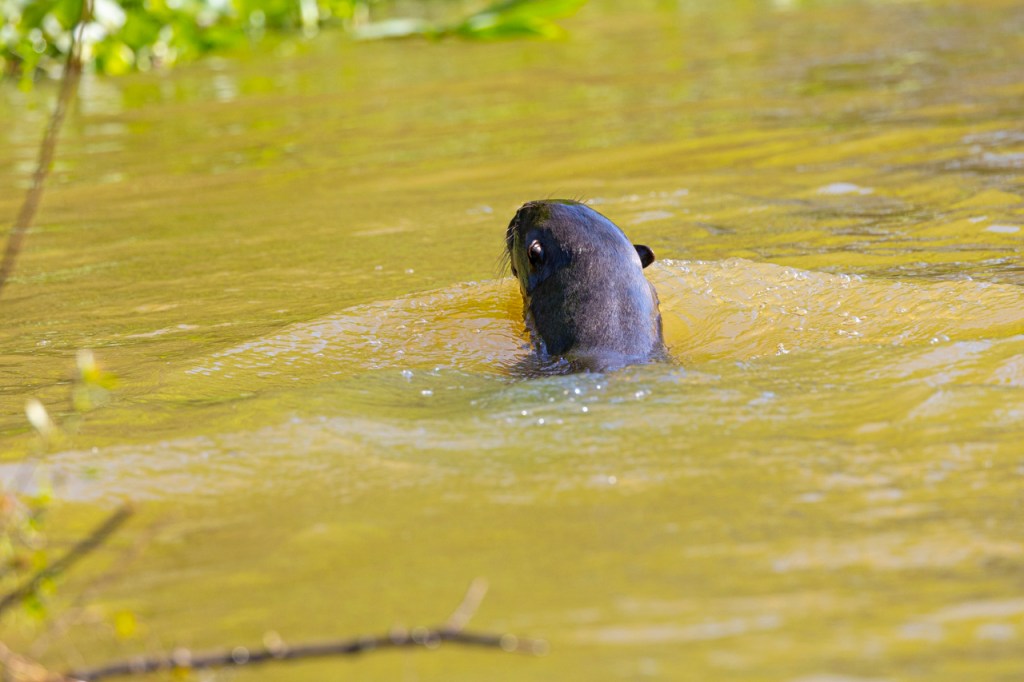
We photographed and watched Nels for maybe 20-minutes and then heard this screeching sound off to the right. My guide, Raul Guarnizo, said the sound was great otters coming to attack the jaguar. Click for Giant Otter sounds.
Jaguar versus Giant Otters sounds like a kid’s futbol match. Let’s see how this plays out.
Jaguar versus Giant Otters
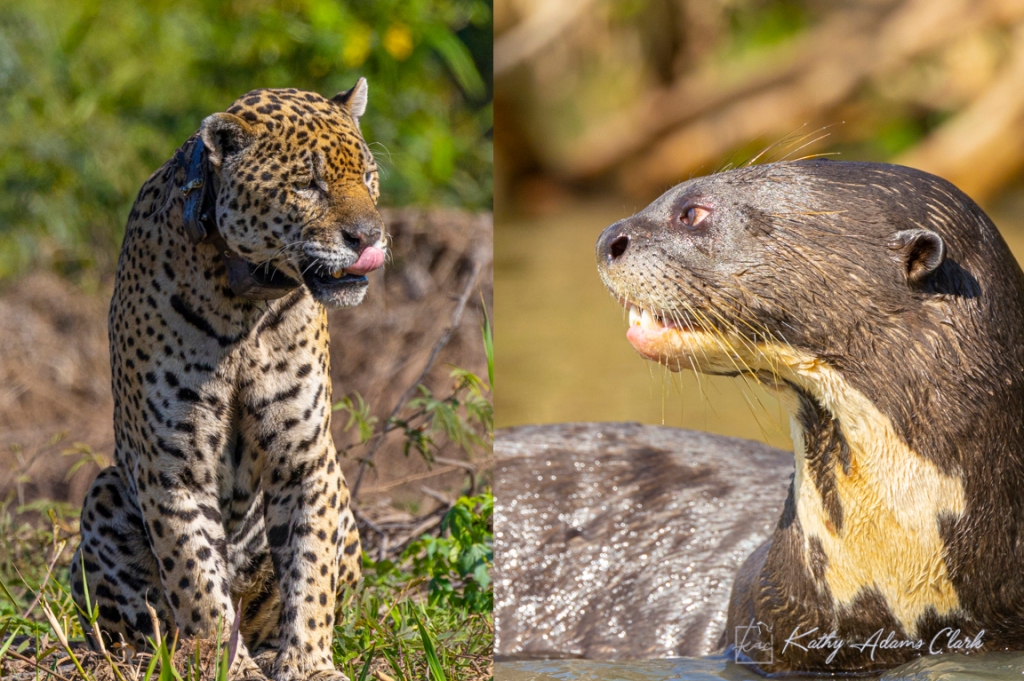
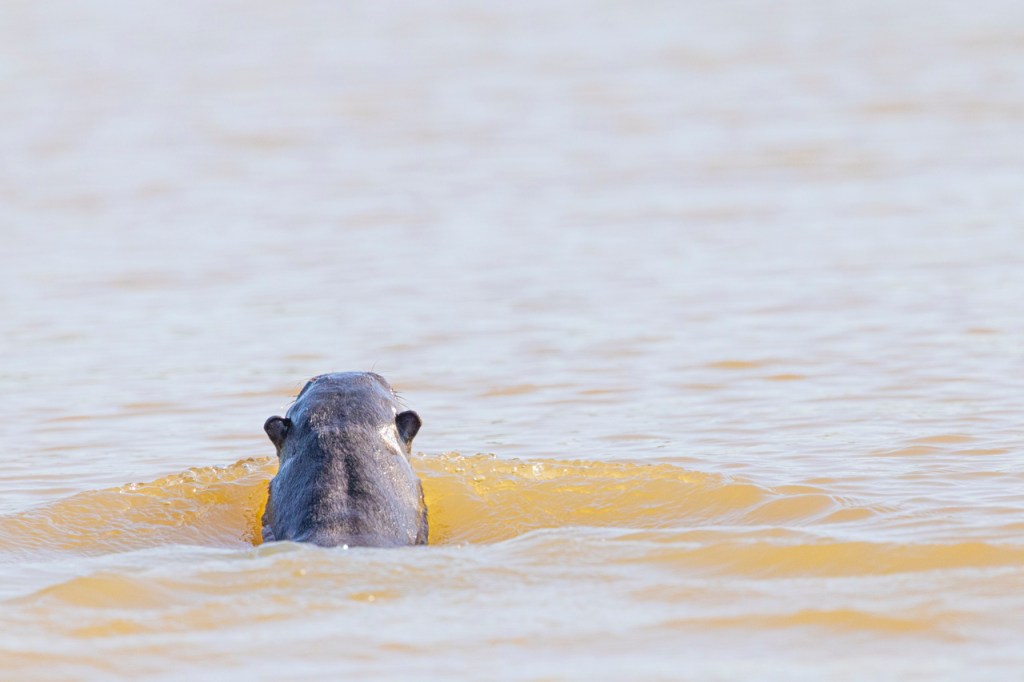
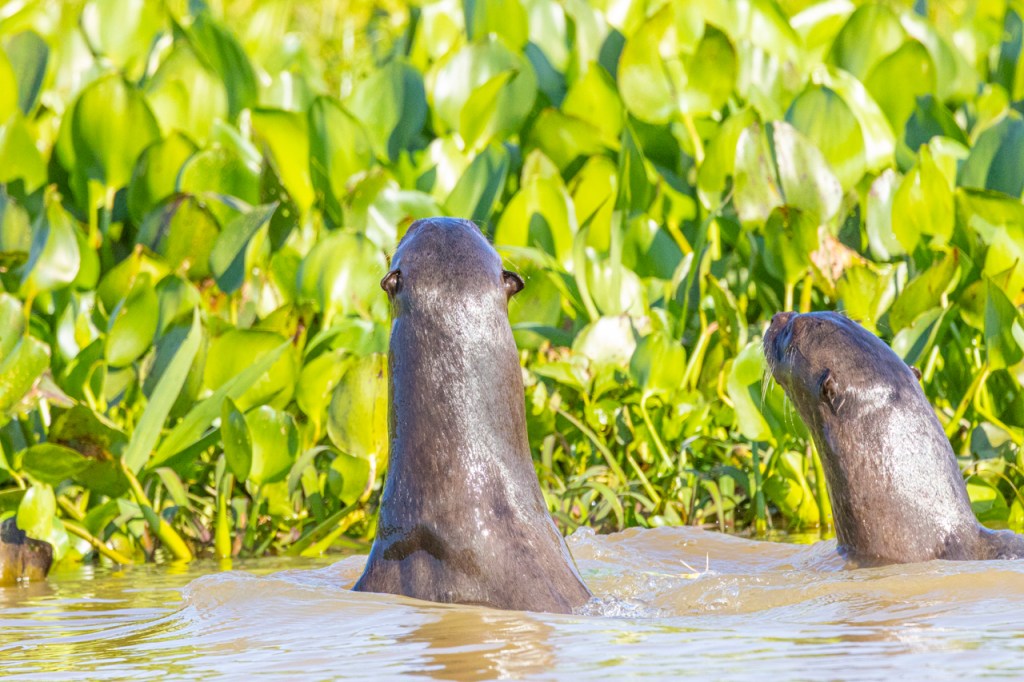
Here’s the jaguar named Nels minding his own business in the Pantanal of Brazil. Jaguar Nels comes out into the open. Giant otter sees the Jaguar and goes on the alert.The giant otter starts bellowing. “I’m coming for you Jaguar! You’re in my territory, dude! Get out!” That’s what it sounded like to me. Here’s the reality, though. Click to hear giant otter sounds.Giant otter makes the turn in the river and swims right toward the Jaguar. “I’m coming for you, Jaguar!!”Jaguar Nels comes out in the open and looks around. Giant otter comes up to the shore. “I’m coming for you, Mr. Jaguar!”Giant otter yells, “I’ve got my buddy, Jaguar. We’re coming for you!!”Giant otter and his buddy start popping up and down. “We see you, Mr. Jaguar!!” The entire time they are hollering. Click here to listen to Giant Otter chatter.Jaguar Nels appears to say “Bring it on, Mr. Otter. I’m ready for you!!”Giant otter seems to lose interest. One last, “I see you, Mr. Jaguar. Get out of here!”Giant otter heads on down the river. He has more important things to do.
So that’s it! One defiant jaguar and two feisty giant otters.
What fun trying to figure out what’s going on in the animal world.
Thanks for reading! I appreciate your support. I hope you appreciate my humor.
I hope all is well. I was hoping you could help me select a camera body for my African safari in Dec. I’m deciding between the Canon R6ii and R7. Do you think R7 crop factor is preferred to get more reach on the lenses. I will bring the 100-500rf lens. Any thoughts on a good 2nd lens? Will also bring my 7Dii as a second body. Thanks so much for your thoughts on this!
Jordan
My reply:
Thanks for asking, Jordan. You’re going to find that the R6ii is a more robust camera. I’d recommend the R6ii over the R7 in this situation. (Nikon Z8 and/or Sony A7rV for others)
You already own the 100-500 RF lens so that with the R6ii will be perfect.
I will suggest that you get the 1.4x extender for the 100-500 RF lens. I use that on my lens all the time.
My current set-up is R6ii, 100-500mm RF lens with a 1.4x extender. I used that all the time I was in Costa Rica and I’ll use it on my safari to Africa in May of this year.
Keep a 24-105mm or other medium wide lens on your 7Dii. The landscapes are amazing. Photos of the animals in the landscape are always a treasure, too.
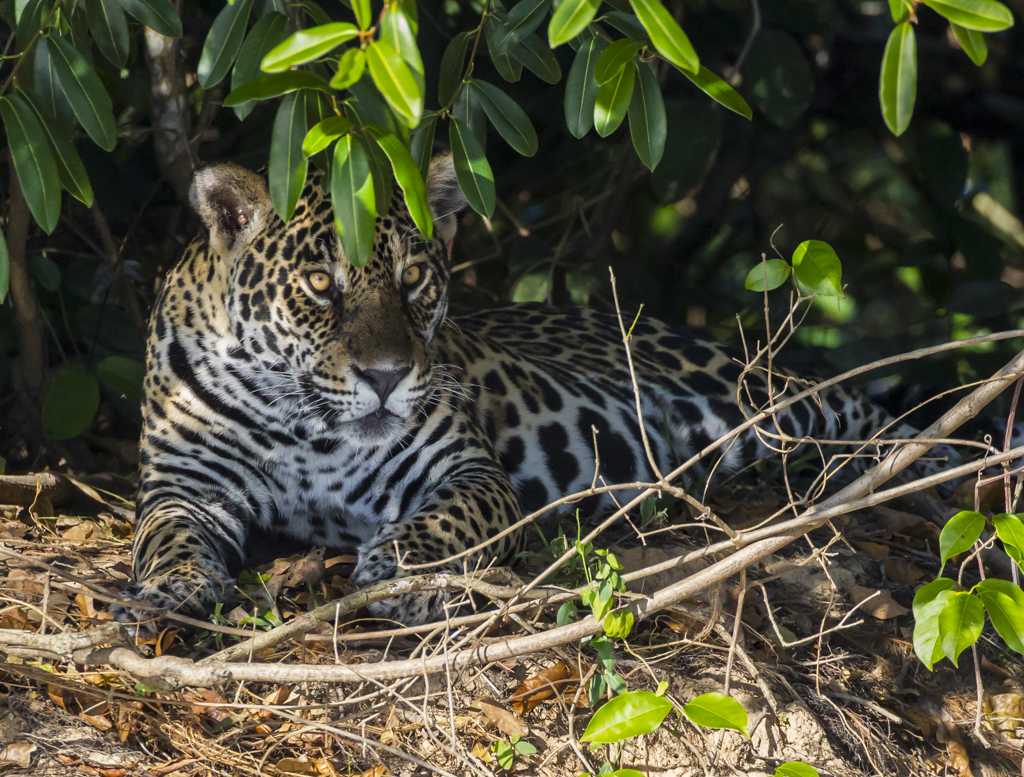
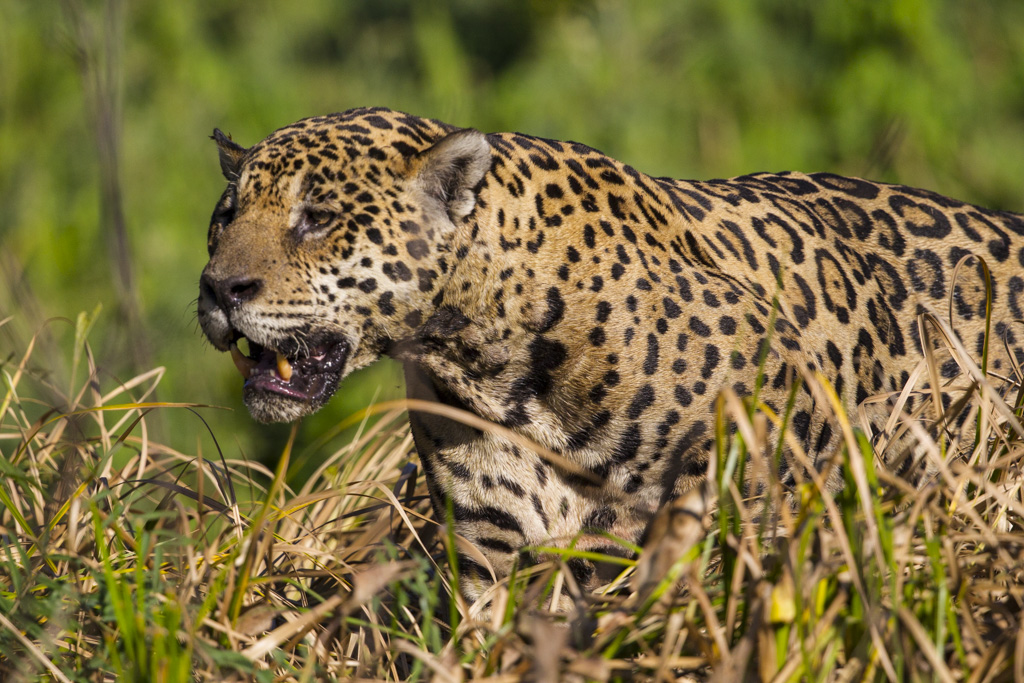
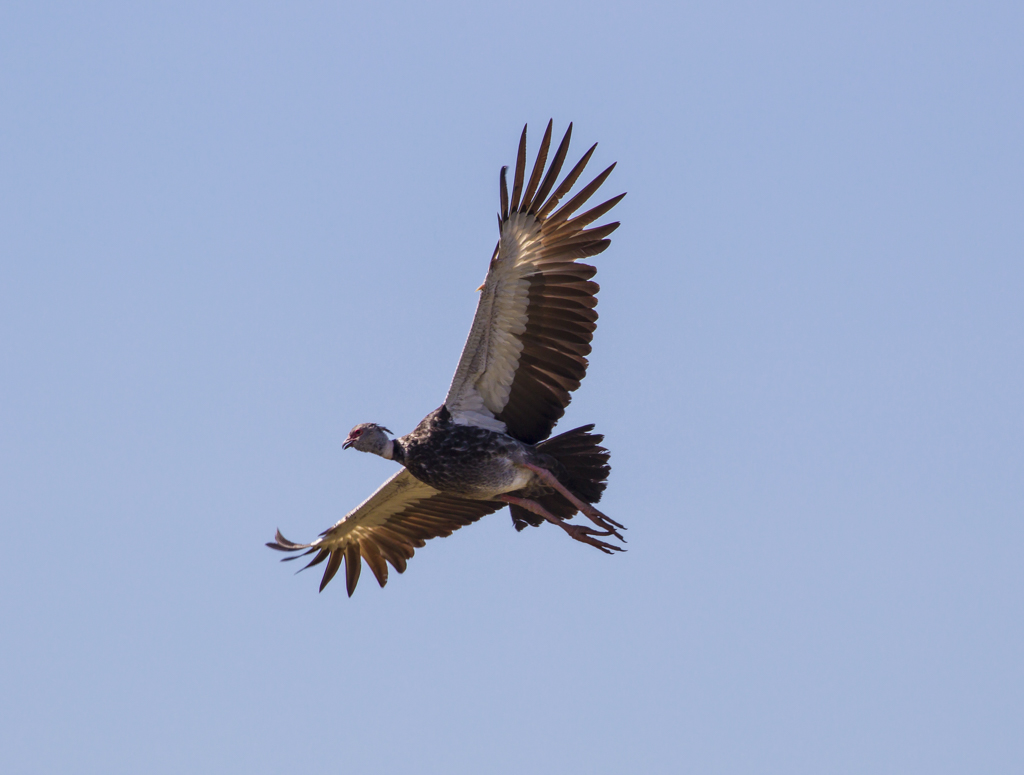
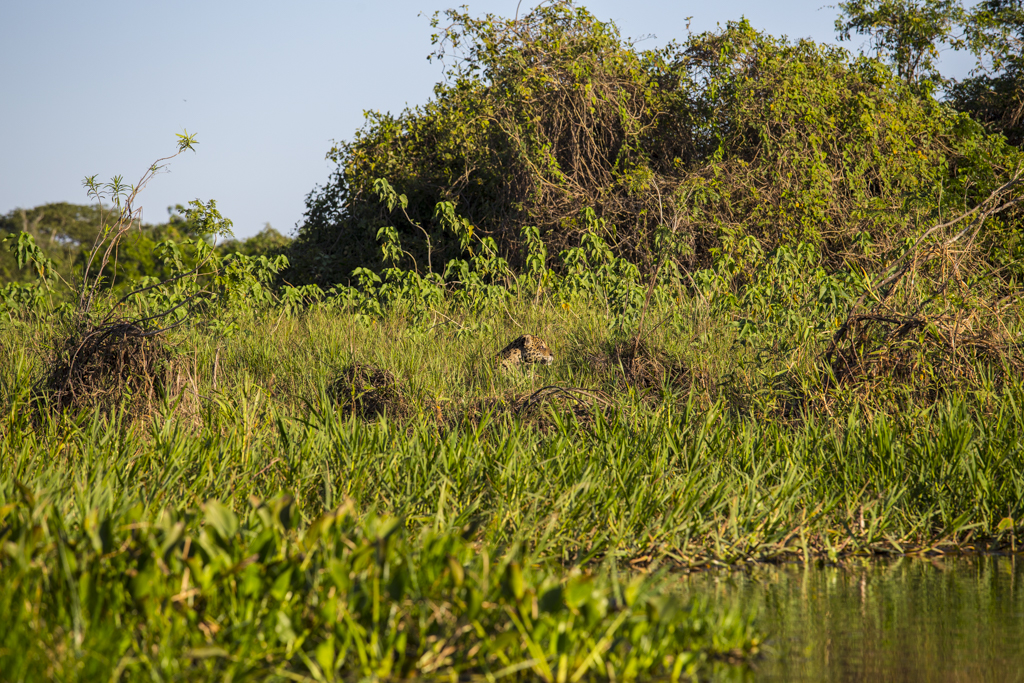
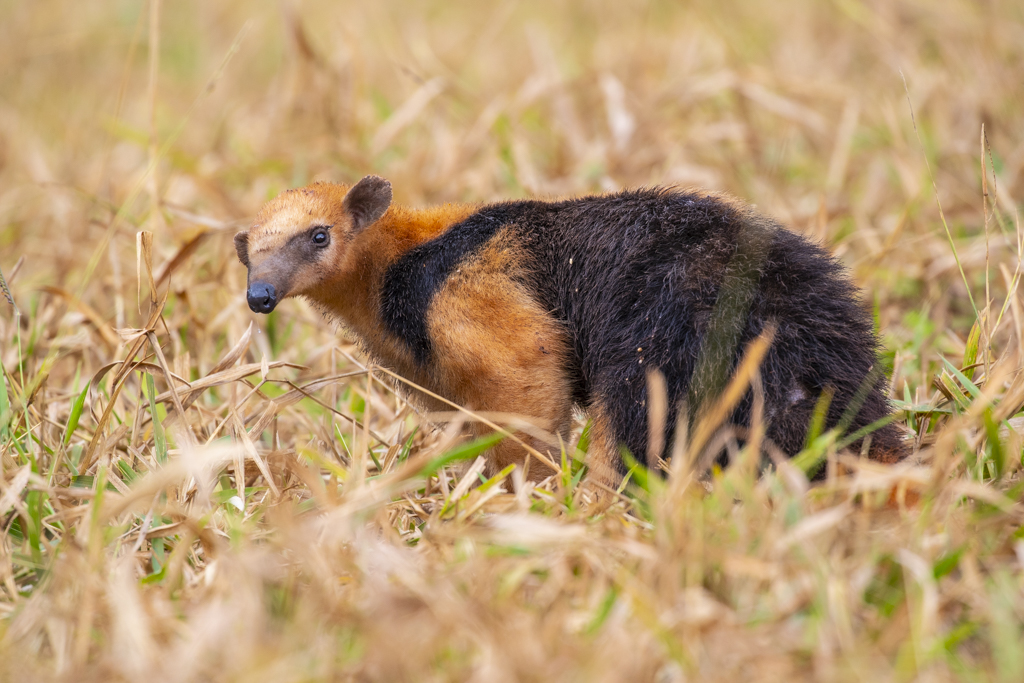
I’ve traveled to the Brazil’s Pantanal region several times to photograph jaguars, Toco toucans, giant anteaters, and other amazing wildlife. This part of the world reminds me to Tanzania. There’s wildlife at every turn and the photo opportunities are amazing.
Jaguar, Mick the Jaguar, older male with wounded eye, Pantanal, Brazil, South America.
Southern Tamandua; Tamandua tetradactyla; lesser anteater; collared anteater; Mato Grosso de Sul; Southern Pantanal; Brazil
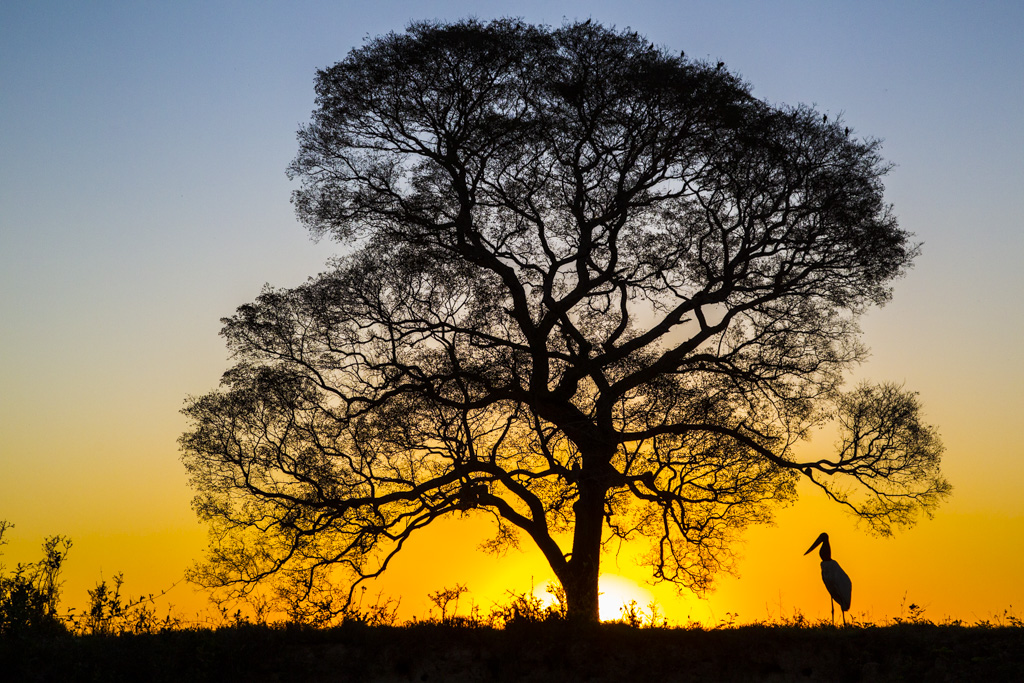
Sunset, Jabiru; Jabiru mycteria, silhouette, Pantanal, Brazil, South America
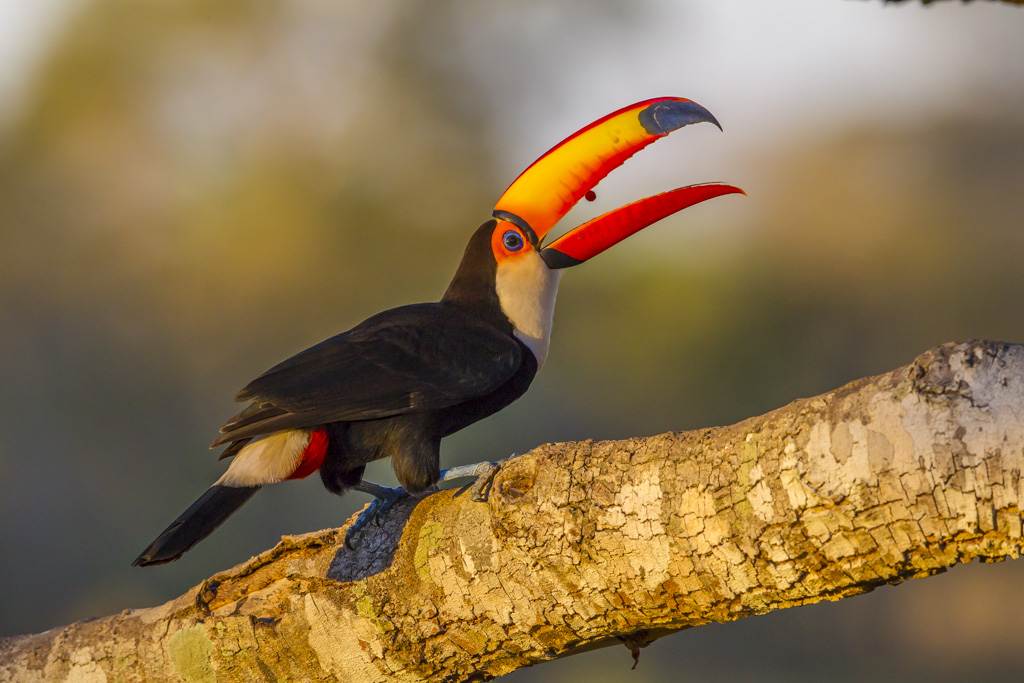
Toco Toucan, Ramphastos toco; feeding, Pantanal, Brazil, South America
During the summer of 2020 we started seeing news reports in the US about the horrible fires in the Pantanal. One especially heartbreaking photo showed a jaguar rescued from the flames in a rehab facility with bandaged paws.
Fellow photographers were sending me links to news reports. So I thought I’d send an email to Charles Munn, founder and owner of SouthWild. SouthWild is the tour company Strabo Photo Tour Collections uses to coordinate all my trips to Pantanal.
Here’s the update Charles Munn sent about the Pantanal:
“The pantanal is half the size of California. It is and always has been a fire-adapted ecosystem, designed to have periodic dry season fires, originally set by lightning prior to humans arriving 12,000 years ago, and then set every year or two or five by humans. The plants and animals evolved with periodic, widespread fires, for perhaps 100,000 years. The Pantanal had a longer, drier dry season this year than any time in the last 47 years. The extra dry year and the fires set by some ranchers here and there have caused about 25% of the Pantanal to burn. By early October, the fires were done and the first rains have started, thankfully. “A report from 3 weeks ago from two naturalist guides at different times in different boats ..(the guides who have guided for SouthWild) said that they racked up 18 good Jaguar sightings in a week. That is a high or extra high number of sightings. Yet another colleague had 11 Jaguar sightings in 2 days. All of these Jaguar results involved NO assistance from radio calls from other boats, because the pandemic has reduced boats in Jaguarland to the point where there is no radio system this season. There was a lot of fire in the heart of Jaguarland in August and September, but it is done now, and all of these Jaguar reports have come from AFTER the fires were over. None of our lodges in the Pantanal has had its birding trails or lodges affected by the fires. There were some fires near SWP lodge, but the fire was kept out of the forests that we use for birding. As tragic as the fires have been, they now are done, and it would appear that things will look pretty normal normal next year, that is assuming that rains that have started in Oct will intensify in Nov and continue for the normal rainy months of Dec, Jan, Feb, March.“
Charles Munn
“One more detail I should make clear: Most of Pantanal is …seasonally flooded (and then seasonally dried out) grasses.. not forest for decades, perhaps millennia, the Three Brothers River in the heart of Jaguarland has a thin ribbon of forest along 80% of the riverbank, and just grasses along the remaining 20%. where there is forest along the riverbank, it averages only 20 meters wide….almost nothing….. and in many places it is only 10 meters wide and then all the rest of the habitat behind this narrow gallery forest…for km and km…. is …grass….. Therefore, the fires were worse this year than in decades, but the Pantanal is designed to survive and bounce back from fire.“
Charles Munn
I hope Charles’s information adds to what you’ve read or seen in the US news. My hope is to one day return to the Pantanal and enjoy the fabulous photography and people in that area of the world.
I had the pleasure in September of leading a photo tour to the Lofoten Islands of Norway for Strabo Photo Tour Collection.
Norway was amazing. It’s a pretty easy flight over to Oslo. Then you have to overnight in Oslo and take two flights up to Leknes. It’s above the Arctic Circle so takes some time to get there. Luckily, the Norwegians run a super-efficient air travel system and all the flights were right on time.
The Oslo airport, by the way, is quiet. There are large halls typical of any airport. People are quiet with their voices in low tones. Conveyor belts and people movers are quiet. Overhead announcements are quiet. It was so amazing.
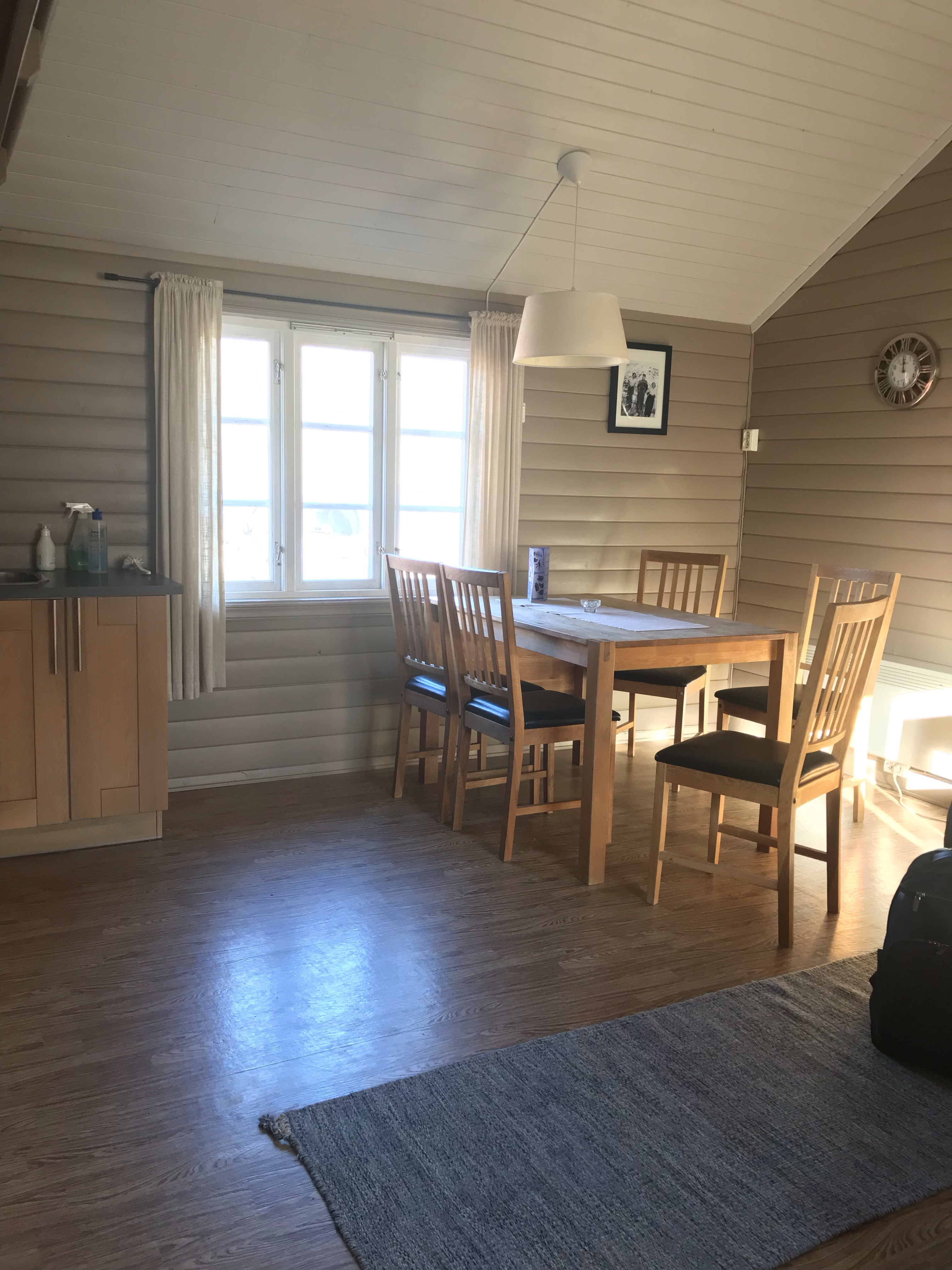
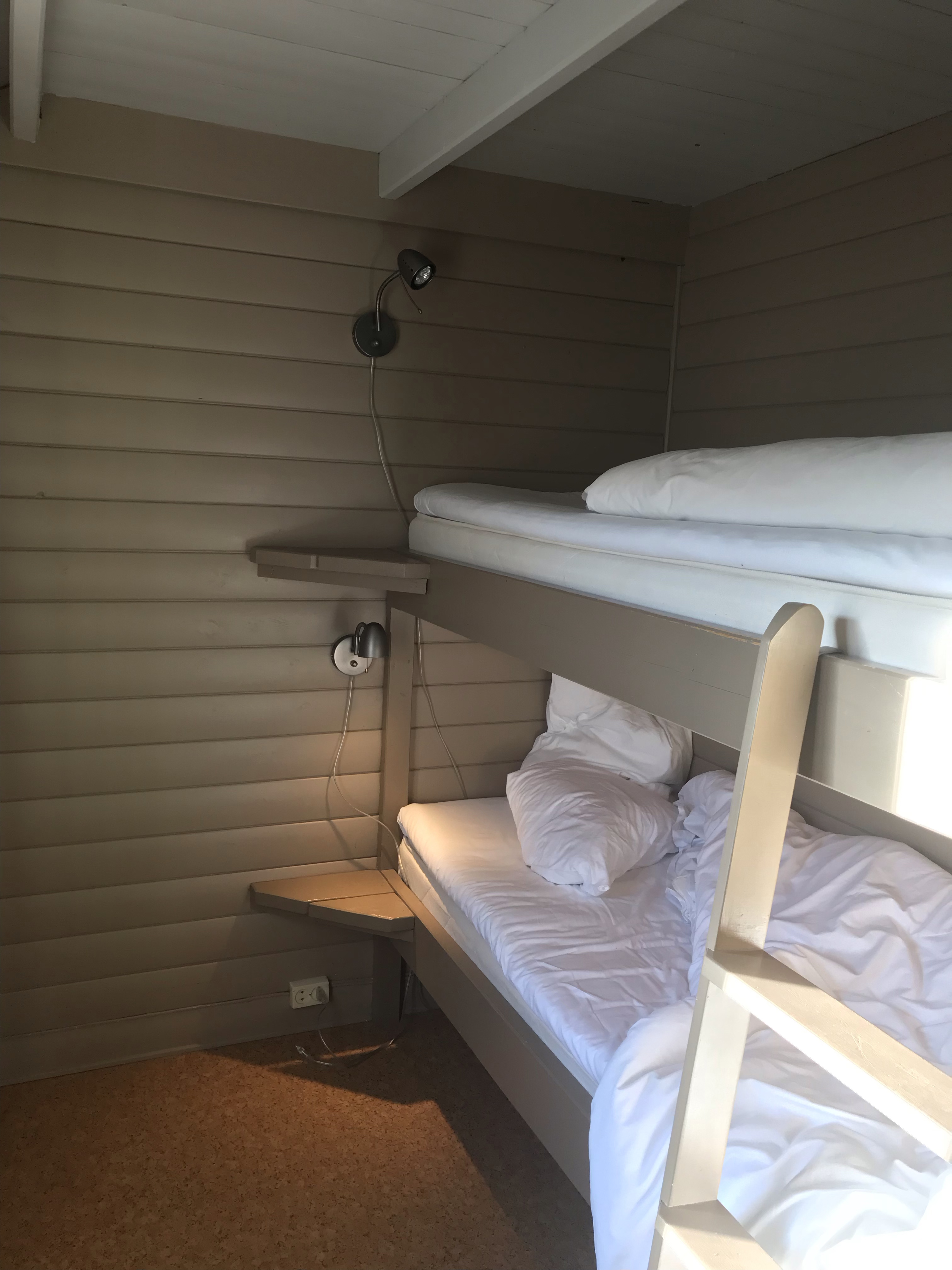
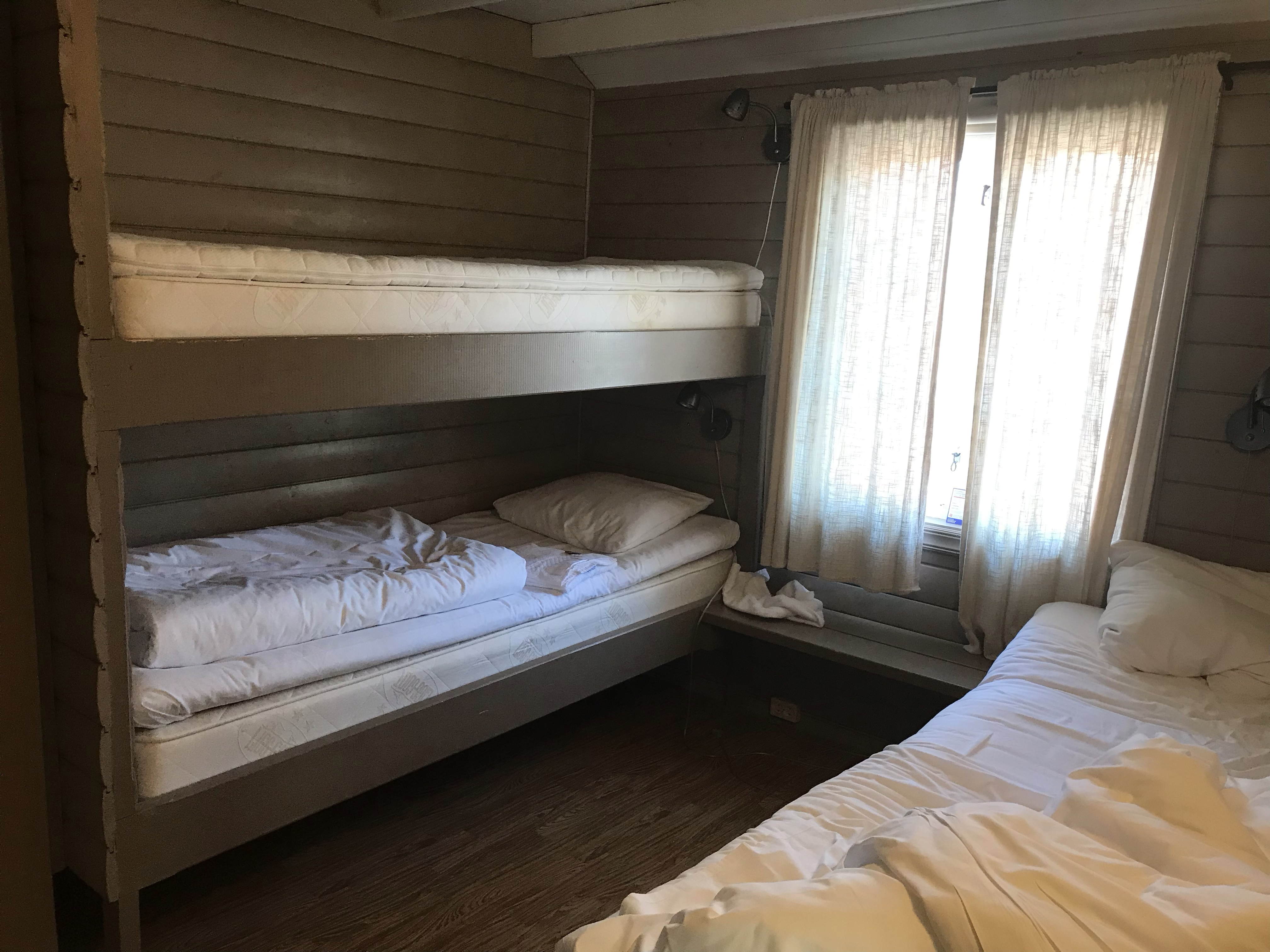
The Lofoten Islands form a peninsula that goes out into the Norwegian Sea. There’s a road system connecting the larger islands so travel is quick and efficient. Our hotels were near Hamnoy, Leknes, and Svolvaer. All the hotels were rorbuer-style or styled like a fishing cottage community. Little red houses clustered around the rocky shoreline. Made for great photos. The little fishing cottages had two bedrooms, a shared bathroom, with a living room and kitchen. Very cozy as long as you don’t mind sharing a bathroom. One hotel had two bedrooms in one house and each bedroom had a private bathroom. That was my favorite arrangement because we had private bath but still shared a living room and kitchen.
During the day we tooled around the area photographing towering mountains over crystal clear water. The little villages were usually filled with real fishing cottages with boats, nets, buoys, etc. That meant we always had something to photograph from a grand landscape to tiny details. We went to an old whaling village that’s now a UNESCO site. Lots of neat stuff from the late 1800’s and early 1900s plus museums all in a tiny village setting. I went nuts photographing the general store with all the old tins, advertisements, and cash register.
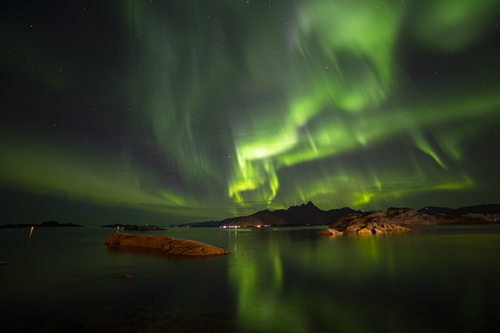
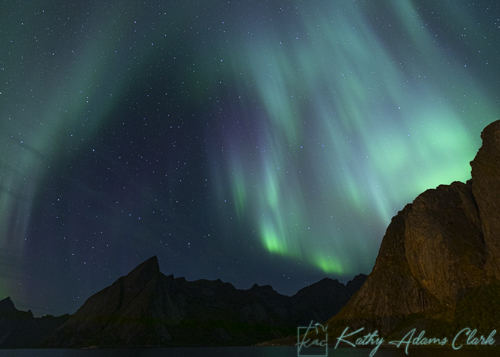
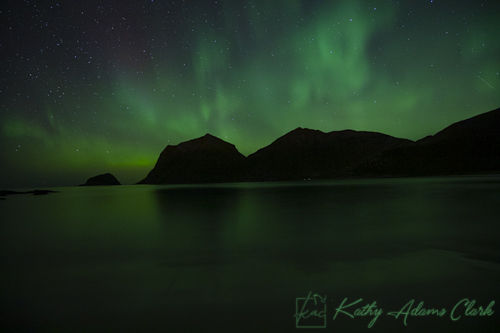
At night we shot based on the aurora activity. Our first night out was pretty good. It was especially nice since we didn’t have to leave the rorbuer to shoot. We just walked across the parking lot and stood on the rocky shoreline. Everyone got great photos of the aurora that night and worked on their skills. We had a visible aurora in the middle of the trip but activity wasn’t predicted until after 11:00pm. Several people decided to stay back at the rorbuer but the rest of us loaded in the van and headed off to a wide, sandy beach. We had great aurora activity and got to play with reflection of the lights in the ocean. Our third chance at the aurora was our best night. Predictions were for spectacular lights and they began right about twilight. I saw them on my way to dinner and had ants in my pants the whole time we were eating. After dinner we drove to a nearby beach and stayed for several hours. It’s amazing how you don’t get tired when green lights are waving across the sky. Our guides said it was one of the best nights they’ve seen. We quit shooting about 2:00am and that was because batteries were dead and cards were full.
Temperature the entire trip were in the 30-degree to 70-degree range. We had rain on our last day as we drove to the airport. I wore my down coat as an outer layer almost all the time. Longjohns as a base layer and then pants and a long-sleeved shirt as a middle layer. I only wore gloves at night when we were shooting the aurora.
Food was amazing. I thought it would be gross things or super bland stuff. The fish wasn’t fishy tasting. The meat, pork, and lamp the others had looked really nice and tender. We had plenty of root vegetables with familiar carrots and potatoes. Breakfast was the basic European buffet of sliced meats, cheese, fruit, eggs, and breads. The breads were all hardy, whole-grain that I added fresh butter and jam to. The coffee was weak but we learned to make strong coffee in our rooms.
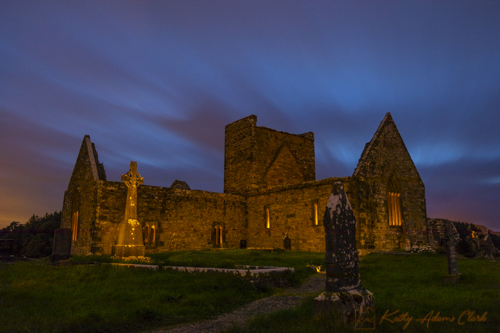
I was in Ireland recently leading a photo tour. A favorite location of mine for light painting at night is Burrishoole Abbey in County Mayo.
We set our cameras on tripods, composed the shot, focused, and then set our exposures for 30 seconds. Then I “Painted” the outside of the building with an amber flashlight. In one 30-second exposure I might cover half the building. We reminded the group that they would use layers in Photoshop to get a photo of the entire building illuminated in amber light.
A Photoshop blend of 21 photos of Burrishoole Abbey being painted with an amber flashlight. Masking to have a uniform sky.
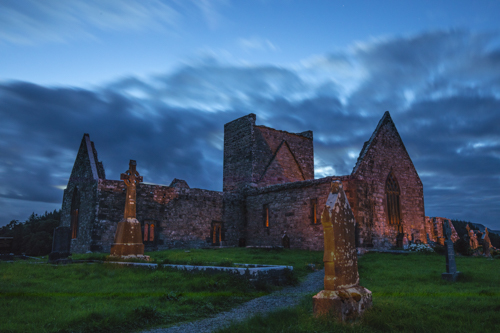
Toward the end of our shoot at Burrishoole, I decided to make a change. I told the group to leave their f/stops at 22, change the ISO to 800, and take a 4-minute exposure using Bulb. We took one photo to check exposure. Personally, I needed to change my f/stop to f/9.
Then we clicked the shutters and left them open for 4-minutes. During that time, I painted the building one more time with the amber flashlight. Notice I had enough time to go inside and paint the window openings.
Burrishoole Abbey painted with an amber flashlight during a 4-minute exposure. Minor adjustments to the photo in Adobe Camera Raw. No layers.
Each photo is a bit different but the last was much easier to make. Many photographers don’t like Photoshop layers or don’t want to learn layers. Personally, I think layers is a super powerful tool but do understand the learning curve can be steep.
Next time you do light painting, consider using a very long exposure as an alternative to layers.


















 Kathy Adams Clark